Showing posts with label Roger Ebert. Show all posts

Wednesday, July 16, 2014

Boyhood and Life Itself - Two of the Finest Films I Have Ever Seen


Richard Linklater has made a version of all of the movies I could ever hope to make, and more. He’s made the joyous backstage theatre drama (Me & Orson Welles), the best romance in recent movie history (the Before Sunrise, Before Sunset and Before Midnight trilogy), the story of the last day of school at an Austin high school (Dazed and Confused) and a dark comedy that explores the peculiarities of East Texas and its local flavor (Bernie).

With Boyhood, his twelve-years-in-the-making portrait of Mason (Ellar Coltrane) from age six to eighteen, Linklater has made his best movie, a masterful epic that brings to mind Terrence Malick’s The Tree of Life (2011), both in its ambition and in its Texas setting. Roger Ebert wrote in his review of The Tree of Life that he didn’t “know when a film has connected more immediately with [his] own personal experience.” I suspect many people will feel this way about Boyhood, too.

Oh, how this film will resonate for those who grew up in Texas. Linklater gets everything right – the recitation of the Texas pledge in public schools, the sound of white winged doves calling out over suburban neighborhoods, the Bible given to you at a certain age with your name engraved on the cover. 

Near the end of the film, as she’s sending her son off to college, Mason’s mother, Olivia (Patricia Arquette), says, “I just thought there’d be more, you know?” And that’s when the power of the movie hit me.

Though the movie has been lauded for its incredible twelve-year shoot, the greatest achievement of Boyhood is that you don’t really notice the characters (and actors) aging. The movie is so entertaining, the transitions so seamless, and the characters such a genuine pleasure to hang out with, that you lose sight of the fact that they’re growing up and maturing right before your eyes. By not focusing on overly dramatic or seminal moments that other filmmakers might make the focus of their coming-of-age films, Linklater gives the whole movie such a hang-out feeling that the trick is not thinking about the time. And I thought there’d be more. But that’s how it happens. It’s all over too soon, and perhaps the power of the movie doesn’t even fully register until you realize it’s all over.

In the first half of this film, Mason is pulled in many different directions, with adults offering out various ways through life. It’s not until about midway through Boyhood that Mason really emerges and develops a voice. That’s not an arc we see much in cinema, particularly with so much emphasis placed on active characters. But how are we formed? Aren’t we all slowly molded by the world around us? Much of our childhood is spent not thinking about the future and not making active decisions. We’re certainly not thinking about what we’re doing as part of some larger life structure.

Many of the major character changes take place off-screen. The movie is not unlike Kenneth Lonergan’s Margaret (2011) in this respect, where characters are allowed to leave a scene and have lives outside the movie. I think of Mason’s father, Mason Sr. (Ethan Hawke) growing from freewheeling dad in one section of the movie to a slightly more conservative and mature man entering his second marriage a bit later. We see how this change must have taken place. To witness the change itself is not necessary.

The actors in Boyhood are extraordinary, and you’d be hard-pressed to argue that any other film performances this year are really comparable to what Arquette, Coltrane, Hawke and Lorelei Linklater achieve in this movie. In particular, I’d like to see Hawke at the very least get nominated for an Academy Award for his performance – he’s an absolutely fantastic actor, extraordinary in everything from Linklater’s films to Sidney Lumet’s Before the Devil Knows You’re Dead (2007) to Training Day (2001).

As Linklater says in an interview, “At some point, you’re no longer growing up, you’re aging. But no one can pinpoint that moment exactly.” I can’t wait to see Boyhood again to see if I can pinpoint exactly where it happens, but I have a feeling I’ll be taken away on Mason’s journey once again and forget about that question altogether, enjoying my time with wonderfully real people.

I’ve had my own boyhood with Mr. Linklater (see the picture to the left). I don’t mean to say he has any idea who I am, but by growing up in Austin and being interested in film, I (along with many others) feel a certain kinship with him.

He is our resident auteur, and more. He’s the friendly patron of the arts, the man sitting behind me at Hyde Park Theatre’s production of Killer Joe. He's the guy enthusiastically talking with cinephiles in between the Summer Classic Film Series screenings of Martin Scorsese’s Raging Bull (1980) and Goodfellas (1990) at the Paramount Theatre. He came to Waterloo Video to sign the newly released Criterion DVD of Slacker back in 2004, and I have my copy proudly placed atop my DVD collection. “To Jack – all the best. Rick Linklater.”

I’ve never been more proud to come from the city of Linklater. The Texas auteurs – Linklater, Terrence Malick, Wes Anderson, David Gordon Green – are responsible for many of the best films of the last few years. Boyhood is certainly the best picture of this year, and I can only hope that by this time next year, we’ll be referring to Linklater as an Academy Award-winning director.

Special Note: In one of the scenes filmed at Austin High School, you can see the 2009 UIL One-Act Play State Champions banner hanging over the Preas Theater (for our production of Over the River and Through the Woods, in which I was one of the six actors). We didn’t just win State – we made it into a Linklater movie! Watch the Boyhood featurette that shows some of the filming at Austin High. And here's a great interview with Linklater - on Boyhood, Bernie and Texas.

How Richard Linklater made me a better film critic

Slacker Geography, 25 Years Later

Life Itself (Steve James)

I often walk out of movies and struggle to articulate the effect they have on me. Roger Ebert was a master at this. He always had a perfect turn of phrase to capture exactly what a certain movie felt like. Who else could write something like, “I was almost hugging myself while I watched it” of Cameron Crowe’s Almost Famous (2000)? I think of that quote every time I watch Almost Famous, because that’s exactly how the movie makes you feel.

On the opening night of Steve James’s new documentary about Ebert, Life Itself, I was moved to tears, just as I had been the first time I saw the movie in January. Walking out of Austin’s Violet Crown Cinema and seeing the peaceful Austin skyline before me, a banner poster of Boyhood proudly draped over the cinema, I was touched by a tinge of sadness.

Partially because this journey isn’t yet over. Many of us left have yet to enjoy our heyday. Some of us never get there. Roger Ebert did, and the morning after he passes away in Life Itself, Steve James shows us a Chicago infused with sunlight and purpose. Forty years ago, there was Ebert, part of the very fabric of that city, informing the lives of its people. And now, he’s gone.

This is to say I don’t know how to articulate exactly how I felt looking out at the city skyline after this movie ended. Certainly, I was overcome with sadness, knowing that Ebert is gone and not coming back. But I was also filled with joy, knowing that a city – in his case, Chicago – could contain a man such as this, who stood for the right things and whose writing guided so many people to see pictures they may never have seen otherwise.

The film’s score plays an integral role in this magnificent feeling. The music by Joshua Abrams hits a feeling somewhere between triumphant and mournful. There’s something truly grand about it – as soon as you hear it, it just feels right. It’s the score a life like this deserves. With the aid of that score, those final shots of trains running through Chicago the morning after Ebert’s death give the movie an almost transcendental power. This movie embodies such a specific feeling and attitude toward a man, his life and the city in which he lived.

Watching Life Itself, I understood, in a way, what people mean when they say death is a beautiful thing. The movie’s celebration of life and reconciliation with death took me aback. When I saw the film for the first time in January, I was focused on how well the movie illustrates Mr. Ebert’s impact on cinema and his relationships with many of the filmmakers he championed. But I may have missed the fearless quality of the movie to look at something deeper, going into the unknown and ultimately coming to peace with Ebert’s passing. I felt Ebert’s bravery more this time.

I’ve not seen a movie that treats death with such forthrightness since Sean Penn’s Into the Wild (2007), at least in the sense that death is accepted in both films and shown for what it is.

During one section of the movie, Ebert’s friend Bill Nack recites the last page of Fitzgerald’s The Great Gatsby by heart, and perhaps that’s as good a way as any to reconcile this thing that happens to all of us in the end. Life Itself is one of the best films I’ve seen, not simply because it captures what made Ebert so important and influential to the film community, but because it’s one of the few movies that’s left me with a profound impression about what it means to face death.

So, reflecting after the movie, I thought about this ether space – the space between the old world, where Ebert was alive and influenced how I thought of cinema, and this new world, where recent movies seem almost out-of-balance without his writing and guiding them to their proper alignment. As Ebert goes, so does a whole way of living, a whole time and place for me.  He is more than a part of my childhood. He is sort of the leader, along with Martin Scorsese, of everything I hold sacred and thrilling in movies.

And here was this new city in front of me, full of life and those who may never know what kind of man was here for a time and informed the way we feel and react.

"And it took me years to understand that that’s who I am. And Roger knew that.” - Martin Scorsese

The best films of 2014, at the half-way point.

1. Boyhood (Richard Linklater)
2. Life Itself (Steve James)
3. The Immigrant (James Gray)
4. The Grand Budapest Hotel (Wes Anderson)
5. Under the Skin (Jonathan Glazer)
6. Noah (Darren Aronofsky)
7. Ida (Pawel Pawlikowski)
8. Joe (David Gordon Green)
9. Night Moves (Kelly Reichardt)
10. Jersey Boys (Clint Eastwood)

With Begin Again, Dawn of the Planet of the Apes, Edge of Tomorrow, Snowpiercer, Enemy, Muppets Most Wanted and The Lego Movie very close behind. And, of course, Afternoon of a Faun: Tanaquil Le Clercq, which I'm not including due to my closeness to the movie (but it is truly one of the finest films).

Tuesday, April 1, 2014

Philip Seymour Hoffman and The Beginning of a New Year

To your right, you will see the incredible new poster for my film Jake the Cinephile by the endlessly talented Benjamin Dewey. Ben designed the beautiful posters for With Love, Marty and The Wheels, as well, and I was thrilled to have him design this new poster. 

Jake the Cinephile had its film festival premiere on Sunday, March 9th at the Beacon Film Festival (Freeze Frame) in Beacon, New York. I was so honored to screen the film in the Beacon, where we shot all of the movie theater scenes for the film. I travelled up to Beacon for the screening, where I was thrilled to see posters for the festival in many of the store windows along Main Street. Outside the Beacon Theater, they had pictures posted for each film (which you can see in the picture below).

The film screened on its own (rather than part of a short film program), and I was very excited to participate in a Q&A onstage after the screening. I had the opportunity to spend some time in Beacon after the screening, as well, which was great fun.

The festival received some wonderful publicity, including a large story in the Poughkeepsie Journal, where Jake the Cinephile not only received a mention, but the newspaper also featured a picture from the film (see a picture of the article below). The film and I were also mentioned in the Philipstown newspaper in an article about the fourth annual Beacon Film Festival and our film shoot in the Beacon.

If you're in New York City on Wednesday, April 16th, Jake the Cinephile is screening at 8:00 PM as an Official Selection of NewFilmmakers New York's Short Film Program at Anthology Film Archives! It will be very exciting to screen the film at Anthology, which is an incredible screening space. Check out our film's profile on NewFilmmakers New York's website here

On September 23rd, I was honored to screen Jake the Cinephile at Rutgers University for one of its largest audiences yet, as part of a special screening for Professor John Belton's film class. Professor Belton, a brilliant film writer, has been such a champion of this film, and I was thrilled that he not only invited me to screen the movie in his class, but that his entire afternoon lecture was dedicated to screening the film and a Q&A with the class afterward. More than any other screening, I was really amazed by how the movie was received by the students here. It's been fun screening this particular movie (there was even an unofficial sequel made in Yemane Demissie's summer Sight and Sound: Film class - where I screened the movie for the class - that ended up in the Tisch School of the Arts Sight and Sound showcase).

Thanks to our Executive Producer Steve White, we also now have our poster on the Jake the Cinephile IMDB page.

Richie Donnelly, one of my late father's best friends and another Executive Producer of Jake the Cinephile, passed away in December. One of the kindest people I've met, Richie was a loving and supportive presence in my life with his wife Susan Morris. From telling me stories about my father to coming to my plays in high school, Richie's support and love means more to me than I can ever say. I know my dad is overjoyed to see his old friend. Richie's memorial page and obituary can be found here, although how can these brief paragraphs ever begin to capture the beauty of someone like this?

It's been a terrible few months for losing genius talents. Peter O'Toole, one of the finest actors in cinema, brought an intimacy and emotional complexity to a four-hour epic with David Lean's Lawrence of Arabia (1962). Lawrence is unlike any other screen protagonist I can remember, and this was just the first leading role for an actor who would give so many more genius performances. Roger Ebert's 2002 interview with O'Toole is worth checking out. 

Harold Ramis was a master, giving us some of the funniest movies of all time, including Groundhog Day (1993), National Lampoon's Vacation (1983), Caddyshack (1980), Ghostbusters (1984) and Analyze This (1999). I hope his dark thriller The Ice Harvest (2005) is rediscovered. And his performances - from Stripes (1981) to Knocked Up (2007) to Walk Hard: The Dewey Cox Story (2007) - are golden.

The great Lou Reed, Marcia Wallace, Pete Seeger and James Rebhorn (who wrote his own very moving obituary) are among the many other wonderful artists who have passed away in recent months.

I've wanted to write a tribute for some time to one of the greatest actors the world has ever known, but the thought of articulating all of my love and appreciation for this man into one neat article seems impossible. So, I will continue to write about the work of Philip Seymour Hoffman in future posts, as he has changed the world of film and theatre so tremendously that it's impossible to write about great works in either medium without mentioning at least one of his performances.

Not only was Hoffman the finest actor of his generation, he was also an incredibly gracious person. I'll never forget meeting him and congratulating him the week after he won his Oscar for Capote in March of 2006 (this was at the ninetieth birthday party of Horton Foote). His work onstage in the Broadway revival of Death of a Salesman was the most powerful stage performance I've ever seen, and his openness with the Tisch Dean's Scholars when he talked to us last April was inspiring. He was the master. 

I was honored to be have been interviewed for an article on Mr. Hoffman's extraordinary legacy for Newsday, who also published a picture of our Dean's Scholars group with Mr. Hoffman (along with the article itself) in amNewYork. There have been a number of lovely tributes to Mr. Hoffman, including this moving montage of his work on Vimeo, a wonderful tribute by film critic Michael Phillips, a tribute from his Almost Famous director Cameron Crowe, memories from the staff at RogerEbert.com (Ebert always said that he wanted Hoffman to play him in a movie) and even a cartoon from The New Yorker that brings a tear to my eye.

I first became aware of Mr. Hoffman and his incredible range as an actor in 2002, around the time I became a more adventurous theatrical moviegoer. That fall alone, I was amazed by his extraordinary performances in Paul Thomas Anderson's Punch-Drunk Love, Spike Lee's 25th Hour and Brett Ratner's Red Dragon. The following spring, after reading Roger Ebert's rave four-star review of Owning Mahowny (2003), my mom and I sought out the wonderful independent film at the Regal Westgate in Austin (back when Austin multiplexes screened independent films). In the film, Hoffman plays a compulsive gambler, and in any other actor's filmography, this would be their greatest performance. For Hoffman, it's one of many buried treasures that I hope people will continue to discover when delving into his rich filmography.

By that time, I had started watching his brilliant performances in earlier films that were changing my life and still remain among my favorite movies, including Cameron Crowe's Almost Famous (2000) and Paul Thomas Anderson's Magnolia (1999) and Boogie Nights (1997) - not to mention coming to appreciate his hilarious turn in Joel and Ethan Coen's The Big Lebowski (1998), which I had first watched with my dad (who was a Lebowski fan before it was popular, for what it's worth), even more than when I first saw the movie. 

I was overjoyed when he won the Best Actor Oscar for his monumental performance in Bennett Miller's Capote (2005). It was clear, more than ever, that Hoffman was the finest working actor, on par with De Niro, Pacino, Nicholson and Penn and never anything short of brilliant in every single role. In the next few years, audiences were treated to the best of both worlds - Hoffman gave towering leading performances in contemporary masterpieces such as Sidney Lumet's Before the Devil Knows You're Dead (2007), Tamara Jenkins' The Savages (2007), Charlie Kaufman's Synecdoche, New York (2008) and John Patrick Shanley's Doubt (2008), while still remaining the finest character actor alive in Mike Nichols' Charlie Wilson's War (2007), Bennett Miller's Moneyball (2011), George Clooney's The Ides of March (2011) and J.J. Abrams' Mission: Impossible III (2006). 

And then there were his stage performances. I was lucky enough to see Mr. Hoffman onstage twice - in 2009's Othello at NYU's Skirball Center for the Performing Arts, and in Mike Nichols' production of Death of a Salesman on Broadway in 2012. Death of a Salesman left me devastated in a way no live theatre production has in my life. When I met Mr. Hoffman for the second time less than a year ago with the Tisch Dean's Scholars, I was near the end of my own thesis film shoot, and I asked him about the communication and notes shared between actor and director while shooting a film. We were so fortunate to spend time with a genius who has forever changed cinema and theatre.


I haven't mentioned so many of his other wonderful performances - in Cold Mountain (2003), Flawless (1998), Pirate Radio (2009), The Hunger Games: Catching Fire (2013) and, in perhaps his greatest screen role, Paul Thomas Anderson's The Master (2012). Many of the best films of the last twenty years were anchored by Mr. Hoffman's genius, and watching his performances on film and stage influenced me in no small part as an aspiring actor, too. His characters felt so vulnerable and authentic, and losing him feels like a great personal loss to so many people. I don't know how to comprehend a world without Mr. Hoffman. 

Since the heralded premiere of her film Afternoon of a Faun: Tanaquil Le Clercq at the 51st New York Film Festival in October, I have had the privilege of continuing to work as an assistant for Emmy-winning director Nancy Buirski. Her new film, on which I worked as a researcher and production assistant, had three incredible screenings at the New York FIlm Festival.

The distributor Kino Lorber picked up Afternoon of a Faun for distribution shortly after the end of NYFF, and earlier the year, I was fortunate to attend several meetings at the Kino Lorber offices to discuss the release of the film. Here is the official trailer for the movie, which opened on February 5th at the Elinor Bunin Munroe Film Center at the Film Society of Lincoln Center.

In October, we screened Afternoon of a Faun with UNICEF on World Polio Day (October 24th) at the United Nations. Following the screening, Nancy spoke on a panel dealing with Polio in the 21st Century with David Oshinsky, Pulitzer Prize-winning author of Polio: An American Story; Peter Crowley, Global Polio Team Leader; and journalist and U.N. correspondent Irwin Arieff.

Over the holiday break, I discovered that my grandmother, Lucille Kyser, attended the Ballet Russe de Monte Carlo in St. Louis in 1945, 1946 and 1947, which included ballets choreographed by George Balanchine and danced by Alexandra Danilova and Maria Tallchief. Nancy and I were thrilled to share pictures from the original programs to our Facebook followers (as my grandmother still has the programs in her collection after all these years).

On the Monday evening before the film opened in cinemas, there was a wonderful premiere of Afternoon of a Faun at the JCC in Manhattan, followed by a dessert and champagne reception at the home of Richard Lorber. 

On its opening weekend, Nancy was actually out-of-town for the film's International Premiere at the Berlin International Film Festival (also at Berlinale - Scorsese's New York Review of Books documentary). I assisted with the opening weekend Q&As at Lincoln Center, which included talkbacks with Jacques D'Amboise, Randy Bourscheidt and Arthur Mitchell. Among the many ecstatic reviews the film received, my favorites are the rave from RogerEbert.com and Owen Gleiberman's Grade A review in Entertainment Weekly (not to mention Stephen Holden's outstanding review in The New York Times and the San Francisco Chronicle's four-star review). And after two months in theaters, Afternoon of a Faun is still at 100% on Rotten Tomatoes.

On its opening weekend, Afternoon of a Faun topped the Specialty Box Office. "With perfect first positioning by the Film Society of Lincoln Center, Afternoon of a Faun certainly blasted off this weekend - we're all thrilled and getting ready to pirouette into national release in the coming weeks," Gary Palmucci of Kino Lorber said in this article from IndieWire. Since then, the movie has continued to do incredible business.

In early March, I had the incredible honor of serving as an Associate Producer on a two-day film shoot in which Nancy interviewed legendary dancer Jacques D'Amboise. We spent two days in a studio at the National Dance Institute in Harlem listening to Mr. D'Amboise's incredible stories - he is one of the most energetic storytellers around, and I was honored to be a part of this shoot.

In addition to getting its run extended for several weeks at the Elinor Bunin Munroe Film Center, Afternoon of a Faun also opened at Cinema Village on 12th Street later in February. The movie continues to expand across the country as the rave reviews keep coming in - please visit the film's website to check out its upcoming theatrical playdates. Not to overwhelm you with links, but here is Nancy's interview on NPR from February, and her brilliant piece from The Daily Beast on the film and Tanaquil Le Clercq's story. Coming up, Afternoon of a Faun is a Center Frame screening at the Full Frame Documentary FIlm Festival. The film will screen at 4:00 PM this Friday, with Nancy and Jacques D'Amboise speaking after the movie.

On Monday, February 24th, I was lucky enough to attend the Tribeca Film Institute's 20th Anniversary benefit screening of Robert De Niro's directorial debut A Bronx Tale (1993) at the Village East Cinema. After the screening, De Niro participated in an incredible Q&A with the audience. This wasn't the first time I had seen my lifelong hero in person, but as I sat in the second row of the Village East's large auditorium, it was the closest I had ever been to the man who, along with Martin Scorsese, has shaped my life in an extraordinary way.

De Niro had so many words of wisdom, including a response to a question about Method Acting that drew applause from the entire theater. In short, it was a wonderful opportunity to see my hero in person speaking about one of his finest films.


Earlier this year, I was thrilled to support Steve James' new documentary Life Itself, based on Roger Ebert's memoir, which raised money on IndieGoGo. The film was executive-produced by Martin Scorsese and, as a perk of contributing to the movie, I was able to watch it simultaneous to its premiere at the Sundance Film Festival. Life Itself moved me to tears - my heart swelled with love for Mr. Ebert, who changed my life, and I cannot wait to write more about the movie when it receives a theatrical release later this year.

In other recent screening news, my film The Wheels was selected as one of three student films to screen on Friday, March 28th at the NYU Student Film Showcase, presented by The Motion Picture Club at NYU and the Humanities Ambassadors. The event ran from 5:00 PM to 7:00 PM in NYU's Kimmel Center, and it was followed by a discussion of the films and answering questions about the making of these movies. As always, it was a joy to get to screen my work for others.

There's much more to cover in my next blog post, including my thoughts on this year's Academy Awards and awards season in general. Nothing will ever equal seeing The Wolf of Wall Street for the first time with Martin Scorsese laughing uproariously a few rows behind me, but I spent Christmas Day the way any self-respecting Scorsese fan would - taking the family to see this certifiably insane masterpiece again. DiCaprio blows the roof off the theater every time I've seen it, and Scorsese doesn't let anyone off the hook easily. The way the music shifts in the wedding scene alone is genius - from Sharon Jones singing Goldfinger live onstage to the creeping in of Six Mix a Lot's Baby Got Back to the hard cut to Bo Diddley's howlingly devilish Pretty Thing - well, I could go on (which reminds me - here's a dang good list of the year's best soundtracks). But I have to agree with Wesley Morris when he says "it's rare that a tracking shot brings a tear to [his] eye." As Scorsese would put it, the film is big and ferocious.

I'll end by writing that my Advanced Production class was treated to a wonderful dinner at the home of our professor Yemane Demissie in February (I've included some pictures from this evening throughout this post). It was a fantastic meal and a delight to spend time with our mentor as we all complete or near completion of our senior thesis films.

Wednesday, April 10, 2013

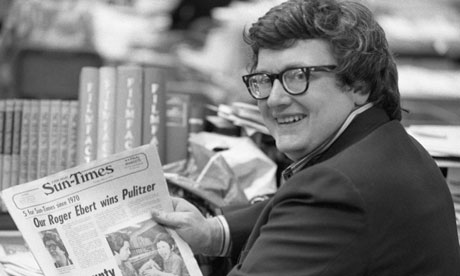
Roger Ebert, 1942 - 2013


Everything started with Roger Ebert. The only reason I knew to start watching the films of a director named Martin Scorsese is because Roger Ebert wrote so lovingly of his work. When I was eleven years old, I began reading Ebert's reviews. I quickly became a compulsive viewer of Ebert & Roeper, setting my VCR to record the program every Saturday night. And his work became an indelible part of my life. I would wait by my computer on Thursday nights, counting down the minutes until Ebert’s reviews of the new releases would trickle in.

In April of 2002, I remember breathlessly reading his four-star review of Changing Lanes, a film I was eagerly anticipating, and I rejoiced in the fact that Ebert thought it was a four-star film. I rushed to see Changing Lanes opening weekend, and it is one of the first instances where I can recall going to see the movie with Ebert’s words in my mind as I watched it. Leaving the cinema, I was alive with excitement, to know that I felt the same way Ebert did. It was in that way that I first came to feel like a member of a film society.

I started seeing certain types of films that hitherto I had only examined with curiosity at video stores or seen in giant advertisements in newspapers. I felt almost too young and too unsophisticated to approach many of the great works of cinema, but Ebert’s reviews brought these giant films down to earth for me. In 2002 and 2003, I made ventures to see films such as City of God, Owning Mahoney, Raising Victor Vargas, Nowhere in Africa and The Quiet American in Austin cinemas. This was back when many of the larger multiplex cinemas in Austin – the Gateway and the Westgate, specifically – would screen art-house films for a few weeks alongside the other major releases. It’s telling that the world Ebert introduced me to – a world where American Splendor played alongside American Wedding at the Gateway in 2003 – would eventually morph into a world where The Descendants was banished to mostly “art-house” screens only years later.

A few months before I turned twelve, I began writing weekly film reviews for The West Austin News in April of 2002. Only weeks later, my father passed away. I don’t think I knew how to deal with that kind of pain at such a young age, and I believe I ran away from it by immersing myself in movies more than ever. Through his criticism, Ebert acted as a kind of guide into this new, frightening world that I was entering.

I religiously watched my way through Ebert’s Great Movies list, and I can proudly tell you his favorite film from every year he worked as a critic (for many of the years, I can even recite his entire top ten list by memory). On my computer, I bookmarked every list I could find from both Siskel and Ebert (their end-of-the-decade top ten lists are especially worth obsessing over).

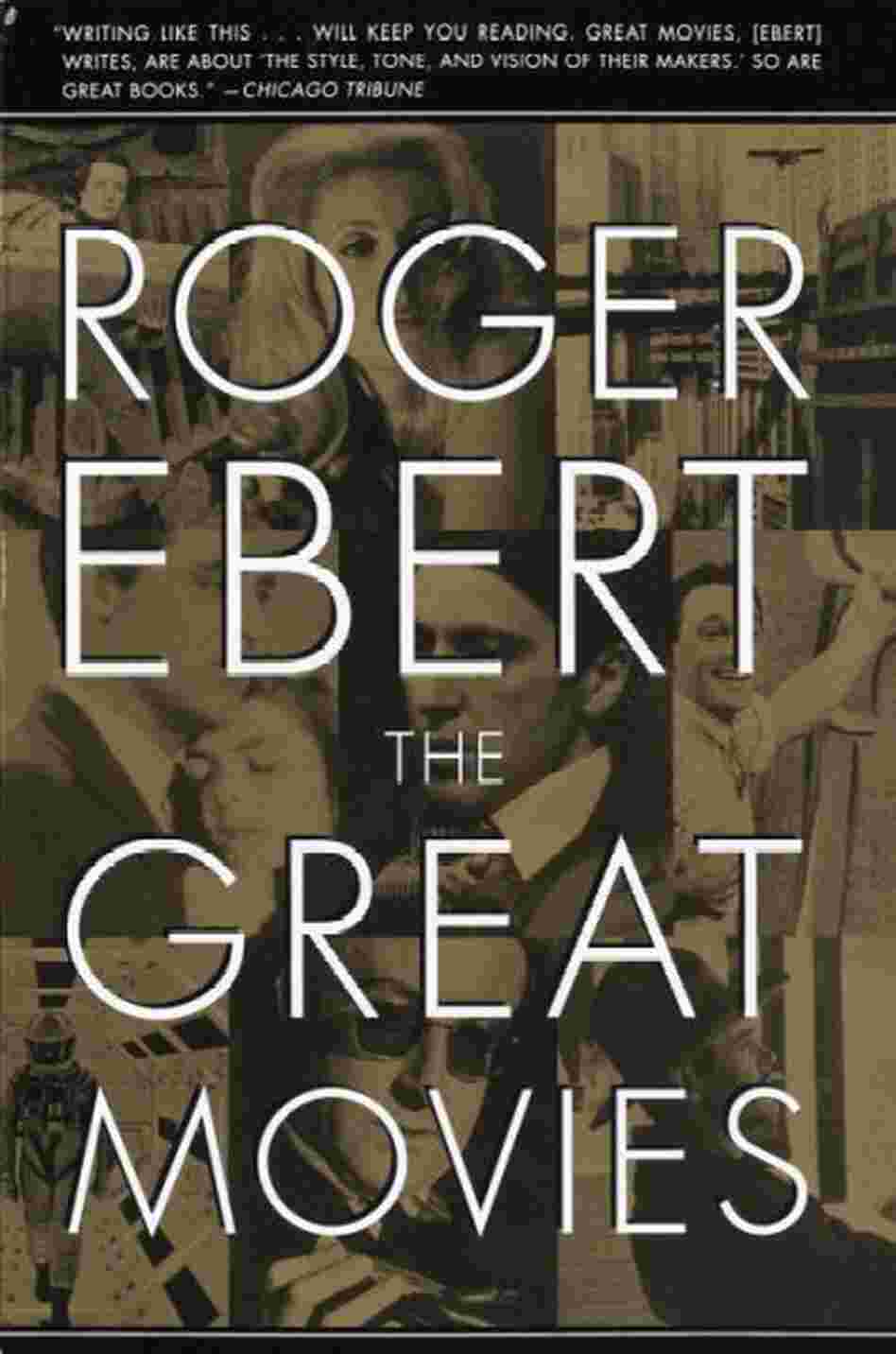
I bought Ebert’s annual Movie Yearbooks and read them compulsively. Whenever I was in the car with my mom, I would bring my copy of his original Great Movies book with me. As she drove, I read his reviews and articles aloud – sometimes on a film we had just watched at home the night before, other times on a film that I was trying to convince her to let me see. She might argue that a particular film sounded a little too mature for an eleven year-old, but by reading Ebert’s reviews to her, I was trying to demonstrate that I was ready to watch these works. I wanted to feel and experience for myself what Ebert so articulately presented in his prose. Just before my twelfth birthday, I finally got permission to watch Raging Bull and Goodfellas for the first time. I can tell you just about everything Ebert has to say about both films, as I viewed them for the first time almost entirely with his review in my mind – what to watch for, what certain sections might mean.

On his website, I constantly entered the Movie Answer Man forum, hoping that Ebert would answer one of my film-related questions (all of the questions that he answered in his Movie Answer Man column were later printed and published in his annual Movie Yearbook – and it was my dream to be included in one).

As a 'film critic' in the Austin circuit, I was invited to advance press screenings days or sometimes weeks before new films were officially released in theaters, which meant I would have to form an opinion on my own without first consulting Ebert, which was a large step for me as a critical thinker. Days after finishing my own review, I would read Ebert’s piece when it was published, and I was always giddy when he felt the same way I did about a film. My first official press screening as a film critic for the West Austin News was for Adaptation in December of 2002. I thought it was one of the best films of the year, and I hoped Ebert would agree with me. Just days later, he posted his four-star review, and placed the film at #3 on his end-of-the-year top ten list.

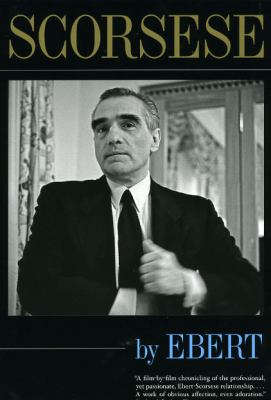
I was also thrilled to discover that Ebert had relationships with many of the filmmakers he adored, including Scorsese, Werner Herzog and Errol Morris. I’ve read his masterful book “Scorsese by Ebert” more times than I’d care to mention (you only need to read the inside cover of “Scorsese by Ebert” to see a thank-you letter written by Scorsese – on New York University stationary in 1970 – to Ebert, thanking him for championing his work, to get a sense of the personal bond between the two). Even when Ebert occasionally hasn’t been crazy about one of Scorsese’s works, he still understands where the piece is coming from and what it means in the context of Scorsese’s obsessions and concerns as a filmmaker.

I remember being very disappointed that Ebert only gave Gangs of New York three-and-a-half stars when it was released in December of 2002, as I thought it was the best film of the year. Richard Roeper agreed with me – but then, in their annual Oscars segment “If We Picked the Winners” on Ebert and Roeper in early 2003, Ebert said that he felt he had been too harsh on Gangs of New York in his initial review – and of the five films nominated for Best Picture that year, he believed it deserved the Oscar. Ebert was always willing to look back on a film and reconsider it. He only gave 25th Hour three-and-a-half stars upon its original release in 2002, but he then placed it in his end-of-the-decade top ten list years later.

By the way, 2002 was a great year for film, in addition to being a seminal year for me as a growing film fanatic. Ebert’s #1 film of the year was Steven Spielberg’s Minority Report, which was my choice as the year’s second best film. Maybe because it was the first full year where I made a point to see pretty much every noteworthy release in cinemas while keeping Ebert’s books by my bedside table, but I will always remember 2002 as a beautiful year of cinema (About Schmidt, Far From HeavenRoad to Perdition, About A Boy, Punch Drunk Love, The Pianist and Catch Me If You Can were among the other major releases that deeply affected me).


In 2002 and 2003, I tried to seek out every one of Ebert’s picks for the year’s best film from the past decades (in 2002 and 2003 alone, I recall watching, among many other films, Do the Right Thing, Platoon, House of Games, The Right Stuff, Amadeus, Nashville, The Color Purple, Mississippi Burning, JFK, Malcolm X, Hoop Dreams, Being John Malkovich, Dark City, Almost Famous and 2001: A Space Odyssey).

After doing a quick search in my computer, it looks I’ve quoted Ebert or at least mentioned him in at least every other review I’ve written. And there’s no competition – rogerebert.com is the most visited website on my computer by a mile.

“A movie is not about what it’s about, it’s about how it’s about it.”

When you revisit a film after several years, you also revisit Ebert’s review. Most recently, I returned to his Great Movies article on Nashville, one of my favorite films, and it’s impossible for me now to talk about Nashville without mentioning Ebert’s beautiful words on the film. The meaning of the movie itself is tied to his prose – in a sense, without his words, the picture is not really complete.

I came to understand so much about Ebert through his blog the past few years – including the fact that he was a recovering alcoholic, and that he intimately understood the teachings of Alcoholics Anonymous (which came across so understandingly and well in his review and appreciation of last year’s Flight). 


I looked to Ebert for his opinion on everything - his writing, both as a film critic and as a blogger, was the most consistently engaging and brilliant work you'd find online. One of the only reasons I’m on Twitter is so I can follow Ebert and Re-Tweet his opinions, reviews and the articles he comes across.

I have to confess that I oftentimes like to pretend I have a successful movie career, and I invent Roger Ebert reviews in my head – of what he might say about a film I directed, or in which I acted. This game is immensely satisfying, mostly because I like to think I've read enough of Ebert's work to formulate realistic-souding make-believe reviews in my head. Not that it would likely have ever happened (receiving an Ebert review means you've probably 'made it' as a director, and I'm pretty far from that), but I am now faced with the fact that there's not going to be an opportunity to read an actual Ebert review of one of my films.


Reading his last blog post just two days before his death – “A Leave of Presence” – I was deeply troubled to read of the return of his cancer, but I didn’t imagine for a moment that we would lose Ebert. It’s never registered with me that Ebert would ever cease being.

As I learned of Ebert’s passing at my internship last Thursday, a small part of me died inside. When I open my mouth from now on to inform someone of the master’s opinion – “Well, Ebert has consistently written that Nicolas Cage is one of our finest actors…” – my excitement about the conversation will give way to immense sadness. I’m prone to depressive bouts with nostalgia, and Ebert, who occupies the role of narrator when I think about anything related to film, will now be another person tucked into the past. The voice of reason is gone.


As one of my roommates said, as Ebert dies, so do hundreds of future films that will be forgotten without his efforts to spotlight and appreciate them. He championed the films that were forgotten, both large and small, and was responsible for the careers of many great filmmakers who, without someone like Ebert behind them, likely would not have achieved a great deal of their success. 

A world without Roger Ebert is something with which I’m not very comfortable. Gone is the generosity, the warmth and the understanding. I keep checking his website to see what Roger Ebert has to say about the death of such a great human being, and it’s only then that I remember. As a 'film critic,' I am at a loss for words. There are other critics I admire, but none in whom I can take comfort like Roger Ebert. As an aspiring filmmaker, I wonder, for whom will we make movies anymore?

A sample of some of my favorite Ebert reviews:

Almost Famous - Original 2000 Review

Minority Report Original 2002 Review


Raging Bull - Great Movies Review

Wonder Boys - Original 2000 Review


Saturday, August 22, 2009

The Auteur: Martin Scorsese

In honor of my cinematic hero, auteur filmmaker Martin Scorsese, I am posting a lengthy essay I wrote about Scorsese, his magnificent films and his influence on me. The paper was written specifically for a Visual Media class I took my junior year of high school. No, today isn't his birthday, but it is the day after Paramount Pictures announced that his latest project, Shutter Island, is being pushed back from an October 2nd release date to next February. Not only does this move my most anticipated film of the year back four months, it also knocks Shutter Island out of this year's Oscar race. Alas, I am very saddened by this news.

Filmmaker Martin Scorsese is the greatest living American director. I won’t hide the fact that I absolutely worship Scorsese and his repertoire of timeless American cinema - the flurry of images, whiplash editing spiraling onscreen from the great Thelma Schoonmaker, his incessantly giddy use of popular music, the intensity with which each shot is prepared and executed - this man is filmmaking.

Above all, the man reveals truths about the human condition that both appall and fascinate me – I could not initially understand why I identified with Travis Bickle (Taxi Driver, 1976) or Jake La Motta (Raging Bull, 1980) but I was nevertheless awestruck by his wizardry in creating sympathy for so many violent and self-loathing characters. Scorsese could easily be called the savior of the antihero; indeed, his films often feature lead protagonists balancing the line between sanity and insanity.

When I think of Scorsese, I think of the great moments that make up his films: Jake La Motta (Robert De Niro) punching the prison walls and beating his head against the stone in agony near the end of Raging Bull; Travis Bickle (De Niro), soaked in blood, staring at New York police officers while pathetically placing his index finger against his head pulling an imaginary trigger in Taxi Driver; Howard Hughes (Leonardo DiCaprio) staring at his tortured image in the mirror as his obsessiveness leads to his demise in The Aviator (2004); the slow-motion, drenched-red entrance of Johnny Boy (De Niro) to Jumpin’ Jack Flash by The Rolling Stones in Mean Streets (1973); and, most recently, the shocking elevator confrontation between Billy Costigan (Leonardo DiCaprio) and Colin Sullivan (Matt Damon) in The Departed (2006).

Scorsese has crafted a superb cinematic niche involving conflicted, alienated lead characters who often resort to shocking violence as a means of being ‘accepted’ into a certain society. The morality of these characters is another recurring Scorsese thematic idea; originally interested in joining the Catholic priesthood, Scorsese uses religious undertones and motifs throughout his works, often unintentionally. Note the Christ-like poses that Frank Costello in The Departed and La Motta in Raging Bull emulate upon their ultimate defeat, not to mention the obvious symbolism in The Last Temptation of Christ (1988).

Scorsese’s first masterpiece, Mean Streets (1973), is the story of conflicted New York hoodlum Charlie (Harvey Keitel) and his Catholic guilt as a sinner doomed for Hell. His penance comes in the symbolic representation of Johnny Boy, his dimwitted cousin who owes money all over town. Ultimately, Charlie’s attempts to escape this immoral world are undermined by the chaos caused by Johnny Boy.

Especially interesting in the film is Charlie’s repeated use of flames to burn his finger – as if he were testing the fires of Hell to assure himself that he will be ready for his judgment day. The opening lines of Mean Streets – "You don’t pay for your sins in church. You do it on the streets. You do it at home. The rest is bullshit and you know it." – allude to the eventual penance that Charlie must face in the form of Johnny Boy. Scorsese also prominently features one of his most infamous camera angles – the so-called Priests-Eye View, which is not quite a Birds-Eye View shot but, rather, the angle at which a priest would look down upon his sinners.

The visual aura of 1970s New York City – the filth, the scum, the crime – serves as a microcosm for the hell in which many of Scorsese’s antiheroes find themselves spiritually. Certainly used as a visual imprisonment for the hustlers and hoods of Mean Streets, New York City is even more central in the narrative of Taxi Driver (1976), where disillusioned Vietnam veteran Travis Bickle becomes obsessed with the idea of saving angelic women from the evil scum of New York. The whores, junkies, pimps and hustlers all serve as symbols of filth to Travis, and as his nights become lonelier and lonelier, his obsession grows deeper with rescuing women who don’t necessarily want to be rescued - a thematic ode by Scorsese to John Ford’s The Searchers (1956).

Taxi Driver is astounding because the film disturbingly depicts the alienation and social ineptitude of the post-Vietnam generation. When Travis goes too far – shooting down a whorehouse in an attempt to save prostitute Iris (Jodie Foster) from her pimp Sport (Harvey Keitel) – we are shocked not only because he went there, but most importantly because we went there with him. His delusions of heroism become our delusions.

The film was only the beginning of Scorsese’s obsession with social misfits. After the release of Raging Bull, audiences complained that the antiheroes of Scorsese films were often too violent and brutal for audiences to sympathize with them. His response? The brilliant, under-seen The King of Comedy (1983), where pathetically fame-hungry Rupert Pupkin (De Niro) kidnaps late-night comedy show host Jerry Langford (Jerry Lewis). The picture is one of the darkest comedies ever made, as Pupkin's disastrous behavior is eerily similar to the anti-social quirks of Travis Bickle. The King of Comedy doesn't have any explicit violence, but it retains Scorsese's mark - the story of an outsider desperate to be a part of a particular society.

Raging Bull may be Scorsese’s greatest achievement. His idea of placing the camera inside the boxing ring – a technique thought absurd by generic boxing pictures such as Rocky (1976, John G. Avildsen) – added an intensity and personal brutality that locks the audience within the blood, sweat and tears of Jake La Motta. From the astounding editing by Schoonmaker to the 1940s soundtrack of Italian favorites, this picture is widely considered one of the ten best films ever made. The ending sequence – as La Motta recites Marlon Brando’s lines from On the Waterfront (1954, Elia Kazan) in a pathetic attempt to bring Shakespearean tragedy to his misery – is as powerful an ending as any motion picture in history.

Scorsese, however, was still generalized as a ‘male-picture’ director who could only work within the confines of an extremely violent piece of material. The antithesis to this argument was presented very early in Scorsese’s career, with his masterful Alice Doesn’t Live Here Anymore (1975), which won a Best Actress Academy Award for star Ellen Burstyn. The film opens with a beautifully tinted color stock intended as an homage to the opening scenes of The Wizard of Oz (1939), and features fine supporting performances from the male costars, including Kris Kristofferson and the brilliant Harvey Keitel.

The personal life of Martin Scorsese sheds a great deal of light onto his cinematic career. Diagnosed with severe asthma as a child, Scorsese was unable to participate in any athletic activities, leaving him with two sanctuaries: the Catholic Church and the local movie theater. Growing up in Little Italy, Scorsese was inspired predominantly by the Neo-Realist Italian filmmakers of the 1960s, endlessly influential in his early works as a film major at New York University's Tisch School of the Arts. His first feature film after countless short movies, Who’s That Knocking at my Door? (1969), was a semi-autobiographical feature on growing up in Little Italy. The film also marked Scorsese’s first collaboration with Harvey Keitel, who would later serve as Scorsese’s cinematic alter ego in Mean Streets.

After the fall of the Hollywood studio giants in the 1960s, independent-spirited renegade filmmakers like Scorsese, Francis Ford Coppola, Robert Altman and Sidney Lumet revolutionized cinema in an unprecedented fashion. Because of the emergence of the American auteur, 1970s cinema remains unparalleled in the complexity and brilliance of it's films. Scorsese especially astounded audiences with his deeply personal sagas of alienated New Yorkers.

But his experimental work in the 1980s was equally compelling, dabbling in the mainstream with The Color of Money (1986), infuriating right-wing Christians with the highly controversial The Last Temptation of Christ (1988) and further exploring the mean streets of New York with After Hours (1985).

Based on the novel by Nikos Kazantzakis, The Last Temptation of Christ presents Jesus Christ (Willem Dafoe) as conflicted and subject to temptation. Despite being a clear work of fiction by a devout Catholic, the film was banned in many regions for presenting Christ as human and flawed. I’d personally like to think of the film as a companion piece to Scorsese’s earlier efforts. There is an undeniable connection between characters as varied as Travis Bickle, Jake La Motta and Jesus Christ – they all fit into the imperfect antihero mold.

In The Last Temptation of Christ, Scorsese does some of his best work. The film earned him a second Best Director Academy Award nomination (his first being in 1981 for Raging Bull) and is as epically scoped as any Scorsese picture. Every gorgeous frame begging for attention and packed with imagery and symbolism (take special notice of the birds), this picture may very well be Scorsese’s best-looking film. The parallels between Judas (Harvey Keitel) and Joey La Motta (Joe Pesci) in Raging Bull are unmissable. Keitel, by the way, is riveting as Judas.

But the journey of the tortured New York soul is best defined in After Hours, where Paul Hackett (Griffin Dunne) has a rather existential late night in New York City. Never before had Scorsese portrayed New York in a such a bizarre fashion – Paul’s entire experience seems a bit exaggerated and hallucinatory, but that is exactly the intention. Whether viewed as a black comedy or a visually stunning nightmare, After Hours represented a slight departure from the gritty realism of other Scorsese films.

I suppose attention must be paid towards Scorsese’s brilliant, career-defining use of music in his films; no director before him had ever so brilliantly infused popular music as a sort of omnipresent narrator. Mean Streets offers many songs by The Rolling Stones (who, upon viewing Mean Streets, told Scorsese he could use their music free-of-charge for any of his future work) and The Ronettes, whose bubbly Be My Baby is the haunting opening anthem for the street epic. Raging Bull has a classically nuanced soundtrack overseen by Robbie Robertson of The Band (the subject of Scorsese’s incredible 1978 documentary The Last Waltz).

But the crowning champion of Scorsese’s musical madness is Goodfellas (1990); using over forty-two songs throughout the movie (some more than once), Scorsese keeps the tunes coming fast and furiously, most noticeably in the cocaine-fueled final day of freedom for gangster Henry Hill (Ray Liotta), where we feel the high with echoes of Jump into the Fire by Harry Nilsson, Mannish Boy by Muddy Waters, Memo from Turner and Monkey Man by the Stones and What is Life? by George Harrison. The charged camerawork led by the rapidly-changing discography serves as a unique contrast to an earlier scene in the film, perhaps the most powerful, when Scorsese pulls off an infamous tracking shot of Henry leading Karen Hill (Lorraine Bracco) through the backdoors of the Copacabana, set to the tune of Then He Kissed Me by The Crystals. As the world of the underworld nightlife unfolds right before Henry’s eyes, Scorsese pumps up the volume of the music, and what results is perhaps the best scene in any Scorsese film.

I am often asked what my personal favorite Scorsese film is, and I cannot help but heap the most praise upon Goodfellas. Some claim the film is not as deeply personal as Raging Bull and Taxi Driver; in a sense, they are correct, because Goodfellas is about the gangster lifestyle more than the human psyche. But the need to be accepted into a particular society – a theme circulating throughout all of Scorsese’s work – is the dominant subject of Goodfellas; the Italian mafia takes young Henry Hill under their wing and thirty years later spits him out as an aging Mafioso. There is something very shocking about Henry’s betrayal in Goodfellas when he sells out all of his wiseguy buddies to the Witness Protection Program, but also present is a lamentation on having to leave the very circle that raised him. Scorsese comes back to this idea in The Departed, where young Colin Sullivan (Matt Damon) is fathered by notorious gangster Frank Costello (Jack Nicholson) and yet, in a Shakespearean act of irony, assumes his identity as a moral police officer and kills Costello by the film's end.

Casino (1995) is a brilliant film, as well. Betrayal comes in the form of wife Ginger (Sharon Stone) and best friend Nicky (Pesci) for casino manager Sam Rothstein (De Niro) in another piece oddly reminiscent of Shakespeare and the Bible. Even in Scorsese’s most ambitious epics (like Casino or Goodfellas), the focus is on the personal tragedy. Take, for instance, The Aviator, which can be interpreted as either a big-budget, glamorous Hollywood homage or as a personal odyssey of self-destruction and insanity. Knowing Scorsese, I think it’s easy to finger point which one is the correct interpretation.

Critics cite the off-putting violence in Goodfellas and Casino as the detracting factor of the respective films, and yet nobody seems to acknowledge that Scorsese is merely presenting things as he sees them. In the interview Scorsese on Taxi Driver and Herrmann by Carmie Amata, Scorsese says the following: “I hate violence, I’ve never ever been in a fight, although I grew up in a very volatile area. That, by the way, is what I tried to get into Mean Streets. But as much as I hate violence, I know that it’s in me, in you, in everyone and I want to explore it. That means the small violences, too. There are a lot of small violences, too. In Taxi Driver they come through in a lot of the dialogue, like when Bobby [De Niro] and Harvey [Keitel] are talking in the doorway for the first time. They’re playing with each other when Bobby asks him about the young prostitute [Jodie Foster], but there’s a very violent undertone when they talk about doing it with girls. There’s such a degrading violence about the way those two human beings are talking about each other and about other human beings.”

Further on in the Amata interview, Scorsese states the following: “No matter what you’ve learned in terms of dramatic structure and all, you ultimately make a film on your own. No school can teach you how to make a film. In other words, you have to know who you are, or you can’t really have your film mean anything to you, or to anyone else. Knowing who you are is a major necessity, and once you’ve fulfilled that requirement, you’ve got to make a picture the best way you know how and you can’t really think in terms of how to make it palatable for everyone.”

Such a quote is an attribution to the level of personal filmmaking that Scorsese exemplifies. In an age of impersonal direction controlled by money-hungry studios, this interview harkens back to the age in which Scorsese, Coppola and Altman were in charge of the system and created profoundly moving works that worked on meaningful levels. The above quote is in specific reference to Taxi Driver, but Scorsese might
as well have been talking about his 1999 feature Bringing Out The Dead, scripted by Paul Schrader and starring Nicolas Cage in a performance that echoes De Niro’s work as Travis Bickle and Rupert Pupkin. Appropriately, the picture is about a wanderer in the nighttime streets of New York City, EMS ambulance driver Frank (Cage) who is haunted by the ghosts of the souls he couldn’t save. Frank, a failed savior of the night, struggles to stay awake and make connections with living people. He is more successful socially than, say, Travis Bickle, but just barely. Loneliness is never better depicted than in a Scorsese-Schrader collaboration, and the triumvirate of Taxi Driver, Raging Bull and Bringing Out The Dead are direct proof.

Scorsese never fails to bring an added dimension to his films. Even when remaking a seemingly conventional horror film like Cape Fear (1991), he drifts into a flawed character-study analysis that is nothing short of fascinating. In Cape Fear particularly, notice the dimensions he adds to the Nick Nolte character. Who is truly the bad guy in the film? Maybe Max Cady (Robert De Niro), maybe Nolte.

I fear perhaps his most misunderstood film is his 2006 triumph The Departed, which deservedly earned Scorsese his first Best Director Academy Award after countless nominations. Yes, the picture is startling and thrilling within the terms of an engrossing thriller, but more than anything The Departed is a film about two men literally hiding themselves within false personas. It is a film about identity and the very thin line between cops and criminals, and therapists, for that matter. On a side note, the movie is second only to Goodfellas as the fastest 150 minutes ever captured on film.

Perhaps through referencing so many of his films, I can provide an answer as to why I am obsessed with Scorsese and how emotionally attached I feel to his work as an auteur. Certainly, his physical limitations and obsession with expressing oneself through film appeal to my similar case, but even more so, here is a man who talks endlessly about his ideas and seems as unconfident about his work and lifestyle today as he was in 1983.

In the appropriately titled interview Martin Scorsese: Who the Hell Wants to Make Other Pictures If You Can’t Have a Relationship with a Woman? by Roger Ebert, I find myself smiling but also nodding. “The amount of rejection in this film [The King of Comedy] is horrifying,” Scorsese says in the article. “There are scenes I almost can’t look at. There’s a scene where De Niro is told, I hate you! and he nods and responds, Oh, I see, right, you don’t want to see me again! I made the movie during a very painful period in my life. I was going through the Poor Me routine. And I’m still very lonely. Another relationship has broken up. I’m spending a lot of time by myself now. I go home and watch movies on video and stay up all night and sleep all day. If I didn’t have to work I’d sleep all the time. I’ve never had such a long period when I’ve been alone.”

Ebert asserts that Scorsese’s remark “gives an additional dimension to The King of Comedy, a movie about a man so desperately isolated that even his goals do not include a relationship with another human being.” Ebert does, however, come to the consolation that “out of his pain, however, [Scorsese] has directed some of the best films ever made about loneliness and frustration.”

Since that 1983 interview, of course, Scorsese has found further pain and further rejection, but also success and love and children. I admire the man, though, because throughout even his lowest periods he has created artwork out of his tragedy. And his tragedy has been our cinematic reward. As an aspiring artist and active social misfit, I can only hope to accomplish something beautiful out of my personal failures. Because when you combine Howard Hughes minus the aviation, Jake La Motta minus the boxing and Travis Bickle minus the homicidal vengeance, you get something like Martin Scorsese. You also get me.