Sophomore Jack Kyser is Edward Teller (James R. Burton Award Nominee - Best Supporting Actor 2006-2007). From The Red Dragon Players' production of "The Lovesong of J. Robert Oppenheimer" - October 2006.
Jack is a 2013 graduate of NYU’s Tisch School of the Arts, where he was a Dean's Scholar and film major. He is currently in pre-production on his first feature film. Jack’s previous seven short films have screened at film festivals nationwide over the last several years. He is the recipient of numerous awards from Tisch during both his enrollment and post-graduation, including the Richie Jackson Artist Fellowship, the Sony Electronics Scholarship and the Emerson Scholarship. He currently works as an editor at Comedy Central for The Daily Show with Trevor Noah. Previously, he was an associate producer and assistant editor for Emmy-winning filmmaker Nancy Buirski, and interned for a year-and-a-half at Martin Scorsese’s Sikelia Productions. He studied acting at Manhattan’s Herbert Berghof Studio under the direction of Austin Pendleton. During his four years at Austin High School, Jack performed in twenty-three plays and won fourteen Best Actor or All-Star Cast awards at all levels of UIL competition, and advanced to Nationals competition in Monologue, Duet Musical and Shakespeare performance. He has written a monthly film column for Austin Family Magazine since 2004.
Bill Pohlad’s Love & Mercy is the best movie of the year so far, a caring and understanding film about mental illness, the best musician biopic since Todd Haynes’s I'm Not There (not coincidentally, Oren Moverman co-wrote both that film and Love & Mercy), and an incredibly comforting film, with the best performances and music I’ve seen and heard this year. It has moments of such stunning power that I felt compelled to see it again, as I often do with movies I love, and examine why it’s so effective and moving.
Paul Dano and John Cusack brilliantly portray Brian Wilson of The Beach Boys at two very different points in his life – Dano during the creation of the masterful album Pet Sounds in the 1960s, and Cusack in the 1980s, when Wilson was in terrible mental health and under the care of Dr. Eugene Landy (Paul Giamatti). Landy misdiagnoses Brian as a paranoid schizophrenic, and keeps him estranged from his family for years. When Brian meets his future wife, Melinda Ledbetter (Elizabeth Banks) while buying a car from her dealership, he finds not only a soul mate empathetic to his mental illness, but someone willing to fight against the tyrannical Landy to help Brian find his way back to himself.
Jumping back and forth between time periods, the movie gives us one remarkable sequence after another, all of which feel organic and thematically connected (and not simply like a greatest-hits of major events from a person’s life, a problem in many biopics.) Just as The Beach Boys seem to be bridging apart while creating Pet Sounds, we get a perfect recreation of the music video for Sloop John B, and the power of this recreation comes not just from the beauty of the song, but from seeing the brothers as comrades – goofy, fun-loving and joyous, playing around in their backyard swimming pool.
It’s the same pool where, in another magnificent scene, while the band tries to have a business meeting, Brian barely hangs onto a raft in the deep end. His only request is that they whisper and join him on the other side of the pool, and it’s heartbreaking to watch as the meeting goes on, with Brian seemingly oblivious to the larger implications of the band’s decisions as he tries to stay afloat on his end of the pool.
Director Bill Pohlad has only directed one other film, but his directorial choices in this movie are so strong, you’d think he was one of our most seasoned filmmakers. Pohlad produced Brokeback Mountain (2005), Into the Wild (2007), The Tree of Life (2011) and 12 Years a Slave (2013), and perhaps working with such excellent filmmakers has enabled him to make a film every bit the equal of those other masterful titles.
I think of the many strong editorial and camera choices made throughout the film. In an early date between Brian and Melinda, there’s a long take where Brian describes his childhood, and the camera stays on Melinda. We catch glimpses of Brian’s face from the reflection at the back of the booth, but mostly, we’re watching Melinda slowly fall in love with him.
There’s a slow 360-shot later in the film that simply seems to take in the life and creativity flowing among the sessions band and Brian in the recording studio. Or what about the sequence near the end, in which Dano's Brian and Cusack’s Brian seem to merge when he confines himself to his bed at the height of his depression, and sees visions of characters from his past and present, beautifully set to In My Room?
Both Cusack and Dano’s performances feel free, alive and not even remotely constricted to playing to an audience’s pre-conceived idea of Brian Wilson, whatever that might be. They each create a memorable and unique character completely separate from the real-life Wilson, and that’s really what makes the character feel real (and, as I’m Not There so terrifically proved, casting more than one actor in a role like this only adds to our complex understanding of the person.)
So many films about geniuses – whether famous musicians or physicists (ahem, The Theory of Everything) – are simply content to show the genius completing an equation or being smarter than everyone else in the room, without bothering to actually explain what it is they do, or, even harder, help us understand how they’re doing it.
Here is a film that attempts to actually understand how a genius works, in large part through its rich use of sound and score (Atticus Ross uses elements of many of Wilson’s songs in his score, but breaks them down into their separate parts.) Because many of the individual sounds and notes seem distantly familiar to us (through knowing the music of The Beach Boys), we’re able to understand how Brian can isolate different elements in his head and try to piece them together as a new song.
The film is such an aural experience, which is made clear by the early shot that slowly pulls out of Brian’s eardrum. It’s as much a movie to listen to as it is to watch – attuned to the sounds and noises Brian experiences in his everyday life.
With the music, you can feel Brian reaching for something greater. Is it God? You can feel it in the songs, which are transcendent, as if Wilson made a connection through to another world of indescribable emotions and sensations. Listening to the sounds in his head becomes its own journey of discovering the notes of songs you’ve always known, which feel bigger than all of us – like music that’s always been there, it’s just been waiting for a human to piece it together.
The look of the film is extraordinary. As filmed by Robert Yeoman (who shot all of Wes Anderson's pictures), the warm palettes of the 1960s, with Brian surrounded by his family (whatever disagreements there may be among them), contrast beautifully with the later sequences, which largely take place in white, sterile spaces to which Landy has confined Brian. It’s only the presence of Melinda that gives us hope. Even in its more intense moments, though, there is a calming and comforting quality to Love & Mercy, perhaps because we view the world through such a kind and gentle man, whose only aim seems to be to make the sounds in his head make sense. May we all be granted such love and mercy.
Sitting in the Alamo Drafthouse cinema on South Lamar and experiencing Love & Mercy for the second time, I was overcome with an emotion that I only experience during the perfect match of film and movie experience (a perfect movie experience, by the way, constitutes a quiet, attentive theater in the grasp of a good story.) But I also felt this particular movie in a way I rarely do anymore – certainly not in New York cinemas, where the loudest people reign supreme. Love & Mercy is so gentle and powerful, that I was already sad for the day when my enthusiasm for the movie will wane and my energy will be directed toward another picture. As I watched it, I could not shake the feeling of how fresh and powerful the film seemed to me now – just as Silver Linings Playbook (2012) and Boyhood (2014) were films I felt deeply during earlier months of my life. And though I adore both of those movies, they have now retreated into my long list of favorite films – I will return to them again, certainly, but the period of my life that they defined is now over.
Oh, but to be there and experience a picture in that new way upon its first release. I don’t want Love & Mercy to ever be “the film from last summer.” It is how I feel now, and I find myself wanting to retreat back to that quiet cinema on that peaceful summer day. I’m not ready to move on to another feeling, because it won’t be the same as that film and that cinema on that day. That’s how it feels, at least. Perhaps it’s my nostalgia for Austin kicking in. More than likely, though, it’s just the perfect combination of cinema experience and motion picture, which we so rarely get. I suppose rather than being wistful, I should be thankful – for films as good as this, and for audiences out there willing to shut out the noise and listen.
For the past few months, I've started doing video reviews for Austin Family (for whom I've been writing a film column since 2004) - here are the three inaugural reviews, of Love & Mercy, Inside Out, Aloha and Avengers: Age of Ultron.
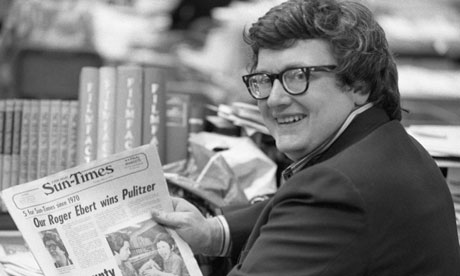
Everything started with Roger Ebert. The only reason I knew to start watching the films of a
director named Martin Scorsese is because Roger Ebert wrote so lovingly of his
work. When I was eleven years old, I began reading Ebert's reviews. I quickly
became a compulsive viewer of Ebert & Roeper, setting my VCR to record the
program every Saturday night. And his work became an indelible part of my life.
I would wait by my computer on Thursday nights, counting down the minutes until Ebert’s
reviews of the new releases would trickle in.
In April of 2002, I remember breathlessly reading his four-star review
of Changing Lanes, a film I was
eagerly anticipating, and I rejoiced in the fact that Ebert thought it was a four-star
film.I rushed to see Changing Lanes opening weekend, and it
is one of the first instances where I can recall going to see the movie with
Ebert’s words in my mind as I watched it. Leaving the cinema, I was alive with
excitement, to know that I felt the same way Ebert did. It was in that way that
I first came to feel like a member of a film society.
I started seeing certain types of films that hitherto I had only
examined with curiosity at video stores or seen in giant advertisements in
newspapers. I felt almost too young and too unsophisticated to approach many of
the great works of cinema, but Ebert’s reviews brought these giant films down
to earth for me. In 2002 and 2003, I made ventures to see films such as City of God, Owning Mahoney, Raising
Victor Vargas, Nowhere in Africa
and The Quiet American in Austin
cinemas. This was back when many of the larger multiplex cinemas in Austin –
the Gateway and the Westgate, specifically – would screen art-house films for a
few weeks alongside the other major releases. It’s telling that the world Ebert
introduced me to – a world where American
Splendor played alongside American
Wedding at the Gateway in 2003 – would eventually morph into a world where The Descendants was banished to mostly
“art-house” screens only years later.
A few months before I turned twelve, I began writing weekly film
reviews for The West Austin News in April of 2002. Only weeks later, my father
passed away. I don’t think I knew how to deal with that kind of pain at such a
young age, and I believe I ran away from it by immersing myself in movies more
than ever. Through his criticism, Ebert acted as a kind of guide into this new,
frightening world that I was entering.
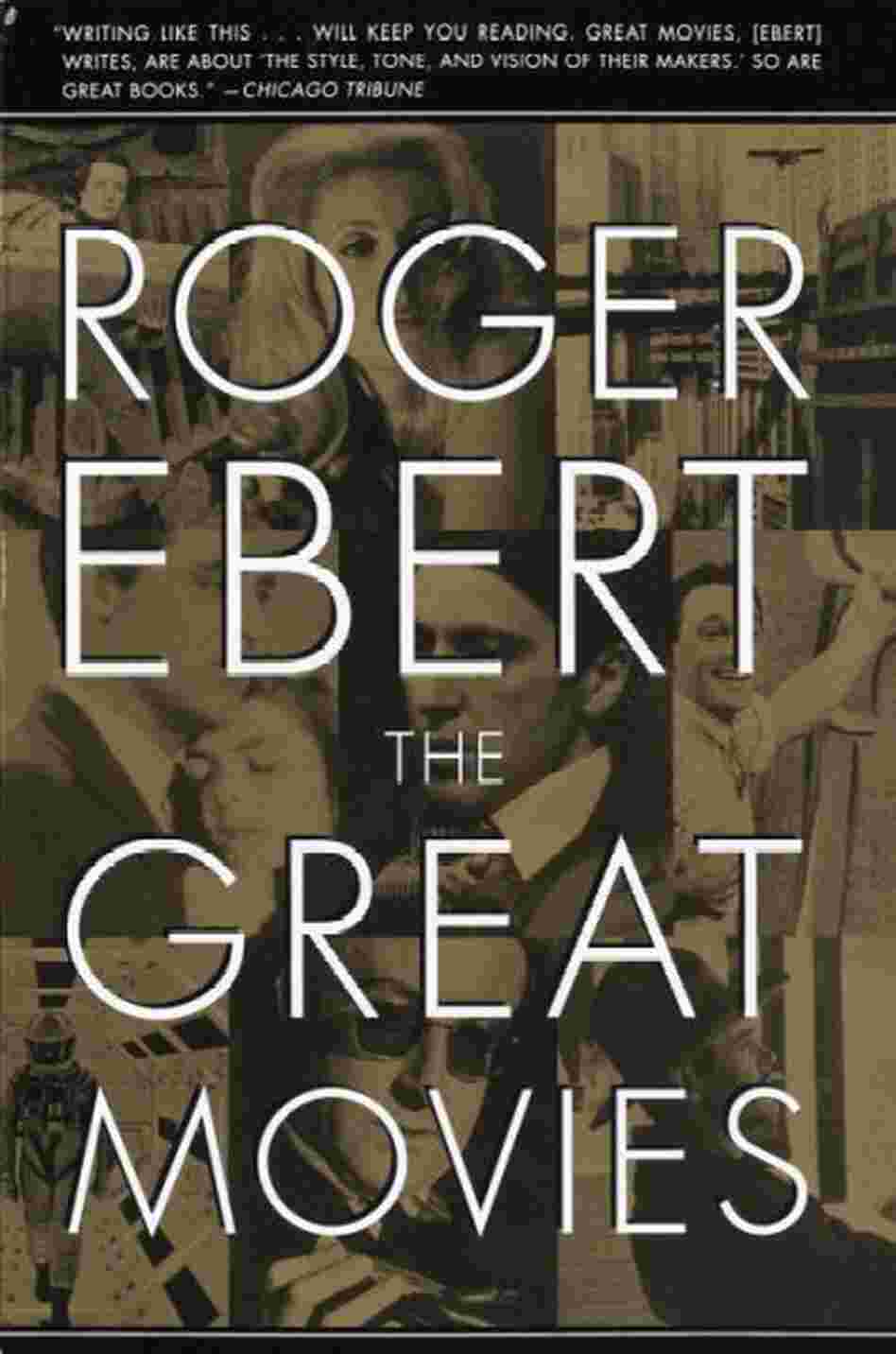
I religiously watched my way through Ebert’s Great Movies list, and I can proudly tell you his favorite film from every year he worked as a critic
(for many of the years, I can even recite his entire top ten list by memory).
On my computer, I bookmarked every list I could find from both Siskel and Ebert
(their end-of-the-decade top ten lists are especially worth obsessing over).
I bought Ebert’s annual Movie Yearbooks and read them
compulsively. Whenever I was in the car with my mom, I would bring my copy of
his original Great Movies book with me. As she drove, I read his reviews and
articles aloud – sometimes on a film we had just watched at home the night
before, other times on a film that I was trying to convince her to let me see.
She might argue that a particular film sounded a little too mature for an eleven
year-old, but by reading Ebert’s reviews to her, I was trying to demonstrate
that I was ready to watch these works. I wanted to feel and experience for
myself what Ebert so articulately presented in his prose. Just before my
twelfth birthday, I finally got permission to watch Raging Bull and Goodfellas
for the first time. I can tell you just about everything Ebert has to say about
both films, as I viewed them for the first time almost entirely with his review
in my mind – what to watch for, what certain sections might mean.
On his website, I constantly entered the Movie Answer Man
forum, hoping that Ebert would answer one of my film-related questions (all of
the questions that he answered in his Movie Answer Man column were later
printed and published in his annual Movie Yearbook – and it was my dream to be
included in one).
As a 'film critic' in the Austin circuit, I was invited to advance
press screenings days or sometimes weeks before new films were officially
released in theaters, which meant I would have to form an opinion on my own
without first consulting Ebert, which was a large step for me as a critical
thinker. Days after finishing my own review, I would read Ebert’s piece
when it was published, and I was always giddy when he felt the same way I did
about a film. My
first official press screening as a film critic for the West Austin News was
for Adaptation in December of 2002. I
thought it was one of the best films of the year, and I hoped Ebert would agree
with me. Just days later, he posted his four-star review, and placed the film
at #3 on his end-of-the-year top ten list.
I was also thrilled to discover that Ebert had relationships
with many of the filmmakers he adored, including Scorsese, Werner Herzog and
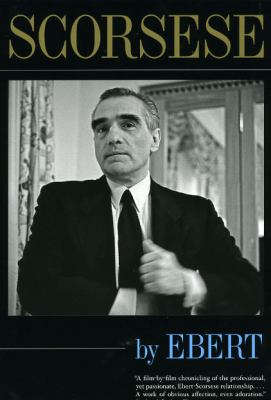
Errol Morris. I’ve read his masterful book “Scorsese by Ebert” more times than
I’d care to mention (you only need to read the inside cover of “Scorsese by Ebert” to see a thank-you letter written by Scorsese – on New York
University stationary in 1970 – to Ebert, thanking him for championing his
work, to get a sense of the personal bond between the two). Even when Ebert
occasionally hasn’t been crazy about one of Scorsese’s works, he still
understands where the piece is coming from and what it means in the context of
Scorsese’s obsessions and concerns as a filmmaker.
I remember being very disappointed that Ebert only gave Gangs of New York three-and-a-half stars
when it was released in December of 2002, as I thought it was the best film of
the year. Richard Roeper agreed with me – but then, in their annual Oscars segment
“If We Picked the Winners” on Ebert and Roeper in early 2003, Ebert said that
he felt he had been too harsh on Gangs of
New York in his initial review – and of the five films nominated for Best
Picture that year, he believed it deserved the Oscar. Ebert was always willing
to look back on a film and reconsider it. He only gave 25th Hour three-and-a-half stars upon its original
release in 2002, but he then placed it in his end-of-the-decade top ten list
years later.
By the way, 2002 was a great year for film, in addition to being a seminal year for me as a growing film fanatic. Ebert’s #1 film of the year was Steven Spielberg’s Minority Report, which was my choice as the year’s second best film. Maybe because it was the first full year where I made a point to see pretty much every noteworthy release in cinemas while keeping Ebert’s books by my bedside table, but I will always remember 2002 as a beautiful year of cinema (About Schmidt, Far From Heaven, Road to Perdition, About A Boy, Punch Drunk Love, The Pianist and Catch Me If You Can were among the other major releases that deeply affected me).
In 2002 and 2003, I tried to seek out every one of Ebert’s picks for the year’s best film from the past decades (in 2002 and 2003 alone, I recall watching, among many other films, Do the Right Thing, Platoon, House of Games, The Right Stuff, Amadeus, Nashville, The Color Purple, Mississippi Burning, JFK, Malcolm X, Hoop Dreams, Being John Malkovich, Dark City, Almost Famous and 2001: A Space Odyssey).
After doing a quick search in my computer, it looks I’ve quoted Ebert or at least mentioned him in at least every other review I’ve written. And there’s no competition – rogerebert.com is the most visited website on my computer by a mile.
“A movie is not about what it’s about, it’s about how it’s about it.”
When you revisit a film after several years, you also revisit Ebert’s review. Most recently, I returned to his Great Movies article on Nashville, one of my favorite films, and it’s impossible for me now to talk about Nashville without mentioning Ebert’s beautiful words on the film. The meaning of the movie itself is tied to his prose – in a sense, without his words, the picture is not really complete.
I came to understand so much about Ebert through his blog
the past few years – including the fact that he was a recovering alcoholic, and that he intimately
understood the teachings of Alcoholics Anonymous (which came across so
understandingly and well in his review and appreciation of last year’s Flight).
I looked to Ebert for his opinion on everything - his writing, both as a film critic and as a blogger, was the most consistently engaging and brilliant work you'd find online. One of the only reasons I’m on Twitter is so I can follow Ebert and Re-Tweet his opinions, reviews and the articles he comes across.
I have to confess that I oftentimes like to pretend I have a
successful movie career, and I invent Roger Ebert reviews in my head – of what
he might say about a film I directed, or in which I acted. This game is immensely satisfying, mostly because I like to think I've read enough of Ebert's work to formulate realistic-souding make-believe reviews in my head. Not that it would likely have ever happened (receiving an Ebert review means you've probably 'made it' as a director, and I'm pretty far from that), but I am now faced with the fact that there's not going to be an opportunity to read an actual Ebert review of one of my films.
Reading his last blog post just two days before his death –
“A Leave of Presence” – I was deeply troubled to read of the return of his
cancer, but I didn’t imagine for a moment that we would lose Ebert. It’s never
registered with me that Ebert would ever cease being.
As I learned of Ebert’s passing at my internship last Thursday, a small part of me died inside. When I open my mouth from now on to
inform someone of the master’s opinion – “Well, Ebert has consistently written
that Nicolas Cage is one of our finest actors…” – my excitement about the
conversation will give way to immense sadness. I’m prone to depressive bouts
with nostalgia, and Ebert, who occupies the role of narrator when I think
about anything related to film, will now be another person tucked into the
past. The voice of reason is gone.
As one of my roommates said, as Ebert dies, so do hundreds of future
films that will be forgotten without his efforts to spotlight and appreciate
them. He championed the films that were forgotten, both large and small, and
was responsible for the careers of many great filmmakers who, without someone
like Ebert behind them, likely would not have achieved a great deal of their
success.
A world without Roger Ebert is something with which I’m not very
comfortable. Gone is the generosity, the warmth and the understanding. I
keep checking his website to see what Roger Ebert has to say about the death of
such a great human being, and it’s only then that I remember. As a 'film
critic,' I am at a loss for words. There are other critics I admire, but none
in whom I can take comfort like Roger Ebert. As an aspiring filmmaker, I
wonder, for whom will we make movies anymore?


 Jumping back and forth between time periods, the movie gives us one remarkable sequence after another, all of which feel organic and thematically connected (and not simply like a greatest-hits of major events from a person’s life, a problem in many biopics.) Just as The Beach Boys seem to be bridging apart while creating Pet Sounds, we get a perfect recreation of the music video for Sloop John B, and the power of this recreation comes not just from the beauty of the song, but from seeing the brothers as comrades – goofy, fun-loving and joyous, playing around in their backyard swimming pool.