Showing posts with label Raging Bull. Show all posts

Wednesday, April 10, 2013

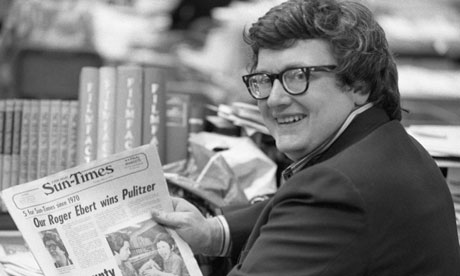
Roger Ebert, 1942 - 2013


Everything started with Roger Ebert. The only reason I knew to start watching the films of a director named Martin Scorsese is because Roger Ebert wrote so lovingly of his work. When I was eleven years old, I began reading Ebert's reviews. I quickly became a compulsive viewer of Ebert & Roeper, setting my VCR to record the program every Saturday night. And his work became an indelible part of my life. I would wait by my computer on Thursday nights, counting down the minutes until Ebert’s reviews of the new releases would trickle in.

In April of 2002, I remember breathlessly reading his four-star review of Changing Lanes, a film I was eagerly anticipating, and I rejoiced in the fact that Ebert thought it was a four-star film. I rushed to see Changing Lanes opening weekend, and it is one of the first instances where I can recall going to see the movie with Ebert’s words in my mind as I watched it. Leaving the cinema, I was alive with excitement, to know that I felt the same way Ebert did. It was in that way that I first came to feel like a member of a film society.
I started seeing certain types of films that hitherto I had only examined with curiosity at video stores or seen in giant advertisements in newspapers. I felt almost too young and too unsophisticated to approach many of the great works of cinema, but Ebert’s reviews brought these giant films down to earth for me. In 2002 and 2003, I made ventures to see films such as City of God, Owning Mahoney, Raising Victor Vargas, Nowhere in Africa and The Quiet American in Austin cinemas. This was back when many of the larger multiplex cinemas in Austin – the Gateway and the Westgate, specifically – would screen art-house films for a few weeks alongside the other major releases. It’s telling that the world Ebert introduced me to – a world where American Splendor played alongside American Wedding at the Gateway in 2003 – would eventually morph into a world where The Descendants was banished to mostly “art-house” screens only years later.
A few months before I turned twelve, I began writing weekly film reviews for The West Austin News in April of 2002. Only weeks later, my father passed away. I don’t think I knew how to deal with that kind of pain at such a young age, and I believe I ran away from it by immersing myself in movies more than ever. Through his criticism, Ebert acted as a kind of guide into this new, frightening world that I was entering.

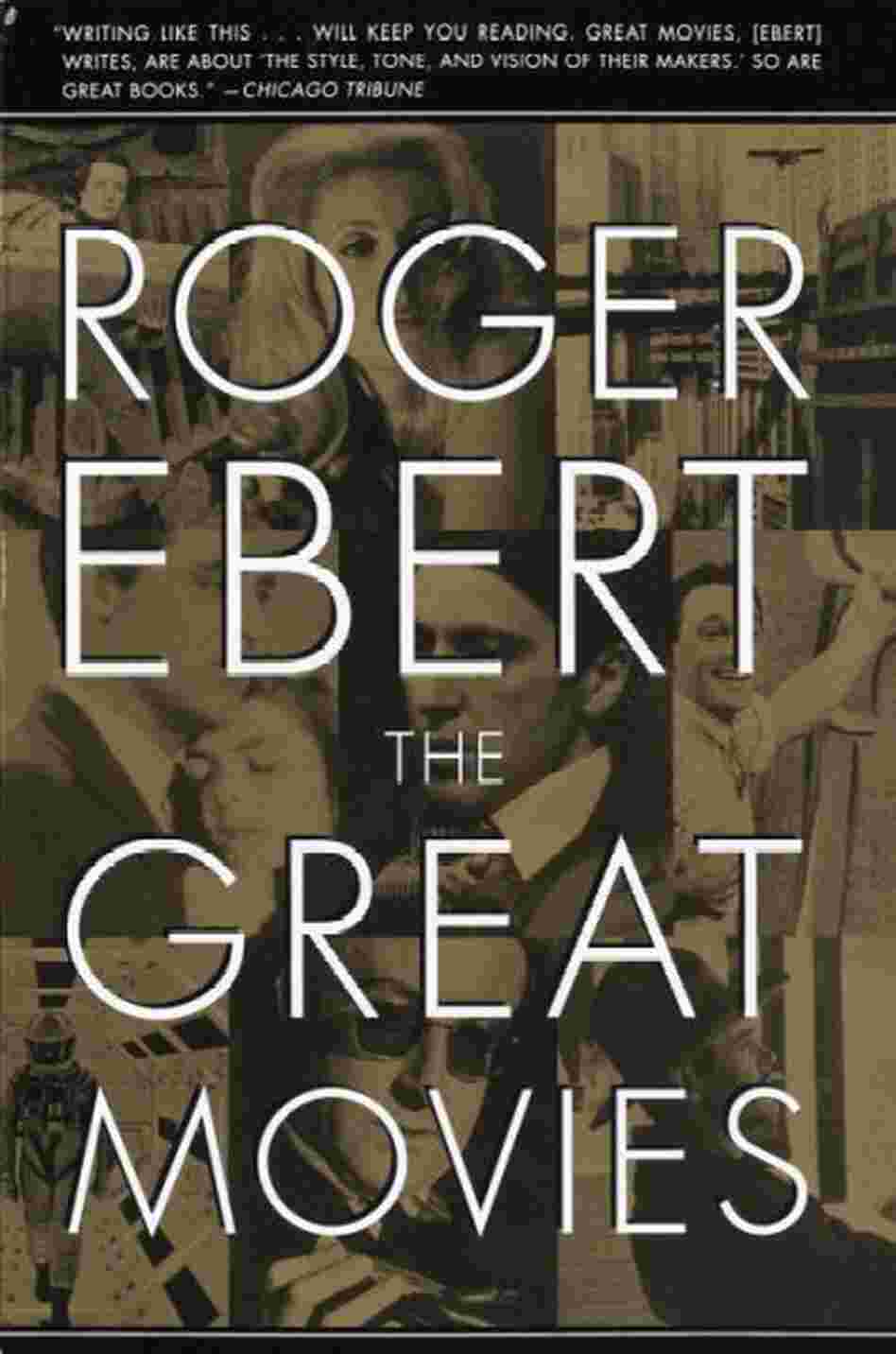
I religiously watched my way through Ebert’s Great Movies list, and I can proudly tell you his favorite film from every year he worked as a critic (for many of the years, I can even recite his entire top ten list by memory). On my computer, I bookmarked every list I could find from both Siskel and Ebert (their end-of-the-decade top ten lists are especially worth obsessing over).

I bought Ebert’s annual Movie Yearbooks and read them compulsively. Whenever I was in the car with my mom, I would bring my copy of his original Great Movies book with me. As she drove, I read his reviews and articles aloud – sometimes on a film we had just watched at home the night before, other times on a film that I was trying to convince her to let me see. She might argue that a particular film sounded a little too mature for an eleven year-old, but by reading Ebert’s reviews to her, I was trying to demonstrate that I was ready to watch these works. I wanted to feel and experience for myself what Ebert so articulately presented in his prose. Just before my twelfth birthday, I finally got permission to watch Raging Bull and Goodfellas for the first time. I can tell you just about everything Ebert has to say about both films, as I viewed them for the first time almost entirely with his review in my mind – what to watch for, what certain sections might mean.

On his website, I constantly entered the Movie Answer Man forum, hoping that Ebert would answer one of my film-related questions (all of the questions that he answered in his Movie Answer Man column were later printed and published in his annual Movie Yearbook – and it was my dream to be included in one).

As a 'film critic' in the Austin circuit, I was invited to advance press screenings days or sometimes weeks before new films were officially released in theaters, which meant I would have to form an opinion on my own without first consulting Ebert, which was a large step for me as a critical thinker. Days after finishing my own review, I would read Ebert’s piece when it was published, and I was always giddy when he felt the same way I did about a film. My first official press screening as a film critic for the West Austin News was for Adaptation in December of 2002. I thought it was one of the best films of the year, and I hoped Ebert would agree with me. Just days later, he posted his four-star review, and placed the film at #3 on his end-of-the-year top ten list.
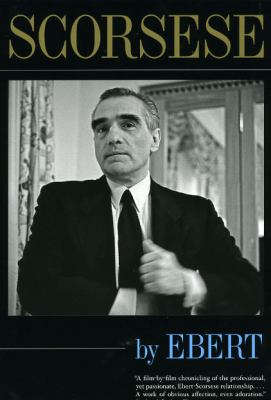
I was also thrilled to discover that Ebert had relationships with many of the filmmakers he adored, including Scorsese, Werner Herzog and Errol Morris. I’ve read his masterful book “Scorsese by Ebert” more times than I’d care to mention (you only need to read the inside cover of “Scorsese by Ebert” to see a thank-you letter written by Scorsese – on New York University stationary in 1970 – to Ebert, thanking him for championing his work, to get a sense of the personal bond between the two). Even when Ebert occasionally hasn’t been crazy about one of Scorsese’s works, he still understands where the piece is coming from and what it means in the context of Scorsese’s obsessions and concerns as a filmmaker.

I remember being very disappointed that Ebert only gave Gangs of New York three-and-a-half stars when it was released in December of 2002, as I thought it was the best film of the year. Richard Roeper agreed with me – but then, in their annual Oscars segment “If We Picked the Winners” on Ebert and Roeper in early 2003, Ebert said that he felt he had been too harsh on Gangs of New York in his initial review – and of the five films nominated for Best Picture that year, he believed it deserved the Oscar. Ebert was always willing to look back on a film and reconsider it. He only gave 25th Hour three-and-a-half stars upon its original release in 2002, but he then placed it in his end-of-the-decade top ten list years later.

By the way, 2002 was a great year for film, in addition to being a seminal year for me as a growing film fanatic. Ebert’s #1 film of the year was Steven Spielberg’s Minority Report, which was my choice as the year’s second best film. Maybe because it was the first full year where I made a point to see pretty much every noteworthy release in cinemas while keeping Ebert’s books by my bedside table, but I will always remember 2002 as a beautiful year of cinema (About Schmidt, Far From HeavenRoad to Perdition, About A Boy, Punch Drunk Love, The Pianist and Catch Me If You Can were among the other major releases that deeply affected me).


In 2002 and 2003, I tried to seek out every one of Ebert’s picks for the year’s best film from the past decades (in 2002 and 2003 alone, I recall watching, among many other films, Do the Right Thing, Platoon, House of Games, The Right Stuff, Amadeus, Nashville, The Color Purple, Mississippi Burning, JFK, Malcolm X, Hoop Dreams, Being John Malkovich, Dark City, Almost Famous and 2001: A Space Odyssey).

After doing a quick search in my computer, it looks I’ve quoted Ebert or at least mentioned him in at least every other review I’ve written. And there’s no competition – rogerebert.com is the most visited website on my computer by a mile.

“A movie is not about what it’s about, it’s about how it’s about it.”

When you revisit a film after several years, you also revisit Ebert’s review. Most recently, I returned to his Great Movies article on Nashville, one of my favorite films, and it’s impossible for me now to talk about Nashville without mentioning Ebert’s beautiful words on the film. The meaning of the movie itself is tied to his prose – in a sense, without his words, the picture is not really complete.

I came to understand so much about Ebert through his blog the past few years – including the fact that he was a recovering alcoholic, and that he intimately understood the teachings of Alcoholics Anonymous (which came across so understandingly and well in his review and appreciation of last year’s Flight). 


I looked to Ebert for his opinion on everything - his writing, both as a film critic and as a blogger, was the most consistently engaging and brilliant work you'd find online. One of the only reasons I’m on Twitter is so I can follow Ebert and Re-Tweet his opinions, reviews and the articles he comes across.

I have to confess that I oftentimes like to pretend I have a successful movie career, and I invent Roger Ebert reviews in my head – of what he might say about a film I directed, or in which I acted. This game is immensely satisfying, mostly because I like to think I've read enough of Ebert's work to formulate realistic-souding make-believe reviews in my head. Not that it would likely have ever happened (receiving an Ebert review means you've probably 'made it' as a director, and I'm pretty far from that), but I am now faced with the fact that there's not going to be an opportunity to read an actual Ebert review of one of my films.


Reading his last blog post just two days before his death – “A Leave of Presence” – I was deeply troubled to read of the return of his cancer, but I didn’t imagine for a moment that we would lose Ebert. It’s never registered with me that Ebert would ever cease being.

As I learned of Ebert’s passing at my internship last Thursday, a small part of me died inside. When I open my mouth from now on to inform someone of the master’s opinion – “Well, Ebert has consistently written that Nicolas Cage is one of our finest actors…” – my excitement about the conversation will give way to immense sadness. I’m prone to depressive bouts with nostalgia, and Ebert, who occupies the role of narrator when I think about anything related to film, will now be another person tucked into the past. The voice of reason is gone.


As one of my roommates said, as Ebert dies, so do hundreds of future films that will be forgotten without his efforts to spotlight and appreciate them. He championed the films that were forgotten, both large and small, and was responsible for the careers of many great filmmakers who, without someone like Ebert behind them, likely would not have achieved a great deal of their success. 

A world without Roger Ebert is something with which I’m not very comfortable. Gone is the generosity, the warmth and the understanding. I keep checking his website to see what Roger Ebert has to say about the death of such a great human being, and it’s only then that I remember. As a 'film critic,' I am at a loss for words. There are other critics I admire, but none in whom I can take comfort like Roger Ebert. As an aspiring filmmaker, I wonder, for whom will we make movies anymore?

A sample of some of my favorite Ebert reviews:

Almost Famous - Original 2000 Review

Minority Report Original 2002 Review


Raging Bull - Great Movies Review

Wonder Boys - Original 2000 Review


Thursday, November 24, 2011

A Boy And His Dreams of the Cinema: Scorsese, Hugo and Me

When watching Martin Scorsese’s new film Hugo, it’s as if my love for Scorsese has come full circle. I first fell in love with him – in obsession with him, really – when I was eleven years old, when I watched VHS copies of Raging Bull (1980), Goodfellas (1990) and Taxi Driver (1976) almost back-to-back. On a visceral and emotional level, I had never seen anything like these pictures. These first encounters with Scorsese occurred only a few months after the death of my father, and in a way, the events are forever linked in my mind. My eyes were opened to a different kind of world – a place where pain, obsession and guilt were always present, and the only way to express this pain was through cinema.


And it is in this way that I looked to Scorsese, really, as a sort of father figure – as a filmmaker who spoke to the fears and obsessions I harbored at a very young age, but also as a filmmaker who understood the excitement and thrilling rush of living. His films are experiential in a way that other movies are not, and I think I recognized early on that no other filmmaker was capable of communicating “an intensity onscreen that matches what [one] perceives/suffers in real life,” as eloquently stated by Chris Hodenfield in his article “You’ve Got to Love Something Enough to Kill It: The Art of Noncompromise.”


On December 20th, 2002, I was a twelve year-old boy sitting bright-eyed, entranced, exhilarated and moved by Gangs of New York on its opening day at the AMC Barton Creek Cinema in Austin, Texas – my first Scorsese film in theaters and a life-changing – yes, an absolutely life-changing – experience. And so with Hugo has Scorsese finally made a film about a twelve year-old boy enveloped by the cinema. And not just a twelve year-old boy, mind you, but a boy with a recently deceased father who seeks emotional satisfaction through the imagination and power of cinema. If there was ever a Scorsese film made just for me, surely this is the one.

My anticipation for a new Scorsese picture is unmatched; I await a new Scorsese movie the same way some anticipate a sort of religious experience. I don’t know if it's truly possible to count the ways Scorsese has influenced every single part of my everyday life, down to the music I listen to daily (The Rolling Stones, Van Morrison) to my beliefs about people, down to the way I experience things, every blink, cut and interpretation of events – not to mention my choice to attend New York University’s Tisch School of the Arts, Scorsese’s alma mater. His work is such a fundamentally important part of my life that there are times when I don’t know how much I originally found similarities between my personal demons and Scorsese’s work, and how much Scorsese’s work ultimately influenced my behavior.


“Movies are the memories of our lifetime. We need to keep them alive.” - Martin Scorsese

Although every one of Scorsese’s pictures is extremely personal – after all, that’s what’s so effective about his films – Hugo may be Scorsese’s most personal film of all. Hugo Cabret (Asa Butterfield), a young boy living in the walls of a Parisian train station in the 1930s, discovers that an automaton left for him by his recently deceased father (Jude Law) may unlock the mystery behind George Méliès (Ben Kingsley), an unhappy elderly man who owns a toy shop in the train station. What Hugo and his newfound friend Isabelle (Chloe Grace Moretz), Méliès’ goddaughter, gradually discover is that Méliès is one of the original pioneers of cinema, the director of over five hundred pictures and a revolutionary filmmaker. However, most of his films are believed to have been destroyed and melted at the rise of World War I, and Méliès, a broken machine without a purpose, resigns from life and fades into obscurity – until Hugo, who understands the pain of having one’s hopes and dreams disintegrate into flames – sets out to restore Méliès’ work.


Ah, film preservation – Scorsese’s most passionate cause, and the real subject of Hugo. The film is all about time, cruel time that batters away at celluloid. As the clocks tick-tock away in Hugo, the memories of our lives are slowly dying, the celluloid burning into ash and the preservation of our past decaying. But how can we let time destroy the magic and power of the cinema, of our memories?

The film gets you caught up in the magic of moviemaking, to the point where the audience gasps in astonishment at the beautiful remaining print of Méliès’ film A Trip to the Moon (1902), screened by film scholar Rene Tabard (Michael Stuhlbarg), who worships Méliès, but, like many, believes him to be dead – until Hugo and Isabelle prove otherwise. Watching Hugo with an audience, there were further gasps of awe when Méliès – in one of the most visually arresting and beautiful flashback sequences I have ever seen – splices together a cut in one of his early films. It had never occurred to me that so many people would not have known the process behind film editing, but there you go.


To say that Hugo is the finest use of 3D technology that I’ve ever seen doesn’t do justice to what Scorsese and cinematographer Robert Richardson achieve with this picture. I don’t particularly like 3D, and yet the visual bravura of Hugo has convinced me that, when utilized by a master filmmaker and treated as an artistic device, it is a major cinematic innovation, on par with the innovations of Méliès and the Lumière Brothers.

This movie is so rich – not just visually, but emotionally – that even after two viewings I am still overwhelmed by it. The performances, from the brilliant and hilarious physical comedy of Sacha Baron Cohen’s Station Inspector, to Kingsley’s nuanced, powerful portrayal of Méliès, are superb. The editing, by the wonderful and loyal Scorsese collaborator Thelma Schoonmaker, is as crisp and exciting as ever.


But in the end, if Scorsese is Hugo, the film preservationist – the boy who restores the magic in a broken machine – then Méliès can be seen as a stand-in for any one of Scorsese’s filmmaking influences whose work he has restored through his Film Foundation, including Michael Powell, Elia Kazan, Luchino Visconti and, of course, Méliès himself. But surely Scorsese knows that, by the end of Hugo, when Méliès takes the stage and tearfully acknowledges Hugo before a screening of his restored work, that it’s impossible for someone like me to look at Méliès, the great innovator of cinema, without thinking of Scorsese, the wise master of filmmaking who influenced me.

This is the work of a master at the height of his cinematic powers. People who truly love film have, picture after picture, said this exact same thing about Scorsese many times. We said it when The Aviator (2004) soared as the most ambitious, energetic and entertaining Hollywood biopic in years. We said it when The Departed (2006) was no less than the great American tragedy of the 2000s, a masterful return to the gangster picture that held us captivated in our seats. And we’re saying it again for Hugo, a movie that has been surrounded by so much negativity from the first announcement that Scorsese would direct a 3D picture – as if the world’s finest filmmaker, who has never made anything short of a great film, wouldn’t find a way to discover the art in 3D technology and take it to an entirely new level – and not only that, but do it with his most passionate cause as his subject material.


My loyalty to Scorsese is boundless, and I’ve suffered through the lows – throwing things at the television when he unfairly lost Best Director Academy Awards for Gangs of New York and The Aviator to inferior films, listening to pseudo-intellectual hipsters knock on the brilliance of Shutter Island (2010) – and I’ve been with him through the highs. And let me tell you, there is nothing that feels as wonderful as watching the artist you love and defend your entire life receive the praise and admiration he so richly deserves, squashing the cynicism of those who feel his time has past. This is his time. George Méliès, step aside for another master of cinema. Martin Scorsese, take a bow.

Thursday, May 13, 2010

Just When You Thought I'd Have Nothing More To Say On Scorsese...

Note: The following piece is an essay I wrote for my fifth and final progression paper for my class Writing the Essay: Art and the World at New York University's Tisch School of the Arts. Thank you to my terrific professor, Ms. Olivia Birdsall.

In the climatic bloodbath of the film Taxi Driver (1976), deranged taxi driver Travis Bickle (Robert De Niro) enters a Manhattan whorehouse and murders three men in his attempt to save the twelve-year-old prostitute Iris (Jodie Foster). After first murdering the pimp Sport (Harvey Keitel) on the steps of the apartment building, Travis ascends upstairs into the hellish apartment building and simultaneously descends into madness. The color in the frame is desaturated, lending a sickening, ethereal nature to the whorehouse. The rooms appear so grimy and filthy that the audience actually wants Travis to clean up the mess, despite the fact that Travis is acting on his own delusions. As an armed man shoots Travis from behind, our experience of the violence is heightened by extreme slow motion; we see the violence the same way Travis sees it. Finally, as Travis busts into the room where Iris is entertaining a client, Travis murders the client and exhaustedly collapses on the couch in the room. He puts his gun to his neck and pulls the trigger, but there aren’t any bullets left. As Travis drops the gun and lies back on the couch, bloodied and wounded and drenched in blood, the camera looks down upon him using the Priest’s Eye View angle – a camera angle more or less invented by director Martin Scorsese, the angle at which a priest would look down upon his congregation – and takes pity on Travis, a fallen antihero, in a scene that is very similar to boxer Jake La Motta’s Christ crucifixion pose upon his defeat in the boxing ring in Raging Bull (1980).

This oddly empathetic ending to Taxi Driver (1976), a film that many have deemed a dangerous and demented picture, defines the personal cinema of director Martin Scorsese, who sees deranged Vietnam veteran and New York City taxi driver Bickle not as a villain necessarily, but as a misunderstood antihero. Traditional Hollywood movies would have Travis die at the film’s end (although surely no traditional Hollywood filmmaker would tackle this subject matter). But Scorsese instead gives Travis a relatively happy ending – after the bloodbath, Travis is finally crowned as a ‘hero cabbie,’ a man who stood up against the filth and scum of the New York streets. Scorsese ends the film with a reconciliation between Travis and Betsy (Cybill Shepherd), the woman that he loves but from whom he has completely alienated himself (although it should be noted that many critics and theorists debate whether the ending represents Travis’ delusions of grandeur as he lays dying or whether the ending is meant to be taken literally).

The juxtaposition of religious imagery with the scum of New York City street life should come as no surprise to anyone familiar with Scorsese’s youth; raised by working-class parents in the Bowery, Scorsese was surrounded as a child by Catholicism and, before deciding to enter film school at New York University, he considered becoming a priest in the Catholic Church. His encounters with both the church and the mean street life lends itself especially well to stories of guilt-ridden antiheroes paying penance for their behavior in an urban setting. In the case of Taxi Driver, Scorsese broke completely new ground with his story of a non-traditional antihero who walks a fine line between sanity and insanity because, unlike other filmmakers, Scorsese demanded that the viewer empathize and understand things from the antihero’s point-of-view. Many filmmakers before Scorsese had made films about psychotic human beings (Alfred Hitchcock’s 1960 film Psycho comes to mind), but no director had ever followed a delusional character so intimately and intensely as Scorsese. Scorsese’s cinema is a cinema of isolation and loneliness, films preoccupied with the mindset and behavior of God’s lonely man, as Travis Bickle refers to himself. There is nothing particularly heroic about Scorsese’s antiheroes other than that they are human beings and suffer from the human condition.

Scorsese’s preoccupations and values come through in wildly different films in very different ways. In Bringing out the Dead (1999), the story of frazzled, sleep-deprived EMS driver Frank Pierce (Nicolas Cage), Scorsese uses the red cross of the hospital ambulances as symbolism for a holy cross that brings a religious weight to the roles of the paramedics, and therefore every time Pierce loses a patient in the back of his ambulance, he has failed to save his fellow man. Scorsese’s breakout feature, the semi-autobiographical film Mean Streets (1973), is the story of a young hoodlum, Charlie (Keitel) in Little Italy who struggles between his loyalties to the mob and the Catholic Church. Guilt and penance play similar roles in this film as in Bringing out the Dead, as Charlie repeatedly holds his hand over open flames as punishment for his sins – he must test the fires of Hell in order to make sure that he is ready to suffer when the appropriate time comes. Other films, such as The King of Comedy (1983) and the aforementioned Raging Bull and Taxi Driver are primarily concerned with deranged loners and their inability to make a lasting connection, particularly with women. In fact, the overwhelming majority of Scorsese’s works are intensely autobiographical in one sense or another. In the article “You’ve Got to Love Something Enough to Kill It: The Art of Noncompromise” by Chris Hodenfield, Hodenfield remarks that “Scorsese doesn’t mind putting his personal life up on the screen,” evident from the very early stages of his career, as “his first feature, an enhanced student project called Who’s That Knocking at my Door? (1968), was about an intensely religious guy and his struggle with a more worldly girlfriend” (48). Only fifteen years after Who’s That Knocking at my Door?, Scorsese directed the unsettling feature The King of Comedy, a film billed as a dark comedy, but in many ways actually a commentary on Scorsese’s failed relationships with people in general. In the 1983 interview “Martin Scorsese: Who the Hell Wants to Make Other Pictures If You Can’t Have a Relationship with a Woman?” by Roger Ebert, Scorsese observes that “the amount of rejection in [The King of Comedy] is horrifying” and that the movie was made “during a very painful period in [his] life” (56). Scorsese elaborates that “[he] was going through the Poor Me routine” while shooting the movie and now, upon its completion, “there are scenes [he] almost can’t look at” because of their extremely personal nature (56). Ebert asserts that Scorsese’s remark “gives an additional dimension to The King of Comedy, a movie about a man so desperately isolated that even his goals do not include a relationship with another human being,” an observation that holds equally true for Taxi Driver.

But Scorsese is a not merely a unique filmmaker because his movies are often preoccupied with his personal demons (guilt, loneliness, isolation and religious penance); rather, his aesthetic innovations that allow his films to resemble the landscape of the human mind are his most noteworthy achievement. Scorsese has an innate ability to approach tough subject matter and off-putting characters that most traditional filmmakers would villainize and, rather than taking the easy way out, grant his audience an unique perspective and understanding into the minds of his morally reprehensible characters through deliberate camera techniques and aesthetic decisions.

There is a scene in Raging Bull that reveals more about both Jake La Motta and Scorsese than any other scene in the film. La Motta (De Niro), on a losing streak, enters the boxing ring for his final fight with Sugar Ray Robinson (Scorsese refers to this scene as the most horrifying scene in the movie). At this point in the film, his state of mind is in a downward spiral of jealousy – he is convinced that his wife, Vickie (Cathy Moriarty), is cheating on him, and his animalistic behavior has alienated him from everyone he knows, including his best friend and brother Joey (Joe Pesci). Scorsese sets the match in a much larger boxing ring than many of the previous fights, in order to indicate the anxiety and anguish of our antihero and his inability to take control of his destiny. Smoke spreads across the ring, clouding La Motta’s vision and creating a foggy and uncertain atmosphere. La Motta knows, and we know, that he is going down in this fight. And as La Motta is brutally beaten and pummeled in the fight, Scorsese uses several sound cues to heighten the scene’s intensity (and I’m not just talking about the use of melons cracking substituting for the sound of actual punches). At one point in the fight, there are actual sounds of elephants and wild animals roaring and snarling at each other in order to accentuate the raw, animalistic qualities of the boxing. In the background, flashes of light bulbs recall the sound of machine-gun fire, further wounding our antihero in his last major fight.

But most importantly, Scorsese uses disturbing visual imagery late in the scene as Sugar Ray is pummeling La Motta repeatedly. Never falling down, La Motta hangs onto the ropes of the ring, his position recalling the image of Jesus Christ suffering on the cross. Scorsese’s obsession with Catholic repentance is apparent as we see Jake paying penance for his sins, not necessarily because he knows he has destroyed every meaningful relationship in his life, but rather because his self-hatred has consumed him. As he hangs from the ropes, defeated and broken, he shouts at Sugar Ray, “You never got me down, Ray.” Blood pouring from every pore of his face, La Motta is still standing, defiantly and pathetically, consumed by self-hatred but refusing to admit defeat. Scorsese looks down at him from his famous Priests-Eye View, and asks us not to like, but perhaps pity and even understand this violent, raging human being.

Scorsese uses these innovative aesthetic techniques to literally get inside the head of his leading characters because the ‘heroes’ of his films are so conflicted, flawed or sometimes outright unlikable (Raging Bull) or psychotic (Taxi Driver) that without literally putting the audience inside the mind of the character, we might not otherwise be willing to watch this particular antihero. Watching any of these men from afar would be extremely painful, but by placing the audience inside their heads, we understand the psychology behind why they do what they do, even if we end up disagreeing morally with their behavior. That is the key to Scorsese’s films – he doesn’t ask us to like Jake La Motta or Travis Bickle, but he does put the audience in a position where we can see how their mind works.

However, Scorsese is sometimes forced to provide some outside commentary on these semi-deranged characters, as a film completely from their point-of-view would somewhat limit the impact of their socially unacceptable actions. One of the most fascinating stylistic choices in Taxi Driver is Scorsese and screenwriter Paul Schrader’s decision to frame the entire movie within the mind and perspective of Travis, with the exception of two very important scenes. That the actors loosely improvised the two scenes that do not feature Travis points to the fact that it was Scorsese, not Schrader, who wished to show scenes taking place outside of Travis’ mind. The first scene involves Betsy and Tom (Albert Brooks) flirting and chatting in Charles Palantine’s campaign office. The second scene shows twelve year-old prostitute Iris and her pimp Sport slow dancing and enjoying each other’s company in the whorehouse. These two scenes focus on the interaction, more or less, between normal couples, or at the very least couples that are comfortable with one another. This interaction is sharply contrasted by Travis’ awkward and socially unacceptable behavior that results in his inability to form a lasting connection with anybody. With this in mind, it seems that Scorsese somewhat concedes his vision of living inside Travis Bickle’s mind. By giving the audience an outside view of normal, functioning men and women (to some degree, anyway), Scorsese is asking us to contrast Travis’ interactions with Betsy and Iris with their interaction with other males. This is an example of Scorsese as storyteller providing the audience with a necessary juxtaposition that might not be apparent if the story were only to take place from Travis’ point-of-view. Although Scorsese is first and foremost determined to give the audience the experience of living inside Travis Bickle’s head, he sometimes has to step back and give in to standard narrative storytelling in order for us to understand the outside implications of Travis’ behavior.

Given that Scorsese’s films are so immensely personal and raw, it is important to consider his more commercial efforts and their relationship to the rest of the Scorsese canon. Although Raging Bull and Taxi Driver are two of the better-known Scorsese films (the movies that are most closely associated with the name Martin Scorsese), these films were not massive commercial successes at the box-office when first released. Scorsese has reached box-office and populist gold, however, with his “genre” films – the movies he has made with large budgets for major studios that, for the most part, speak to a larger audience than Taxi Driver and Raging Bull. These pictures include Cape Fear (1991), The Aviator (2004), The Departed (2006) and Shutter Island (2010), each of which was marketed successfully into a specific genre category – thriller, biopic, gangster and horror. Because Scorsese’s more personal films are not immediately as popular as these “genre” films, the question begs, does Scorsese compromise his artistic vision for these significantly more commercial films?

In order to properly answer this question, I will look at Scorsese’s latest film, the immensely popular Shutter Island. The movie opens in 1954 as U.S. Marshal Teddy Daniels (Leonardo DiCaprio) steadily approaches an island off the coast of Massachusetts known as Shutter Island, a mental hospital for the criminally insane. Once on the island, Daniels investigates the disappearance of one of the island’s patients while simultaneously attempting to uncover the mystery behind the menacing institution itself. On paper, the material sounds generic enough; however, the ‘twist’ of Shutter Island is that Teddy himself is actually a patient on the island, and, rather than reckon with the fact that he murdered his wife after she drowned their three children, he spins elaborate detective mysteries in his head as a means of avoiding guilt. With this in mind, Shutter Island is actually an incredibly appropriate entry in the Scorsese canon – it’s a film about an alienated, insane man haunted by his past and an exploration of an emotionally disturbed human psyche, deceptively disguised as a run-of-the-mill horror film. In this sense, Scorsese does not compromise his vision at all for the sake of mainstream audiences – he simply uses the guise of a popular genre to further explore his obsessions and preoccupations. Shutter Island is an unlikely companion piece, then, to Raging Bull and Mean Streets, as all three films revolve around men who, unable to cope with an overwhelming guilt, force themselves into ritualistic behavior that frees them from their guilt but also traps them in a heightened state of insanity.

That Scorsese’s obsessions consume any work that he creates – be it a genre movie intended for the masses or an intensely personal and autobiographical story – indicates that Scorsese has a need to creatively manifest his inner demons into his work, almost as a means of emotional survival. As Hodenfield observes in his article, Scorsese’s immediate aesthetic goal in any particular scene is to “create an intensity on screen that matches what he perceives/ suffers in real life” (48). The implication in this article is that Scorsese can only communicate through film, as his communicative and social skills, while perhaps not as brazenly unacceptable as the behavior of Travis Bickle or Jake La Motta, are not sufficient means through which he can express himself and, most importantly, allow other people to understand him. As Ebert notes, Scorsese oftentimes finds himself so desperately alone and unable to make a lasting connection with another human being that he retreats to his studio and pours his loneliness into the only friend that has consistently comforted him from the very beginning – the medium of film. Scorsese’s movies, then, can be viewed as stories about men who aren’t lucky enough to have the medium of film at their immediate disposal through which they can channel their isolation and torment, instead of resorting to animalistic behavior.

The artistic process is commonly referred to as a form of therapy for the artist and creator, but for Scorsese, it’s something even more intense. In fact, his artistic process is not that much different from the ritualistic behavior of Teddy Daniels in Shutter Island. You’d think that after forty years of making movies, Scorsese would allow himself to take a break every once in a while, but, as Shutter Island proves, he is still out there, obsessively retelling his story in new and different ways, furiously searching for an answer that may only exist in the films themselves.

Saturday, October 3, 2009

So We Beat On, Boats Against The Current, Borne Back Ceaselessly Into The Past...

It's a tough thing attempting to explain the unbearably painful and heartbreaking past two weeks, during which I haven't written a single entry. My heart goes out to the Goode family, in memory of their loving and wonderful son and brother, James Lawrence Goode, 1995-2009.

He was my little film friend. I say that because, as an only child, I have for years imposed my taste for great and obscure cinema on friends and family who really could not have cared less. I first met Jamie Goode nearly two and a half years ago, but I don’t believe I really knew him until the beginning of this past summer, when I was able to spend nearly every day with him and his wonderful sister, Anne. I noticed we had something unusual in common when one day Anne and I picked him up from a friend’s house, and he displayed to us his list of the one hundred finest movies ever made.

This occurrence made me very excited. I studied his list endlessly, compared it to my own, and wrote him a list of film recommendations that I believed to be ‘essential viewing.’ Jamie and I, it seems, both shared the obsession of making lists – top ten movies of the year, top ten favorite actors, twenty-five worst movies of the past five years, you name it.

I remember when Jamie, Anne and I stayed up late one night at her house and watched the great movie Raging Bull (1980, Martin Scorsese). Did I ever believe in my mind that it might not be a wise idea for a thirteen year-old boy to watch such a brutal movie? Jamie answered that question for me almost immediately. He would not watch films such as Raging Bull or Goodfellas (1990, Martin Scorsese) and comment on the awesomeness of the violence and rough language; instead, he would talk about the movie in the way a seasoned film critic might talk about the movie – elegantly, with careful attention to everything that made it great and enjoyable.

His comments were not the words of a typical adolescent craving to see an R-rated movie. These were the words of an incredibly mature young man who understood film as literary geniuses might understand literature and poetry.

I cannot emphasize enough Jamie’s ability to unassumingly enter a room of young adults six and seven years his senior, and carry on an intelligent, informed conversation on topics as varied as politics, film and religion for hours. Never once did anyone find it odd that a fourteen year-old boy just out of junior high was hanging in the company of college students.

How do you surmise the entire life of such a human being in a mere obituary? How can the impact and beauty of the life of Jamie Goode be trimmed down to a small article? The truth of the matter is, you could write five hundred textbooks on Jamie Goode, and it still wouldn’t be enough. There could be five hundred textbooks written on my late father, John Kyser, too, and it still wouldn’t even begin to hint at what it was like to know him, to love him.

I wish there had been some sort of foreshadowing that would have prevented Jamie’s death from happening. I went to sleep peacefully last Sunday night, and I remember saying to my roommate in the dark that I was going to sleep very well that night. The next time I opened my eyes, it was to see that I had missed eleven calls on my cell phone. Sometimes death waves a warning flag before he strikes. Not this time.

If I ever have a son, I hope he is one-fourth of the man Jamie Goode was. Is. It is a testament to his indescribable character that I only knew him for such a brief period of time, and yet he feels like the younger brother I never had.

No, we can never resurrect Jamie by writing endlessly about him, because it will never be enough, it will never fully measure the weight of his impact. But Jamie Goode will be remembered. Sixty years from now, his friends will meet at a restaurant and laugh about Jamie’s sense of humor, his indelible intellect, and his endless love and kindness toward his friends and his family. It’s never been the same ever since we lost Jamie Goode, they’ll say, and indeed, it will never be the same. But make no mistake, Jamie will influence the future just as much as he has influenced the past. Nobody will ever forget.

Why did Jamie Goode have to be taken from us? Nobody will ever know. In the words of The Band, “I swear by the mud below my feet, you can’t raise a Cain back up when he’s in defeat.”

Saturday, August 22, 2009

The Auteur: Martin Scorsese

In honor of my cinematic hero, auteur filmmaker Martin Scorsese, I am posting a lengthy essay I wrote about Scorsese, his magnificent films and his influence on me. The paper was written specifically for a Visual Media class I took my junior year of high school. No, today isn't his birthday, but it is the day after Paramount Pictures announced that his latest project, Shutter Island, is being pushed back from an October 2nd release date to next February. Not only does this move my most anticipated film of the year back four months, it also knocks Shutter Island out of this year's Oscar race. Alas, I am very saddened by this news.

Filmmaker Martin Scorsese is the greatest living American director. I won’t hide the fact that I absolutely worship Scorsese and his repertoire of timeless American cinema - the flurry of images, whiplash editing spiraling onscreen from the great Thelma Schoonmaker, his incessantly giddy use of popular music, the intensity with which each shot is prepared and executed - this man is filmmaking.

Above all, the man reveals truths about the human condition that both appall and fascinate me – I could not initially understand why I identified with Travis Bickle (Taxi Driver, 1976) or Jake La Motta (Raging Bull, 1980) but I was nevertheless awestruck by his wizardry in creating sympathy for so many violent and self-loathing characters. Scorsese could easily be called the savior of the antihero; indeed, his films often feature lead protagonists balancing the line between sanity and insanity.

When I think of Scorsese, I think of the great moments that make up his films: Jake La Motta (Robert De Niro) punching the prison walls and beating his head against the stone in agony near the end of Raging Bull; Travis Bickle (De Niro), soaked in blood, staring at New York police officers while pathetically placing his index finger against his head pulling an imaginary trigger in Taxi Driver; Howard Hughes (Leonardo DiCaprio) staring at his tortured image in the mirror as his obsessiveness leads to his demise in The Aviator (2004); the slow-motion, drenched-red entrance of Johnny Boy (De Niro) to Jumpin’ Jack Flash by The Rolling Stones in Mean Streets (1973); and, most recently, the shocking elevator confrontation between Billy Costigan (Leonardo DiCaprio) and Colin Sullivan (Matt Damon) in The Departed (2006).

Scorsese has crafted a superb cinematic niche involving conflicted, alienated lead characters who often resort to shocking violence as a means of being ‘accepted’ into a certain society. The morality of these characters is another recurring Scorsese thematic idea; originally interested in joining the Catholic priesthood, Scorsese uses religious undertones and motifs throughout his works, often unintentionally. Note the Christ-like poses that Frank Costello in The Departed and La Motta in Raging Bull emulate upon their ultimate defeat, not to mention the obvious symbolism in The Last Temptation of Christ (1988).

Scorsese’s first masterpiece, Mean Streets (1973), is the story of conflicted New York hoodlum Charlie (Harvey Keitel) and his Catholic guilt as a sinner doomed for Hell. His penance comes in the symbolic representation of Johnny Boy, his dimwitted cousin who owes money all over town. Ultimately, Charlie’s attempts to escape this immoral world are undermined by the chaos caused by Johnny Boy.

Especially interesting in the film is Charlie’s repeated use of flames to burn his finger – as if he were testing the fires of Hell to assure himself that he will be ready for his judgment day. The opening lines of Mean Streets – "You don’t pay for your sins in church. You do it on the streets. You do it at home. The rest is bullshit and you know it." – allude to the eventual penance that Charlie must face in the form of Johnny Boy. Scorsese also prominently features one of his most infamous camera angles – the so-called Priests-Eye View, which is not quite a Birds-Eye View shot but, rather, the angle at which a priest would look down upon his sinners.

The visual aura of 1970s New York City – the filth, the scum, the crime – serves as a microcosm for the hell in which many of Scorsese’s antiheroes find themselves spiritually. Certainly used as a visual imprisonment for the hustlers and hoods of Mean Streets, New York City is even more central in the narrative of Taxi Driver (1976), where disillusioned Vietnam veteran Travis Bickle becomes obsessed with the idea of saving angelic women from the evil scum of New York. The whores, junkies, pimps and hustlers all serve as symbols of filth to Travis, and as his nights become lonelier and lonelier, his obsession grows deeper with rescuing women who don’t necessarily want to be rescued - a thematic ode by Scorsese to John Ford’s The Searchers (1956).

Taxi Driver is astounding because the film disturbingly depicts the alienation and social ineptitude of the post-Vietnam generation. When Travis goes too far – shooting down a whorehouse in an attempt to save prostitute Iris (Jodie Foster) from her pimp Sport (Harvey Keitel) – we are shocked not only because he went there, but most importantly because we went there with him. His delusions of heroism become our delusions.

The film was only the beginning of Scorsese’s obsession with social misfits. After the release of Raging Bull, audiences complained that the antiheroes of Scorsese films were often too violent and brutal for audiences to sympathize with them. His response? The brilliant, under-seen The King of Comedy (1983), where pathetically fame-hungry Rupert Pupkin (De Niro) kidnaps late-night comedy show host Jerry Langford (Jerry Lewis). The picture is one of the darkest comedies ever made, as Pupkin's disastrous behavior is eerily similar to the anti-social quirks of Travis Bickle. The King of Comedy doesn't have any explicit violence, but it retains Scorsese's mark - the story of an outsider desperate to be a part of a particular society.

Raging Bull may be Scorsese’s greatest achievement. His idea of placing the camera inside the boxing ring – a technique thought absurd by generic boxing pictures such as Rocky (1976, John G. Avildsen) – added an intensity and personal brutality that locks the audience within the blood, sweat and tears of Jake La Motta. From the astounding editing by Schoonmaker to the 1940s soundtrack of Italian favorites, this picture is widely considered one of the ten best films ever made. The ending sequence – as La Motta recites Marlon Brando’s lines from On the Waterfront (1954, Elia Kazan) in a pathetic attempt to bring Shakespearean tragedy to his misery – is as powerful an ending as any motion picture in history.

Scorsese, however, was still generalized as a ‘male-picture’ director who could only work within the confines of an extremely violent piece of material. The antithesis to this argument was presented very early in Scorsese’s career, with his masterful Alice Doesn’t Live Here Anymore (1975), which won a Best Actress Academy Award for star Ellen Burstyn. The film opens with a beautifully tinted color stock intended as an homage to the opening scenes of The Wizard of Oz (1939), and features fine supporting performances from the male costars, including Kris Kristofferson and the brilliant Harvey Keitel.

The personal life of Martin Scorsese sheds a great deal of light onto his cinematic career. Diagnosed with severe asthma as a child, Scorsese was unable to participate in any athletic activities, leaving him with two sanctuaries: the Catholic Church and the local movie theater. Growing up in Little Italy, Scorsese was inspired predominantly by the Neo-Realist Italian filmmakers of the 1960s, endlessly influential in his early works as a film major at New York University's Tisch School of the Arts. His first feature film after countless short movies, Who’s That Knocking at my Door? (1969), was a semi-autobiographical feature on growing up in Little Italy. The film also marked Scorsese’s first collaboration with Harvey Keitel, who would later serve as Scorsese’s cinematic alter ego in Mean Streets.

After the fall of the Hollywood studio giants in the 1960s, independent-spirited renegade filmmakers like Scorsese, Francis Ford Coppola, Robert Altman and Sidney Lumet revolutionized cinema in an unprecedented fashion. Because of the emergence of the American auteur, 1970s cinema remains unparalleled in the complexity and brilliance of it's films. Scorsese especially astounded audiences with his deeply personal sagas of alienated New Yorkers.

But his experimental work in the 1980s was equally compelling, dabbling in the mainstream with The Color of Money (1986), infuriating right-wing Christians with the highly controversial The Last Temptation of Christ (1988) and further exploring the mean streets of New York with After Hours (1985).

Based on the novel by Nikos Kazantzakis, The Last Temptation of Christ presents Jesus Christ (Willem Dafoe) as conflicted and subject to temptation. Despite being a clear work of fiction by a devout Catholic, the film was banned in many regions for presenting Christ as human and flawed. I’d personally like to think of the film as a companion piece to Scorsese’s earlier efforts. There is an undeniable connection between characters as varied as Travis Bickle, Jake La Motta and Jesus Christ – they all fit into the imperfect antihero mold.

In The Last Temptation of Christ, Scorsese does some of his best work. The film earned him a second Best Director Academy Award nomination (his first being in 1981 for Raging Bull) and is as epically scoped as any Scorsese picture. Every gorgeous frame begging for attention and packed with imagery and symbolism (take special notice of the birds), this picture may very well be Scorsese’s best-looking film. The parallels between Judas (Harvey Keitel) and Joey La Motta (Joe Pesci) in Raging Bull are unmissable. Keitel, by the way, is riveting as Judas.

But the journey of the tortured New York soul is best defined in After Hours, where Paul Hackett (Griffin Dunne) has a rather existential late night in New York City. Never before had Scorsese portrayed New York in a such a bizarre fashion – Paul’s entire experience seems a bit exaggerated and hallucinatory, but that is exactly the intention. Whether viewed as a black comedy or a visually stunning nightmare, After Hours represented a slight departure from the gritty realism of other Scorsese films.

I suppose attention must be paid towards Scorsese’s brilliant, career-defining use of music in his films; no director before him had ever so brilliantly infused popular music as a sort of omnipresent narrator. Mean Streets offers many songs by The Rolling Stones (who, upon viewing Mean Streets, told Scorsese he could use their music free-of-charge for any of his future work) and The Ronettes, whose bubbly Be My Baby is the haunting opening anthem for the street epic. Raging Bull has a classically nuanced soundtrack overseen by Robbie Robertson of The Band (the subject of Scorsese’s incredible 1978 documentary The Last Waltz).

But the crowning champion of Scorsese’s musical madness is Goodfellas (1990); using over forty-two songs throughout the movie (some more than once), Scorsese keeps the tunes coming fast and furiously, most noticeably in the cocaine-fueled final day of freedom for gangster Henry Hill (Ray Liotta), where we feel the high with echoes of Jump into the Fire by Harry Nilsson, Mannish Boy by Muddy Waters, Memo from Turner and Monkey Man by the Stones and What is Life? by George Harrison. The charged camerawork led by the rapidly-changing discography serves as a unique contrast to an earlier scene in the film, perhaps the most powerful, when Scorsese pulls off an infamous tracking shot of Henry leading Karen Hill (Lorraine Bracco) through the backdoors of the Copacabana, set to the tune of Then He Kissed Me by The Crystals. As the world of the underworld nightlife unfolds right before Henry’s eyes, Scorsese pumps up the volume of the music, and what results is perhaps the best scene in any Scorsese film.

I am often asked what my personal favorite Scorsese film is, and I cannot help but heap the most praise upon Goodfellas. Some claim the film is not as deeply personal as Raging Bull and Taxi Driver; in a sense, they are correct, because Goodfellas is about the gangster lifestyle more than the human psyche. But the need to be accepted into a particular society – a theme circulating throughout all of Scorsese’s work – is the dominant subject of Goodfellas; the Italian mafia takes young Henry Hill under their wing and thirty years later spits him out as an aging Mafioso. There is something very shocking about Henry’s betrayal in Goodfellas when he sells out all of his wiseguy buddies to the Witness Protection Program, but also present is a lamentation on having to leave the very circle that raised him. Scorsese comes back to this idea in The Departed, where young Colin Sullivan (Matt Damon) is fathered by notorious gangster Frank Costello (Jack Nicholson) and yet, in a Shakespearean act of irony, assumes his identity as a moral police officer and kills Costello by the film's end.

Casino (1995) is a brilliant film, as well. Betrayal comes in the form of wife Ginger (Sharon Stone) and best friend Nicky (Pesci) for casino manager Sam Rothstein (De Niro) in another piece oddly reminiscent of Shakespeare and the Bible. Even in Scorsese’s most ambitious epics (like Casino or Goodfellas), the focus is on the personal tragedy. Take, for instance, The Aviator, which can be interpreted as either a big-budget, glamorous Hollywood homage or as a personal odyssey of self-destruction and insanity. Knowing Scorsese, I think it’s easy to finger point which one is the correct interpretation.

Critics cite the off-putting violence in Goodfellas and Casino as the detracting factor of the respective films, and yet nobody seems to acknowledge that Scorsese is merely presenting things as he sees them. In the interview Scorsese on Taxi Driver and Herrmann by Carmie Amata, Scorsese says the following: “I hate violence, I’ve never ever been in a fight, although I grew up in a very volatile area. That, by the way, is what I tried to get into Mean Streets. But as much as I hate violence, I know that it’s in me, in you, in everyone and I want to explore it. That means the small violences, too. There are a lot of small violences, too. In Taxi Driver they come through in a lot of the dialogue, like when Bobby [De Niro] and Harvey [Keitel] are talking in the doorway for the first time. They’re playing with each other when Bobby asks him about the young prostitute [Jodie Foster], but there’s a very violent undertone when they talk about doing it with girls. There’s such a degrading violence about the way those two human beings are talking about each other and about other human beings.”

Further on in the Amata interview, Scorsese states the following: “No matter what you’ve learned in terms of dramatic structure and all, you ultimately make a film on your own. No school can teach you how to make a film. In other words, you have to know who you are, or you can’t really have your film mean anything to you, or to anyone else. Knowing who you are is a major necessity, and once you’ve fulfilled that requirement, you’ve got to make a picture the best way you know how and you can’t really think in terms of how to make it palatable for everyone.”

Such a quote is an attribution to the level of personal filmmaking that Scorsese exemplifies. In an age of impersonal direction controlled by money-hungry studios, this interview harkens back to the age in which Scorsese, Coppola and Altman were in charge of the system and created profoundly moving works that worked on meaningful levels. The above quote is in specific reference to Taxi Driver, but Scorsese might
as well have been talking about his 1999 feature Bringing Out The Dead, scripted by Paul Schrader and starring Nicolas Cage in a performance that echoes De Niro’s work as Travis Bickle and Rupert Pupkin. Appropriately, the picture is about a wanderer in the nighttime streets of New York City, EMS ambulance driver Frank (Cage) who is haunted by the ghosts of the souls he couldn’t save. Frank, a failed savior of the night, struggles to stay awake and make connections with living people. He is more successful socially than, say, Travis Bickle, but just barely. Loneliness is never better depicted than in a Scorsese-Schrader collaboration, and the triumvirate of Taxi Driver, Raging Bull and Bringing Out The Dead are direct proof.

Scorsese never fails to bring an added dimension to his films. Even when remaking a seemingly conventional horror film like Cape Fear (1991), he drifts into a flawed character-study analysis that is nothing short of fascinating. In Cape Fear particularly, notice the dimensions he adds to the Nick Nolte character. Who is truly the bad guy in the film? Maybe Max Cady (Robert De Niro), maybe Nolte.

I fear perhaps his most misunderstood film is his 2006 triumph The Departed, which deservedly earned Scorsese his first Best Director Academy Award after countless nominations. Yes, the picture is startling and thrilling within the terms of an engrossing thriller, but more than anything The Departed is a film about two men literally hiding themselves within false personas. It is a film about identity and the very thin line between cops and criminals, and therapists, for that matter. On a side note, the movie is second only to Goodfellas as the fastest 150 minutes ever captured on film.

Perhaps through referencing so many of his films, I can provide an answer as to why I am obsessed with Scorsese and how emotionally attached I feel to his work as an auteur. Certainly, his physical limitations and obsession with expressing oneself through film appeal to my similar case, but even more so, here is a man who talks endlessly about his ideas and seems as unconfident about his work and lifestyle today as he was in 1983.

In the appropriately titled interview Martin Scorsese: Who the Hell Wants to Make Other Pictures If You Can’t Have a Relationship with a Woman? by Roger Ebert, I find myself smiling but also nodding. “The amount of rejection in this film [The King of Comedy] is horrifying,” Scorsese says in the article. “There are scenes I almost can’t look at. There’s a scene where De Niro is told, I hate you! and he nods and responds, Oh, I see, right, you don’t want to see me again! I made the movie during a very painful period in my life. I was going through the Poor Me routine. And I’m still very lonely. Another relationship has broken up. I’m spending a lot of time by myself now. I go home and watch movies on video and stay up all night and sleep all day. If I didn’t have to work I’d sleep all the time. I’ve never had such a long period when I’ve been alone.”

Ebert asserts that Scorsese’s remark “gives an additional dimension to The King of Comedy, a movie about a man so desperately isolated that even his goals do not include a relationship with another human being.” Ebert does, however, come to the consolation that “out of his pain, however, [Scorsese] has directed some of the best films ever made about loneliness and frustration.”

Since that 1983 interview, of course, Scorsese has found further pain and further rejection, but also success and love and children. I admire the man, though, because throughout even his lowest periods he has created artwork out of his tragedy. And his tragedy has been our cinematic reward. As an aspiring artist and active social misfit, I can only hope to accomplish something beautiful out of my personal failures. Because when you combine Howard Hughes minus the aviation, Jake La Motta minus the boxing and Travis Bickle minus the homicidal vengeance, you get something like Martin Scorsese. You also get me.