Showing posts with label The Wheels. Show all posts

Saturday, July 18, 2015

Blood and Thunder, By Sidney Lumet and Upcoming Festivals

I recently had the great honor of starring in my good friend Alex Fofonoff's first feature film, titled Blood and Thunder, which is soon to be released. The production wrapped in May after five months of shooting, and I cannot thank the fine people involved enough for such a great shoot and for giving me the acting experience of a lifetime. I am truly going to miss working on this movie.

I was lucky enough to view a close-to-finished cut of the film last month and again this week, and boy, has Alex made a great movie! I'm incredibly proud to appear in all ninety minutes of this crazy picture.

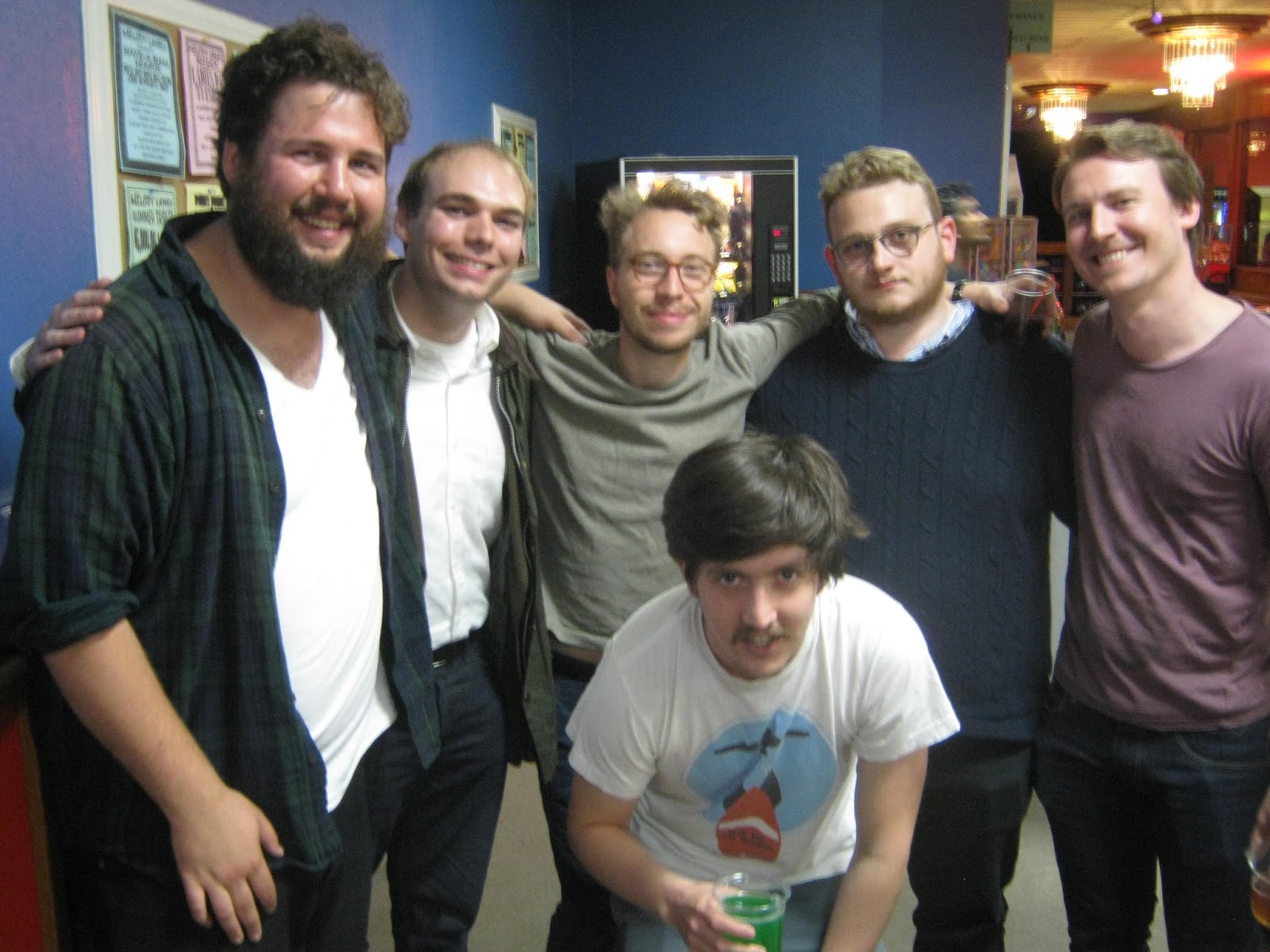
We had our last full day of shooting Blood and Thunder on May 12th, with two big locations: Melody Lanes, a great bowling alley in Brooklyn, and a Brooklyn concert venue, followed by a final day of pick-up shots on May 14th. Leading up to the shoot at Melody Lanes, I had many character research nights at the bowling alley, including many fascinating discussions with Peter, the bartender who acts in the film. He was a terrific scene partner.

We started shooting the picture on the weekend of Friday, December 5th, when the cast and crew drove down to Virginia and stayed two nights at our friend Daniel Hasse's incredible ranch. Interestingly enough, we shot both the very beginning and ending of the picture during those two days. My costars included the great Bristol Pomeroy (as my character's father), Megan Hasse (as my character's sister), and one of the Hasse family's horses.

The next weekend, on December 13th and 14th, we drove up to beautiful Beacon, New York and shot at a variety of great locations, including an antique shop, a candy store, the Beacon train station, an abandoned house, a restaurant and a scenic view by the Hudson River. It didn't hit me until I heard our assistant director say we were shooting Scene 46 that this was one big movie.

We picked back up in January for a very cold and tightly scheduled four-day shoot, where we filmed many exterior scenes in Gowanus and other sections of Brooklyn. This included a night-time murder scene in a scrap yard along the Gowanus Canal, a chilly alleyway scene that nearly froze my co-star Desi Domo and me to death, several scenes inside a Brooklyn motel room, scenes in Sunset Park, several bridges in Brooklyn and exterior shots in Harlem and Grand Central Station. It's the coldest I've been in some time (my character wears the same, not quite warm-enough costume for the entire movie), but these scenes look amazing on camera.

In February, we shot for three more days for a critical party sequence at two different Brooklyn apartments, as well as John F. Kennedy International Airport and several Brooklyn subway stations. The weather was still freezing, but again, it really gives a life to the locations and overall feeling of the picture. By the time we finally shot on a sunny day (in March, our fourteenth day of shooting) in Washington Square Park, I was surprised to get a massive sunburn from being out in the park all day.

We finished shooting in April and May with the aforementioned bowling alley sequences at Melody Lanes (which overall involved three shooting days), as well as one massive sixteen hour-day of shooting in which two critical apartment scenes (from very different points in the movie) were filmed. In total, we filmed for nearly three weeks over the course of several months, and refined performances in rehearsals along the way.

I was so fortunate to get this opportunity from Alex, who wrote a terrific script with me in mind for the leading role, and I felt free to take a lot of chances under his direction (along with the support of so many great actors, including Desi, Bristol, Peter, Megan, Kristin Parker, Pat Dwyer, Ben Kahre, Taylor Myers and more.) The crew, including cinematographer Oliver Anderson, producer Charles Malin, sound mixers Adam Boese and Nick Chirumbolo, assistant director Raven Jensen, production designer Danny Porter and many others, were a delight to work with, as well.

If this picture in any way helps jumpstart an acting career for me, I'd be overjoyed - but even if it doesn't, I'm thrilled I got the chance to show what I can do in terms of performance and carrying a feature film. I think the movie is a better representation of my skills than many other things I've helped make, and I'm very excited for people to see it.

My movie You Can't Put Your Arms Around A Memory will have its official festival premiere at the 9th Athens International Short Film Festival Psarokokalo in Athens, Greece as the only short film from the United States in the International Competition. I'm thrilled for my film to be among the International Competition in Psarokokalo.

Additionally, I recently heard that the movie is an Official Selection of The Hudson Valley International Film Festival in upstate New York, which runs from August 14th - 16th, and an Official Selection of the Black Cat Picture Show in Augusta, Georgia, which runs from August 21st - 23rd at Le Chat Noir.

The Psarokokalo screening will also be in August, and per their website, "for the 9th year, the International Short Film Festival Psarokokalo gathers the best short films from the most important international film festivals (Cannes, Sundance, Rotterdam, Clermont Ferrant and others) which make their debut in Greece." Well, we weren't at any of those festivals, but I'm overjoyed the movie is in such great company!

Here is a link to the Psarokokalo website, and the official list of the International Competition (as well as our film's page on their website - we screen in the Competition 5 section on August 8th), and here is a link to the Black Cat Picture Show's line-up of their Official Selections.

I won't be going to the screening in Greece, but I'll definitely be heading upstate for the Hudson Valley screening, if anyone wants information about the screening date/ time and tickets. The screening schedule can be found here.

In April, You Can't Put Your Arms Around A Memory screened at NYU's First Run Festival at 8:30 PM in Room 200, the largest theater at the Iris & B. Gerald Cantor Film Center. It was fantastic to see my film on such a large screen at Cantor, where so many films were shown during my years at NYU. We had a great turnout for the screening (including lead actor Mike Wesolowski, cinematographer Benjamin Dewey and sound designer Bobb Barito, among many others.)

Check out the page for You Can't Put Your Arms Around A Memory on the First Run Film Festival website here.

I wasn't able to talk about this project for some time, but now that it's out in the open, I'm thrilled to announce that the film on which I've been working as Associate Producer and Assistant Editor, By Sidney Lumet, premiered at this year's Cannes Film Festival in May. Sidney Lumet was one of the greatest of all filmmakers, and I'm overjoyed to be a part of Nancy Buirski's wonderful documentary about him.

After its premiere at Cannes, By Sidney Lumet got its first rave review from The Hollywood Reporter. This was soon followed by a great review and an in-depth interview with Buirski by IndieWire.

With an illustrious crew including editor Anthony Ripoli, special advisor Martin Scorsese and executive producer Brett Ratner, I was deeply honored to have four credits on this great film (in addition to Associate Producer and Assistant Editor, I was also a Researcher and Bookkeeper.) After spending many months in the editing room, it continues to be a joy to work on this movie, and I never get tired of watching it. That's a testament to the fascinating interview footage of Mr. Lumet in the film, and the great archival clips from so many of his masterful films, including Dog Day Afternoon (1975), Network (1976), Prince of the City (1981), Serpico (1973), Before the Devil Knows You're Dead (2007), The Verdict (1982), 12 Angry Men (1957), Long Day's Journey Into Night (1964) and Daniel (1983).

By Sidney Lumet most recently screened at the Jerusalem Film Festival this month, and I'm sure as we continue working on the film, I will have much more to report in the coming months. This is a very special picture.

In April, I had the honor of directing a video for the Dallas Spiders Club sketch comedy group, titled Broken Glass. Look for it online soon! The video stars my good friend Mike Wesolowski (who starred in You Can't Put Your Arms Around A Memory), along with Taylor Frey, Justin Danforth and Shelby Leshine, who are some of the funniest and most talented people I know.

So many of my favorite filmmakers are releasing, or have already released, new movies in cinemas this year. Any time Cameron Crowe puts out a new film, it's a cause for celebration. If you feel at home during his movies (as I do), you'll love his latest one, Aloha, which stars Bradley Cooper, Emma Stone, Bill Murray, Rachel McAdams and Alec Baldwin. I wish more people had seen this wonderful film, which is full of more heart than most other pictures this year. Filmmaker Alex Ross Perry wrote an excellent article about Aloha and the unwarranted criticism of Crowe's recent films, in which he correctly wrote, "I suppose it’s indicative of our rotten, cynical culture, in which the greatest appreciation of things is purely ironic, that Aloha is apparently doomed to play to empty theaters while Vin Diesel movies about flying cars not only make money but also earn the respect and admiration of people who purport to care about cinema."

Critics and audiences did themselves a disservice by shunning this movie, but I'm happy to champion the picture and its wonderful soundtrack (one of many wonderful music moments in Aloha comes courtesy of Fleetwood Mac's I Know I'm Not Wrong.) You can watch my full video review of Aloha in my previous blog post, along with video reviews of Love & Mercy, Inside Out and Avengers: Age of Ultron.

Early this year, two of my favorite directors - Clint Eastwood and Michael Mann - both released great films, one of which was widely seen, while the other didn't get the audience it deserved. Mann's Blackhat is another work of art from the master filmmaker, with shootouts as thrilling as those in Heat (1995) and Public Enemies (2009). It was the first official great film of 2015. Eastwood's American Sniper was deservedly a huge hit (it was technically a 2014 release, and just barely missed my top ten list of the year), and the legendary director's best film since Letters from Iwo Jima (2006). Bradley Cooper is astonishing in the movie, and it's doubly impressive considering Eastwood also gave us Jersey Boys last year. American Sniper is a complex picture that was over-simplified by some critics who were mystified by its success. As The Dissolve beautifully wrote, "It's been heartening to follow the quieter, more rigorous conversation about [American Sniper] among those whose job it is to treat it as a film, not a political talking point. Films mean something, and they deserve better than snap judgments and pre-determined, agenda-serving conclusions."

Manglehorn is a beautiful end to David Gordon Green's Texas trilogy, with an incredible performance from Al Pacino. Green's recent films - Manglehorn, Joe (2014) and Prince Avalanche (2013) - have more personality and rich local flavor to them than anything else out there.

Of the upcoming releases from directors whose work I love, I am most excited for David O. Russell's Joy, starring Jennifer Lawrence, Robert De Niro, Bradley Cooper, Isabella Rosselini and Diane Ladd, and Leonardo DiCaprio and Tom Hardy in Alejandro González Iñárritu's The Revenant. I will also be first in line for Woody Allen's Irrational Man, starring Joaquin Phoenix and Emma Stone, coming out this summer, and Steven Spielberg's Bridges of Spies, starring Tom Hanks and written by Joel and Ethan Coen, coming out in the fall.

Meanwhile, as Noah Baumbach's While We're Young remains one of my favorite movies of the year so far (and possibly my favorite Baumbach film), he already has another film, Mistress America, coming out in August. Two Baumbach movies in the same year means he's likely taking up two of the spots on my end-of-year top ten list.

I could not be more excited for these films - I mean, who cares about the next superhero trailer when you get releases like these from our greatest directors?

Meanwhile, there's The Program, from director Stephen Frears, starring Ben Foster as Lance Armstrong, and Dustin Hoffman. And De Niro, my hero, is also starring in the new comedy from Nancy Meyers, The Intern.

On Saturday, June 27th, I had a nice conversation with Patrick Brice, director of the new film The Overnight, before he introduced a screening of the film at Austin's Regal Arbor Cinema (where I spend most of my time when visiting Austin, along with the Alamo Drafthouse.) It's a very funny film and worth seeing.

I'll write more about many other good films I've seen this year in my next post.

Earlier in July, my dear friend Lucas Loredo and I ventured to see my favorite movie of all time, Martin Scorsese's Goodfellas, on the big screen at Film Forum for its 25th Anniversary in a new restoration. The movie has never looked so glorious - every time I see it, I am astounded by its power and its ability to thrill me.

There have been a number of good articles written on the film for its anniversary, including Richard Brody's article Scorsese's Achievement with Goodfellas from The New Yorker, Filmmaker Magazine's Of Tarantino and TV: The Legacy of Goodfellas, along with a Goodfellas supercut from IndieWire and 24 (or 25) Things You Didn't Know about Goodfellas.

Over the past six months, we've lost a number of wonderful and influential people in the film industry. The great film critic Richard Corliss passed away - Martin Scorsese, Steven Spielberg and many others had wonderful things to say about Corliss, and one of his final pieces was a terrific tribute to Robert Redford for Film Society of Lincoln Center. Here are 25 Great Movie Reviews by Richard Corliss worth reading.

Albert Maysles, one of the greatest filmmakers of all time, died earlier this year, as well. His film Gimme Shelter is one of the finest documentaries ever made, and I had the honor of seeing him at a post-screening reception for Afternoon of a Faun: Tanaquil Le Clercq last year.

We also lost two of the greatest producers of all time, Robert Chartoff (Raging Bull, The Right Stuff, Point Blank, Rocky) and Jerry Weintraub (Nashville, Cruising, Ocean's Eleven); The Simpsons co-creator Sam Simon, whose name appears every time I'm about to watch twenty-two minutes of joyous fun; the filmmaker Francesco Rosi; actor Edward Herrmann (so good in The Aviator, Intolerable Cruelty, The Purple Rose of Cairo and Overboard); David Carr, an amazing journalist and the hero of Page One: Inside the New York Times (2011); legendary actor Christopher Lee; Errol Brown, lead singer of Hot Chocolate (whose music Noah Baumbach uses so winningly in Frances Ha and in the trailer for Mistress America); and actor and playwright Ira Lewis.

Before I take off, here's a link to my Intermediate Narrative film The Wheels, which is now available to watch for free on Vimeo. It was awarded the Best Student Film prize at the 2012 Metropolitan Film Festival of New York, and was an Official Selection of The 2012 Coney Island Film Festival.

The Wheels - A Film By Jack Kyser from Jack Kyser on Vimeo.

Tuesday, April 1, 2014

Philip Seymour Hoffman and The Beginning of a New Year

To your right, you will see the incredible new poster for my film Jake the Cinephile by the endlessly talented Benjamin Dewey. Ben designed the beautiful posters for With Love, Marty and The Wheels, as well, and I was thrilled to have him design this new poster. 

Jake the Cinephile had its film festival premiere on Sunday, March 9th at the Beacon Film Festival (Freeze Frame) in Beacon, New York. I was so honored to screen the film in the Beacon, where we shot all of the movie theater scenes for the film. I travelled up to Beacon for the screening, where I was thrilled to see posters for the festival in many of the store windows along Main Street. Outside the Beacon Theater, they had pictures posted for each film (which you can see in the picture below).

The film screened on its own (rather than part of a short film program), and I was very excited to participate in a Q&A onstage after the screening. I had the opportunity to spend some time in Beacon after the screening, as well, which was great fun.

The festival received some wonderful publicity, including a large story in the Poughkeepsie Journal, where Jake the Cinephile not only received a mention, but the newspaper also featured a picture from the film (see a picture of the article below). The film and I were also mentioned in the Philipstown newspaper in an article about the fourth annual Beacon Film Festival and our film shoot in the Beacon.

If you're in New York City on Wednesday, April 16th, Jake the Cinephile is screening at 8:00 PM as an Official Selection of NewFilmmakers New York's Short Film Program at Anthology Film Archives! It will be very exciting to screen the film at Anthology, which is an incredible screening space. Check out our film's profile on NewFilmmakers New York's website here

On September 23rd, I was honored to screen Jake the Cinephile at Rutgers University for one of its largest audiences yet, as part of a special screening for Professor John Belton's film class. Professor Belton, a brilliant film writer, has been such a champion of this film, and I was thrilled that he not only invited me to screen the movie in his class, but that his entire afternoon lecture was dedicated to screening the film and a Q&A with the class afterward. More than any other screening, I was really amazed by how the movie was received by the students here. It's been fun screening this particular movie (there was even an unofficial sequel made in Yemane Demissie's summer Sight and Sound: Film class - where I screened the movie for the class - that ended up in the Tisch School of the Arts Sight and Sound showcase).

Thanks to our Executive Producer Steve White, we also now have our poster on the Jake the Cinephile IMDB page.

Richie Donnelly, one of my late father's best friends and another Executive Producer of Jake the Cinephile, passed away in December. One of the kindest people I've met, Richie was a loving and supportive presence in my life with his wife Susan Morris. From telling me stories about my father to coming to my plays in high school, Richie's support and love means more to me than I can ever say. I know my dad is overjoyed to see his old friend. Richie's memorial page and obituary can be found here, although how can these brief paragraphs ever begin to capture the beauty of someone like this?

It's been a terrible few months for losing genius talents. Peter O'Toole, one of the finest actors in cinema, brought an intimacy and emotional complexity to a four-hour epic with David Lean's Lawrence of Arabia (1962). Lawrence is unlike any other screen protagonist I can remember, and this was just the first leading role for an actor who would give so many more genius performances. Roger Ebert's 2002 interview with O'Toole is worth checking out. 

Harold Ramis was a master, giving us some of the funniest movies of all time, including Groundhog Day (1993), National Lampoon's Vacation (1983), Caddyshack (1980), Ghostbusters (1984) and Analyze This (1999). I hope his dark thriller The Ice Harvest (2005) is rediscovered. And his performances - from Stripes (1981) to Knocked Up (2007) to Walk Hard: The Dewey Cox Story (2007) - are golden.

The great Lou Reed, Marcia Wallace, Pete Seeger and James Rebhorn (who wrote his own very moving obituary) are among the many other wonderful artists who have passed away in recent months.

I've wanted to write a tribute for some time to one of the greatest actors the world has ever known, but the thought of articulating all of my love and appreciation for this man into one neat article seems impossible. So, I will continue to write about the work of Philip Seymour Hoffman in future posts, as he has changed the world of film and theatre so tremendously that it's impossible to write about great works in either medium without mentioning at least one of his performances.

Not only was Hoffman the finest actor of his generation, he was also an incredibly gracious person. I'll never forget meeting him and congratulating him the week after he won his Oscar for Capote in March of 2006 (this was at the ninetieth birthday party of Horton Foote). His work onstage in the Broadway revival of Death of a Salesman was the most powerful stage performance I've ever seen, and his openness with the Tisch Dean's Scholars when he talked to us last April was inspiring. He was the master. 

I was honored to be have been interviewed for an article on Mr. Hoffman's extraordinary legacy for Newsday, who also published a picture of our Dean's Scholars group with Mr. Hoffman (along with the article itself) in amNewYork. There have been a number of lovely tributes to Mr. Hoffman, including this moving montage of his work on Vimeo, a wonderful tribute by film critic Michael Phillips, a tribute from his Almost Famous director Cameron Crowe, memories from the staff at RogerEbert.com (Ebert always said that he wanted Hoffman to play him in a movie) and even a cartoon from The New Yorker that brings a tear to my eye.

I first became aware of Mr. Hoffman and his incredible range as an actor in 2002, around the time I became a more adventurous theatrical moviegoer. That fall alone, I was amazed by his extraordinary performances in Paul Thomas Anderson's Punch-Drunk Love, Spike Lee's 25th Hour and Brett Ratner's Red Dragon. The following spring, after reading Roger Ebert's rave four-star review of Owning Mahowny (2003), my mom and I sought out the wonderful independent film at the Regal Westgate in Austin (back when Austin multiplexes screened independent films). In the film, Hoffman plays a compulsive gambler, and in any other actor's filmography, this would be their greatest performance. For Hoffman, it's one of many buried treasures that I hope people will continue to discover when delving into his rich filmography.

By that time, I had started watching his brilliant performances in earlier films that were changing my life and still remain among my favorite movies, including Cameron Crowe's Almost Famous (2000) and Paul Thomas Anderson's Magnolia (1999) and Boogie Nights (1997) - not to mention coming to appreciate his hilarious turn in Joel and Ethan Coen's The Big Lebowski (1998), which I had first watched with my dad (who was a Lebowski fan before it was popular, for what it's worth), even more than when I first saw the movie. 

I was overjoyed when he won the Best Actor Oscar for his monumental performance in Bennett Miller's Capote (2005). It was clear, more than ever, that Hoffman was the finest working actor, on par with De Niro, Pacino, Nicholson and Penn and never anything short of brilliant in every single role. In the next few years, audiences were treated to the best of both worlds - Hoffman gave towering leading performances in contemporary masterpieces such as Sidney Lumet's Before the Devil Knows You're Dead (2007), Tamara Jenkins' The Savages (2007), Charlie Kaufman's Synecdoche, New York (2008) and John Patrick Shanley's Doubt (2008), while still remaining the finest character actor alive in Mike Nichols' Charlie Wilson's War (2007), Bennett Miller's Moneyball (2011), George Clooney's The Ides of March (2011) and J.J. Abrams' Mission: Impossible III (2006). 

And then there were his stage performances. I was lucky enough to see Mr. Hoffman onstage twice - in 2009's Othello at NYU's Skirball Center for the Performing Arts, and in Mike Nichols' production of Death of a Salesman on Broadway in 2012. Death of a Salesman left me devastated in a way no live theatre production has in my life. When I met Mr. Hoffman for the second time less than a year ago with the Tisch Dean's Scholars, I was near the end of my own thesis film shoot, and I asked him about the communication and notes shared between actor and director while shooting a film. We were so fortunate to spend time with a genius who has forever changed cinema and theatre.


I haven't mentioned so many of his other wonderful performances - in Cold Mountain (2003), Flawless (1998), Pirate Radio (2009), The Hunger Games: Catching Fire (2013) and, in perhaps his greatest screen role, Paul Thomas Anderson's The Master (2012). Many of the best films of the last twenty years were anchored by Mr. Hoffman's genius, and watching his performances on film and stage influenced me in no small part as an aspiring actor, too. His characters felt so vulnerable and authentic, and losing him feels like a great personal loss to so many people. I don't know how to comprehend a world without Mr. Hoffman. 

Since the heralded premiere of her film Afternoon of a Faun: Tanaquil Le Clercq at the 51st New York Film Festival in October, I have had the privilege of continuing to work as an assistant for Emmy-winning director Nancy Buirski. Her new film, on which I worked as a researcher and production assistant, had three incredible screenings at the New York FIlm Festival.

The distributor Kino Lorber picked up Afternoon of a Faun for distribution shortly after the end of NYFF, and earlier the year, I was fortunate to attend several meetings at the Kino Lorber offices to discuss the release of the film. Here is the official trailer for the movie, which opened on February 5th at the Elinor Bunin Munroe Film Center at the Film Society of Lincoln Center.

In October, we screened Afternoon of a Faun with UNICEF on World Polio Day (October 24th) at the United Nations. Following the screening, Nancy spoke on a panel dealing with Polio in the 21st Century with David Oshinsky, Pulitzer Prize-winning author of Polio: An American Story; Peter Crowley, Global Polio Team Leader; and journalist and U.N. correspondent Irwin Arieff.

Over the holiday break, I discovered that my grandmother, Lucille Kyser, attended the Ballet Russe de Monte Carlo in St. Louis in 1945, 1946 and 1947, which included ballets choreographed by George Balanchine and danced by Alexandra Danilova and Maria Tallchief. Nancy and I were thrilled to share pictures from the original programs to our Facebook followers (as my grandmother still has the programs in her collection after all these years).

On the Monday evening before the film opened in cinemas, there was a wonderful premiere of Afternoon of a Faun at the JCC in Manhattan, followed by a dessert and champagne reception at the home of Richard Lorber. 

On its opening weekend, Nancy was actually out-of-town for the film's International Premiere at the Berlin International Film Festival (also at Berlinale - Scorsese's New York Review of Books documentary). I assisted with the opening weekend Q&As at Lincoln Center, which included talkbacks with Jacques D'Amboise, Randy Bourscheidt and Arthur Mitchell. Among the many ecstatic reviews the film received, my favorites are the rave from RogerEbert.com and Owen Gleiberman's Grade A review in Entertainment Weekly (not to mention Stephen Holden's outstanding review in The New York Times and the San Francisco Chronicle's four-star review). And after two months in theaters, Afternoon of a Faun is still at 100% on Rotten Tomatoes.

On its opening weekend, Afternoon of a Faun topped the Specialty Box Office. "With perfect first positioning by the Film Society of Lincoln Center, Afternoon of a Faun certainly blasted off this weekend - we're all thrilled and getting ready to pirouette into national release in the coming weeks," Gary Palmucci of Kino Lorber said in this article from IndieWire. Since then, the movie has continued to do incredible business.

In early March, I had the incredible honor of serving as an Associate Producer on a two-day film shoot in which Nancy interviewed legendary dancer Jacques D'Amboise. We spent two days in a studio at the National Dance Institute in Harlem listening to Mr. D'Amboise's incredible stories - he is one of the most energetic storytellers around, and I was honored to be a part of this shoot.

In addition to getting its run extended for several weeks at the Elinor Bunin Munroe Film Center, Afternoon of a Faun also opened at Cinema Village on 12th Street later in February. The movie continues to expand across the country as the rave reviews keep coming in - please visit the film's website to check out its upcoming theatrical playdates. Not to overwhelm you with links, but here is Nancy's interview on NPR from February, and her brilliant piece from The Daily Beast on the film and Tanaquil Le Clercq's story. Coming up, Afternoon of a Faun is a Center Frame screening at the Full Frame Documentary FIlm Festival. The film will screen at 4:00 PM this Friday, with Nancy and Jacques D'Amboise speaking after the movie.

On Monday, February 24th, I was lucky enough to attend the Tribeca Film Institute's 20th Anniversary benefit screening of Robert De Niro's directorial debut A Bronx Tale (1993) at the Village East Cinema. After the screening, De Niro participated in an incredible Q&A with the audience. This wasn't the first time I had seen my lifelong hero in person, but as I sat in the second row of the Village East's large auditorium, it was the closest I had ever been to the man who, along with Martin Scorsese, has shaped my life in an extraordinary way.

De Niro had so many words of wisdom, including a response to a question about Method Acting that drew applause from the entire theater. In short, it was a wonderful opportunity to see my hero in person speaking about one of his finest films.


Earlier this year, I was thrilled to support Steve James' new documentary Life Itself, based on Roger Ebert's memoir, which raised money on IndieGoGo. The film was executive-produced by Martin Scorsese and, as a perk of contributing to the movie, I was able to watch it simultaneous to its premiere at the Sundance Film Festival. Life Itself moved me to tears - my heart swelled with love for Mr. Ebert, who changed my life, and I cannot wait to write more about the movie when it receives a theatrical release later this year.

In other recent screening news, my film The Wheels was selected as one of three student films to screen on Friday, March 28th at the NYU Student Film Showcase, presented by The Motion Picture Club at NYU and the Humanities Ambassadors. The event ran from 5:00 PM to 7:00 PM in NYU's Kimmel Center, and it was followed by a discussion of the films and answering questions about the making of these movies. As always, it was a joy to get to screen my work for others.

There's much more to cover in my next blog post, including my thoughts on this year's Academy Awards and awards season in general. Nothing will ever equal seeing The Wolf of Wall Street for the first time with Martin Scorsese laughing uproariously a few rows behind me, but I spent Christmas Day the way any self-respecting Scorsese fan would - taking the family to see this certifiably insane masterpiece again. DiCaprio blows the roof off the theater every time I've seen it, and Scorsese doesn't let anyone off the hook easily. The way the music shifts in the wedding scene alone is genius - from Sharon Jones singing Goldfinger live onstage to the creeping in of Six Mix a Lot's Baby Got Back to the hard cut to Bo Diddley's howlingly devilish Pretty Thing - well, I could go on (which reminds me - here's a dang good list of the year's best soundtracks). But I have to agree with Wesley Morris when he says "it's rare that a tracking shot brings a tear to [his] eye." As Scorsese would put it, the film is big and ferocious.

I'll end by writing that my Advanced Production class was treated to a wonderful dinner at the home of our professor Yemane Demissie in February (I've included some pictures from this evening throughout this post). It was a fantastic meal and a delight to spend time with our mentor as we all complete or near completion of our senior thesis films.

Monday, July 15, 2013

An Introduction to You Can't Put Your Arms Around A Memory

Note: In April, I directed my senior thesis film, titled You Can't Put Your Arms Around A Memory, which received an Advanced Production allotment last fall from the Tisch School of the Arts. In order to receive the allotment, I had to pitch my film to Professor Yemane Demissie and the class in November. The first part of this blog entry is comprised of my pitch for the Advanced Production Workshop class, and the second part is comprised of text from my IndieGoGo campaign to fund the film (which was launched in February).

You Can't Put Your Arms Around A Memory Promo Video from Jack Kyser on Vimeo.

The Pitch

To say that my Intermediate Narrative film The Wheels is auto-biographical would be somewhat accurate. The specific events in the movie never happened, but the film does kind of reflect how I feel about a lot of things, and maybe it represents some of the things I wish I'd said to my father, who passed away when I was eleven from alcoholism. But interestingly, making that film became a way of understanding him, and by the end of it, I actually feel more sympathy for his character than for the son. So, I don't know, maybe that says something about why we make these films.

My new film, You Can’t Put Your Arms Around A Memory, is about Charlie, a socially inept twenty-six year-old who compulsively confesses every detail of his anti-social behavior to his mother, Hazel, with whom he still lives in Harlem. When his mother asks him to finally move out of her apartment, Charlie is forced to confront his greatest fears – losing his only life witness and living in a world without his only friend and confidante.

In the latest version of my script, there is no mention made of Charlie's father, but the implication is there - if his father so easily disappeared from this world (as an older draft stated, aside from an obituary and a few pictures around the house, you'd never know he existed), what's to stop Charlie from being forgotten completely, too? Particularly when the people around him – his girlfriend, members of his family, friends who abandon him – are, as he puts it, dropping like flies? At the end of the day, the only person who knows his life story, who has been a witness for his entire life, is his mother.

The film directly addresses so many of my fears and anxieties - of dying without being remembered, the need to be liked or to impress in social situations, fear of abandonment, the necessity of archiving and preserving memory, and wanting to have someone by your side who knows your entire journey, from start to finish. Psychologically, I'm not sure I can say where all of these obsessions come from. Maybe it is from losing my father, or watching the size of my family dwindle down to just a few people. At the beginning of this semester, about two months ago, my mom's sister, my aunt, passed away, and suddenly all of my worst fears embedded within this script were reconfirmed. If anything, that’s made me feel even closer to the project, and more certain that it expresses something that truly matters to me.

The way that the character in my film, Charlie, handles the loss around him isn't exactly mature. He's a self-obsessed character if there ever was one - crying out for love and attention from friends by acting like a buffoon, and then, knowing his behavior was unacceptable, confessing his behavior to his mother and expecting forgiveness, never once thinking of her struggles.

Along with the other three films I have made at NYU - With Love, Marty (2011), The Wheels (2012) and Jake the Cinephile (2013) - this new film represents part of a cinematic biography, with each of these movies dealing with a different aspect of my obsessions. These are all stories of alienated outsiders and social pariahs, of young men with strong, rigid moral codes, and the films concern their disenfranchisement with a world that doesn't share their values. You Can't Put Your Arms Around A Memory is the culmination of so many of these common concerns and themes.

In With Love, Marty, Marty obsesses over a new romantic conquest every few weeks. His desperate behavior drives his friends away, and his obsessive quest for love culminates in an ill-advised trip across the city to profess his love to a young woman he barely knows. She rejects him, and his night ends in disappointment. The obsessive behavior in The Wheels is the father’s unstoppable drinking – it destroys his relationship with his son, but he can’t seem to help it.

Disappointment plays a large role in these movies. In The Wheels, the son is continually let down by his father, and by the film’s end, he has distanced himself from his dad, not allowing himself to get hurt again. In Jake the Cinephile, Jake prefers watching films to having actual relationships with human beings, because the cinema has never disappointed Jake. When Jake tries to start a relationship with a young woman, his obsessive behavior eventually drives the young woman to throw him out on his feet. To Jake, though, this is simply a re-affirmation of what he already suspected – that people are disappointing and unreliable, and the cinema is his only true friend.

More than anything, though, these four pictures all seem to revolve around characters who are forced to come to terms with their unsustainable way of living. These men are pulled away from their comfort zones and pressured by outside forces to change their way of life. More often than not, however, they eventually retreat back to their original behavior.

When I think about why I've written these pieces, I think about the scene in my Advanced film where Charlie, in an act of desperation to form a connection with someone, goes overboard and starts overwhelming his realtor friend, Jim, with his deepest insecurities and fears. Jim becomes very uncomfortable, and withdraws from the conversation. And I think maybe that's what I'm doing with my work - reaching out and hoping that someone will understand me, or at the very least understand how I feel (without alienating them, hopefully, as Charlie alienates Jim in the film).

So what's different about this new film that I want to make in Advanced Production? If this is the same self-obsessed character making the same mistakes, why make another movie about him? This is what I want to address first.

Working with Yemane in this class has made me even more aware of how my movies deal explicitly with resistance to change. This theme has evolved over the four movies in a significant way. In With Love, Marty, I do believe Marty changes, even if only by a small degree. The Wheels, however, is pretty bleak. The father reverts completely back to his original state by the end of the movie – there is no indication that he will get sober. Jake the Cinephile is trickier. Jake loses both the girl and the cinema, and at the end of the movie, he comes face-to-face with himself for the first time. Is that progress? I don’t know.

Now that I’m aware of this reoccurring theme, however, I’m inclined to do something a little different with You Can’t Put Your Arms Around A Memory. At face value, the ending – in which Charlie moves back in with his mother after being asked to move out – would seem to represent a total retreat back to Charlie’s comfort zone. However, I’ve always viewed the ending a little differently – I think that Charlie has learned how much his mother means to him, and how scary it will one day be for him to let go of her. Rather than moving out, however, I believe Charlie deals with this fear by treating his mother differently at the end of the film, with more care and compassion. Yemane and I have talked a lot about Charlie's journey here, and it's become clear that, although you can't expect Charlie to change radically by the end of the film, maybe we can see a character who is ready to listen to his mother.

Maybe it is unhealthy for mother and son to live together for the years to come. But the end of my Advanced film poses the question, what if they truly need each other? What if Charlie learns, over time, to be there for his mother, as his mother is there for him? There’s a strange sense of comfort, if not hope, in that ending, that I don’t believe exists in the other films. With this movie, I want to work toward a new kind of ending – something that’s still true and perhaps a little melancholy, but one that also acknowledges growth and, perhaps, hope.

Inspiration and Style

I'm going to cross over here to inspiration. With all of this talk of guilt, confession, social anxiety and obsessiveness, there's one filmmaker who I really respond to over any others, and that's Martin Scorsese, who is the king of the cinema of loneliness.

The visual style of Mean Streets (1973) is a big influence on the bar scenes in my movie, not only because they are stylistically similar to what I want to achieve, but also because the beginning chapter of Mean Streets was a major influence on me when thinking of how to introduce my character in my script. In one of the opening scenes in Mean Streets, we follow the protagonist, also named Charlie (Harvey Keitel), through the bar and observe his behavior with his friends. In this scene, Scorsese introduces the camera’s subjectivity toward Charlie, and the bar is also used to represent a world of sin. Look at the way Scorsese follows Charlie steadily as he dances through the bar and makes his way onstage to dance with the woman – this is not totally dissimilar to the kind of subjective camera movement I would like to do in my scene, perhaps when my Charlie walks up to the bar and starts ranting to the bartender, doing his Jack Nicholson impression. We also learn quite a bit about Scorsese’s Charlie based on his interaction with his friends – he’s immediately separated from the rest of his friends because he insists on punishing himself, or testing the fires of hell, by holding his finger above an open flame. We then understand that Charlie exists in a more emotionally conflicted universe than the people around him. We’re introduced to both his physical world and his internal, emotional world.

There are two very different worlds in my Advanced film. The first world, of course, is the world of the bar. It will be drenched in red light – open, spacey and a kind of platform where Charlie can go wild with his behavior. The lighting and production design in this scene will emphasize that we’re looking at this bar as a kind of hell for Charlie (very similar to Mean Streets). This is the world of sin, the world of Manhattan – the world away from his mother. The bar stands in contrast to the later scenes in Harlem.

The other world, of course, is that small, cramped Harlem apartment where he lives with his mother. These two environments will stand apart drastically with the film’s production design, as the apartment will be full of furniture, scattered boxes on the floor, and dirty clothes. My hope is for the apartment to convey a real sense of confession, as if Charlie is in a dark confessional booth, defeated by his own behavior. It is almost as if Charlie, squeezed into that Harlem apartment, is forced to come to terms with his inappropriate behavior, whereas the wide-open bar is a playground, where he is free to act like a buffoon and go wild.

The Campaign – The Crew and Logistics

I'm incredibly lucky to get to work with so many people who have been on my creative team for the past three films, as well. Our incredible crew includes producers Erica Rose and Harry Tarre, cinematographer Benjamin Dewey, sound mixer and sound designer Bobb Barito, and production designer David Jaffe – many of whom did outstanding work on my previous films. (Current Jack here – take a look at Ben’s latest cinematography reel below, which features footage from You Can’t Put Your Arms Around A Memory and The Wheels).

Ben Dewey 2013 Cinematography Reel from Benjamin Dewey on Vimeo.

The Impact

We truly believe that if you help us, you will be part of a great and powerful movie. Without the proper financing, however, the film cannot be made. The costs for film equipment, location fees, transportation, and meals for the cast and crew, among many other things, are overwhelming, and outside financial support is critical to the successful production of this film.

As I’ve been making more movies and working with slightly larger budgets, with each new film I think I’m getting closer to achieving what I want in terms of style. For one, I’m trying to incorporate more and more expressive uses of camera movement. Jake the Cinephile is really where I started dipping my toes into a more subjective, expressionistic kind of filmmaking, experimenting with a moving camera – and that’s what I’m hoping to really embrace and expand on with this new film.

My Intermediate Narrative film The Wheels won the Best Student Film award at the 2012 Metropolitan Film Festival of New York, and was an Official Selection of the 2012 Coney Island Film Festival. The film also received high praise from professors at the Tisch School of the Arts. My previous film, With Love, Marty, was an Official Selection of The 2011 Big Apple Film Festival, the 2012 World Music and Independent Film Festival in Washington, D.C., and the Emerging Filmmaker’s Series in Rochester, NY.

We already have an incredible ensemble of actors line up to star in the film, including Mike Wesolowski, who will play Charlie. Mike is a senior in the Atlantic Acting School at the Tisch School of the Arts, currently studying acting under Alec Baldwin. Mary Goggin, an extremely talented actress who has acted in films such as Little Children (2006), will be playing Hazel.

What We Need & What You Get

We need your help. As you can imagine, as a senior thesis film, the scope of the picture is far-reaching. We truly want this to be a film where New York City itself plays a key character in the story, and so we are shooting in many different locations around the city – including a three-bedroom apartment in Brooklyn, a bar in the East Village, a restaurant to double as the Times Square Olive Garden, another restaurant in the West Village, along with several night exteriors in midtown Manhattan and Harlem.

Our budget includes fees for these extraordinary locations, additional equipment rentals, transportation costs, anamorphic camera lenses, and meals for an entire week of shooting. The shoot begins in a little more than one month, and in that time, we need to raise as much money as possible.

As I head into rehearsals with the actors and continue pre-production with my longtime collaborators, I cannot tell you how much I would appreciate it if you would consider contributing to this campaign. We will not be able to make this film without your help. And if you are among those who were so generous to contribute to Jake the Cinephile last summer, I’m so excited to share that film with you in the very near future.

We are working as hard as we can to make this picture a reality by April. Any donation you can make – however small – would be absolutely incredible. Our deadline is quickly approaching, but with your help, we know that we can make this film. On the right, we have listed the perks for contributing to this production. (Current Jack here - thank you so much for reading about my new film, and lastly, please take a look at our wonderful Steadicam operator Patrick Morgan's reel, which includes footage from You Can't Put You Arms Around A Memory):

Patrick Morgan Steadicam Reel Spring 2013 from Patrick Huw Morgan on Vimeo.