Wednesday, April 10, 2013

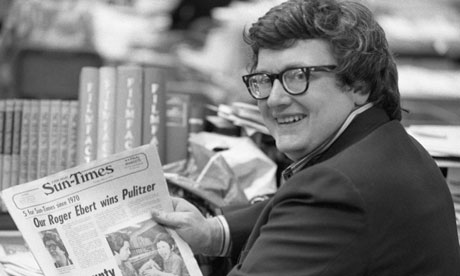
Roger Ebert, 1942 - 2013


Everything started with Roger Ebert. The only reason I knew to start watching the films of a director named Martin Scorsese is because Roger Ebert wrote so lovingly of his work. When I was eleven years old, I began reading Ebert's reviews. I quickly became a compulsive viewer of Ebert & Roeper, setting my VCR to record the program every Saturday night. And his work became an indelible part of my life. I would wait by my computer on Thursday nights, counting down the minutes until Ebert’s reviews of the new releases would trickle in.

In April of 2002, I remember breathlessly reading his four-star review of Changing Lanes, a film I was eagerly anticipating, and I rejoiced in the fact that Ebert thought it was a four-star film. I rushed to see Changing Lanes opening weekend, and it is one of the first instances where I can recall going to see the movie with Ebert’s words in my mind as I watched it. Leaving the cinema, I was alive with excitement, to know that I felt the same way Ebert did. It was in that way that I first came to feel like a member of a film society.

I started seeing certain types of films that hitherto I had only examined with curiosity at video stores or seen in giant advertisements in newspapers. I felt almost too young and too unsophisticated to approach many of the great works of cinema, but Ebert’s reviews brought these giant films down to earth for me. In 2002 and 2003, I made ventures to see films such as City of God, Owning Mahoney, Raising Victor Vargas, Nowhere in Africa and The Quiet American in Austin cinemas. This was back when many of the larger multiplex cinemas in Austin – the Gateway and the Westgate, specifically – would screen art-house films for a few weeks alongside the other major releases. It’s telling that the world Ebert introduced me to – a world where American Splendor played alongside American Wedding at the Gateway in 2003 – would eventually morph into a world where The Descendants was banished to mostly “art-house” screens only years later.

A few months before I turned twelve, I began writing weekly film reviews for The West Austin News in April of 2002. Only weeks later, my father passed away. I don’t think I knew how to deal with that kind of pain at such a young age, and I believe I ran away from it by immersing myself in movies more than ever. Through his criticism, Ebert acted as a kind of guide into this new, frightening world that I was entering.

I religiously watched my way through Ebert’s Great Movies list, and I can proudly tell you his favorite film from every year he worked as a critic (for many of the years, I can even recite his entire top ten list by memory). On my computer, I bookmarked every list I could find from both Siskel and Ebert (their end-of-the-decade top ten lists are especially worth obsessing over).

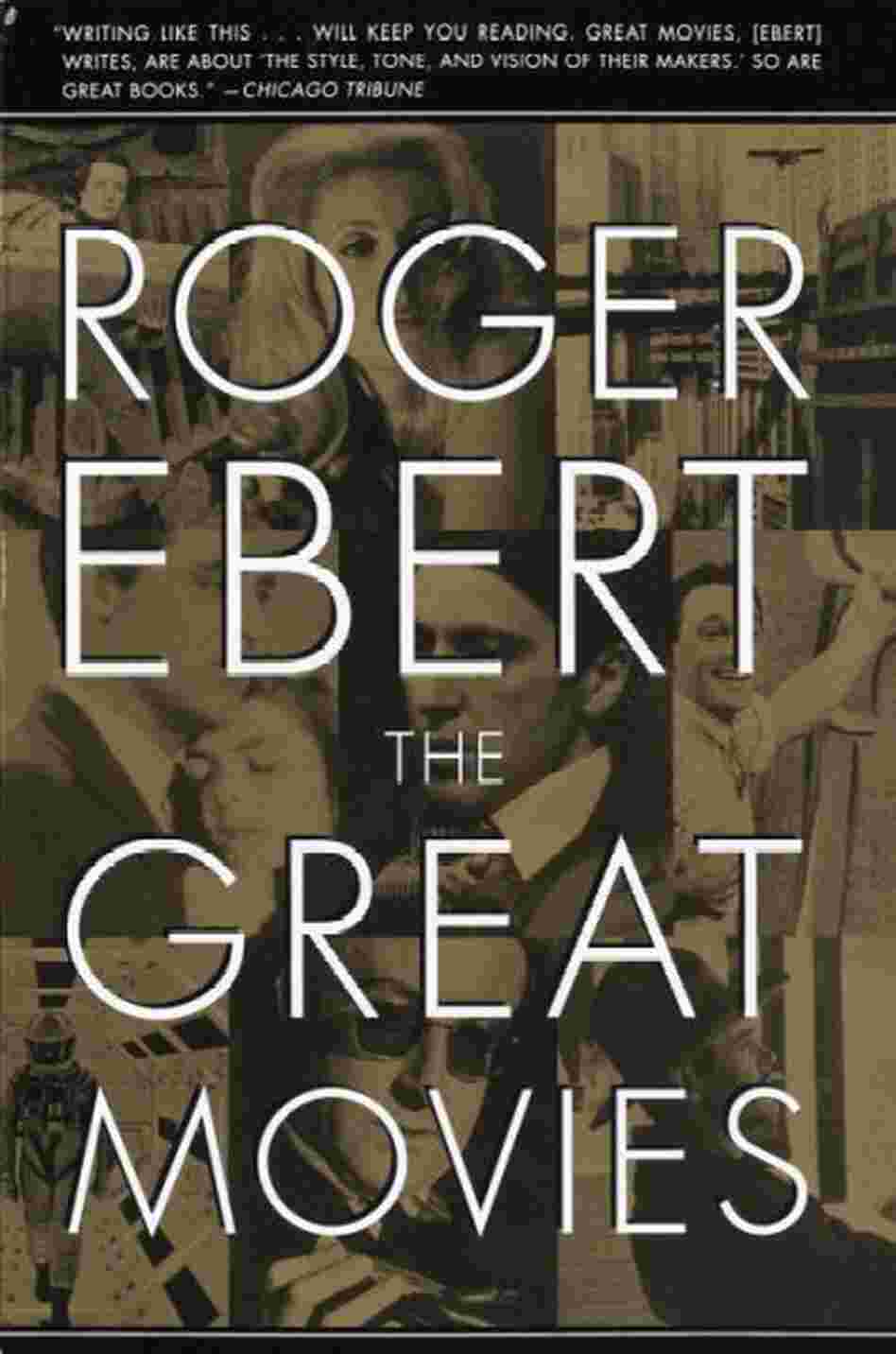
I bought Ebert’s annual Movie Yearbooks and read them compulsively. Whenever I was in the car with my mom, I would bring my copy of his original Great Movies book with me. As she drove, I read his reviews and articles aloud – sometimes on a film we had just watched at home the night before, other times on a film that I was trying to convince her to let me see. She might argue that a particular film sounded a little too mature for an eleven year-old, but by reading Ebert’s reviews to her, I was trying to demonstrate that I was ready to watch these works. I wanted to feel and experience for myself what Ebert so articulately presented in his prose. Just before my twelfth birthday, I finally got permission to watch Raging Bull and Goodfellas for the first time. I can tell you just about everything Ebert has to say about both films, as I viewed them for the first time almost entirely with his review in my mind – what to watch for, what certain sections might mean.

On his website, I constantly entered the Movie Answer Man forum, hoping that Ebert would answer one of my film-related questions (all of the questions that he answered in his Movie Answer Man column were later printed and published in his annual Movie Yearbook – and it was my dream to be included in one).

As a 'film critic' in the Austin circuit, I was invited to advance press screenings days or sometimes weeks before new films were officially released in theaters, which meant I would have to form an opinion on my own without first consulting Ebert, which was a large step for me as a critical thinker. Days after finishing my own review, I would read Ebert’s piece when it was published, and I was always giddy when he felt the same way I did about a film. My first official press screening as a film critic for the West Austin News was for Adaptation in December of 2002. I thought it was one of the best films of the year, and I hoped Ebert would agree with me. Just days later, he posted his four-star review, and placed the film at #3 on his end-of-the-year top ten list.

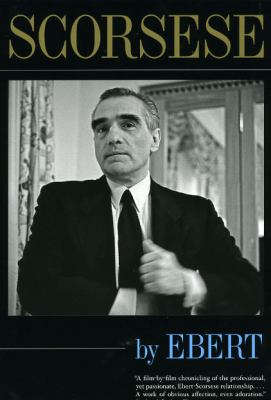
I was also thrilled to discover that Ebert had relationships with many of the filmmakers he adored, including Scorsese, Werner Herzog and Errol Morris. I’ve read his masterful book “Scorsese by Ebert” more times than I’d care to mention (you only need to read the inside cover of “Scorsese by Ebert” to see a thank-you letter written by Scorsese – on New York University stationary in 1970 – to Ebert, thanking him for championing his work, to get a sense of the personal bond between the two). Even when Ebert occasionally hasn’t been crazy about one of Scorsese’s works, he still understands where the piece is coming from and what it means in the context of Scorsese’s obsessions and concerns as a filmmaker.

I remember being very disappointed that Ebert only gave Gangs of New York three-and-a-half stars when it was released in December of 2002, as I thought it was the best film of the year. Richard Roeper agreed with me – but then, in their annual Oscars segment “If We Picked the Winners” on Ebert and Roeper in early 2003, Ebert said that he felt he had been too harsh on Gangs of New York in his initial review – and of the five films nominated for Best Picture that year, he believed it deserved the Oscar. Ebert was always willing to look back on a film and reconsider it. He only gave 25th Hour three-and-a-half stars upon its original release in 2002, but he then placed it in his end-of-the-decade top ten list years later.

By the way, 2002 was a great year for film, in addition to being a seminal year for me as a growing film fanatic. Ebert’s #1 film of the year was Steven Spielberg’s Minority Report, which was my choice as the year’s second best film. Maybe because it was the first full year where I made a point to see pretty much every noteworthy release in cinemas while keeping Ebert’s books by my bedside table, but I will always remember 2002 as a beautiful year of cinema (About Schmidt, Far From HeavenRoad to Perdition, About A Boy, Punch Drunk Love, The Pianist and Catch Me If You Can were among the other major releases that deeply affected me).


In 2002 and 2003, I tried to seek out every one of Ebert’s picks for the year’s best film from the past decades (in 2002 and 2003 alone, I recall watching, among many other films, Do the Right Thing, Platoon, House of Games, The Right Stuff, Amadeus, Nashville, The Color Purple, Mississippi Burning, JFK, Malcolm X, Hoop Dreams, Being John Malkovich, Dark City, Almost Famous and 2001: A Space Odyssey).

After doing a quick search in my computer, it looks I’ve quoted Ebert or at least mentioned him in at least every other review I’ve written. And there’s no competition – rogerebert.com is the most visited website on my computer by a mile.

“A movie is not about what it’s about, it’s about how it’s about it.”

When you revisit a film after several years, you also revisit Ebert’s review. Most recently, I returned to his Great Movies article on Nashville, one of my favorite films, and it’s impossible for me now to talk about Nashville without mentioning Ebert’s beautiful words on the film. The meaning of the movie itself is tied to his prose – in a sense, without his words, the picture is not really complete.

I came to understand so much about Ebert through his blog the past few years – including the fact that he was a recovering alcoholic, and that he intimately understood the teachings of Alcoholics Anonymous (which came across so understandingly and well in his review and appreciation of last year’s Flight). 


I looked to Ebert for his opinion on everything - his writing, both as a film critic and as a blogger, was the most consistently engaging and brilliant work you'd find online. One of the only reasons I’m on Twitter is so I can follow Ebert and Re-Tweet his opinions, reviews and the articles he comes across.

I have to confess that I oftentimes like to pretend I have a successful movie career, and I invent Roger Ebert reviews in my head – of what he might say about a film I directed, or in which I acted. This game is immensely satisfying, mostly because I like to think I've read enough of Ebert's work to formulate realistic-souding make-believe reviews in my head. Not that it would likely have ever happened (receiving an Ebert review means you've probably 'made it' as a director, and I'm pretty far from that), but I am now faced with the fact that there's not going to be an opportunity to read an actual Ebert review of one of my films.


Reading his last blog post just two days before his death – “A Leave of Presence” – I was deeply troubled to read of the return of his cancer, but I didn’t imagine for a moment that we would lose Ebert. It’s never registered with me that Ebert would ever cease being.

As I learned of Ebert’s passing at my internship last Thursday, a small part of me died inside. When I open my mouth from now on to inform someone of the master’s opinion – “Well, Ebert has consistently written that Nicolas Cage is one of our finest actors…” – my excitement about the conversation will give way to immense sadness. I’m prone to depressive bouts with nostalgia, and Ebert, who occupies the role of narrator when I think about anything related to film, will now be another person tucked into the past. The voice of reason is gone.


As one of my roommates said, as Ebert dies, so do hundreds of future films that will be forgotten without his efforts to spotlight and appreciate them. He championed the films that were forgotten, both large and small, and was responsible for the careers of many great filmmakers who, without someone like Ebert behind them, likely would not have achieved a great deal of their success. 

A world without Roger Ebert is something with which I’m not very comfortable. Gone is the generosity, the warmth and the understanding. I keep checking his website to see what Roger Ebert has to say about the death of such a great human being, and it’s only then that I remember. As a 'film critic,' I am at a loss for words. There are other critics I admire, but none in whom I can take comfort like Roger Ebert. As an aspiring filmmaker, I wonder, for whom will we make movies anymore?

A sample of some of my favorite Ebert reviews:

Almost Famous - Original 2000 Review

Minority Report Original 2002 Review


Raging Bull - Great Movies Review

Wonder Boys - Original 2000 Review


Saturday, February 9, 2013

We Can't Be Direct, So We End Up Saying The Weirdest Things

As I finish this latest post, the snowstorm known as Nemo is coming down on the East Coast, and I am taking a moment to catch up on many things from the past year about which I haven't yet written. Forgive the episodic nature of this post - I will be jumping around quite a bit. It was very depressing to make a schedule for my last semester of college at NYU last November, but now that I am already well into my final semester itself, it is a strange feeling. There are so many film shoots on the horizon (I served as Assistant Director for my friend Erica Rose's senior thesis film shoot for two weeks in January, and I have four more shoots, including my own, coming up very quickly) that graduation seems like the least of my concerns at this moment. But, like it or not, it is rapidly approaching.

Over the past year, Kenneth Lonergan's masterpiece Margaret has finally received some of the attention it deserves. Here's a wonderful New York Times piece on Margaret, as well as a link to one of Jim Emerson's essays on the film, where he writes that he's "never before seen a movie that fully recognized what human behavior is like." I was very sad to miss a screening of Lonergan's Director's Cut of the film at the Sunshine Cinema this summer, where Lonergan, Mark Ruffalo, Matthew Broderick and Thelma Schoonmaker held a Q&A after the film (I did walk past the Sunshine as the screening ended, and I saw Philip Seymour Hoffman getting on his bicycle and taking off into the night). Thankfully, I now have the Margaret Blu-Ray with both the Director's Cut and the original theatrical cut.

On August 13th, I received tickets to the New York City premiere of David Cronenberg's Cosmopolis at the Museum of Modern Art with Ben and Erica. I sat in the front row, too, which meant being a few feet away from Robert Pattinson, Paul Giamatti and David Cronenberg when they spoke before the film. Stanley Tucci, Judah Friedlander and others were in the audience, as well.

In early September, immediately after my return from Austin and the first day of my senior year, my friends and I obtained tickets to the New York City premiere of Paul Thomas Anderson's The Master in glorious 70mm at the Ziegfeld Theatre. We waited outside of the theatre for our most anticipated film of the year (and, in my mind, one of the best films of 2012). Amy Adams and Harvey Weinstein introduced the film (ironically, Paul Thomas Anderson could not be there, as he was doing a surprise screening of The Master in Austin at the Alamo Drafthouse), and after the screening, many of us were left speechless. I've written about my love for The Master in my post on the best films of the year, but I was immediately eager to see the film again.

That next Friday night, my mother and grandmother flew into New York, along with my friend Bolton Eckert and his family, to stay for the weekend and see the Off-Broadway production of Harrison, TX: Three Plays by Horton Foote (the Eckert family are relatives of the Foote family). After our Advanced Production class on Friday, my friends (including roommates Bobb Barito and Adam Boese) and I met Bolton at the Lincoln Square cinema to see The Master for a second time on opening night - again in beautiful 70mm. It was a packed house, and for the second time in a week, I was treated to a masterpiece of cinema with many by my side.

After the screening, Bolton and I journeyed downtown to meet my mom, grandmother and the Eckert and Foote families at Tavern on Jane, the wonderful West Village restaurant owned by Horton Foote, Jr. (and one of the key locations in my film Jake the Cinephile). As always, I really enjoyed spending time with the Foote family.

The next evening, thanks to Bolton's great family, we enjoyed dinner at the historic 21 Club with many of the great folks from Wharton, Texas. After dinner, we saw Harrison, TX: Three Plays by Horton Foote, in which Mr. Foote's extremely talented daughter, Hallie Foote, and her equally talented husband Devon Abner, both performed. The production, as is typical with any revival of Mr. Foote's work, was exceptional, and being that it was the closing night of the play, we were invited to attend the cast after-party afterward, which was a great amount of fun.

During my family's trip to New York, we also saw the revival of Evita on Broadway, a musical with which I was not very familiar. In October, I was lucky enough to see Him, a new play by Daisy Foote (another of Horton's children) with Will and Leslie Eckert. The play was a beautiful work, and Hallie Foote once again commanded the stage.

Returning to The Master for a moment, I had the chance to see the film in 70mm a third time at Village East Cinema, and again I was struck by the beauty of the film.

On Thursday, October 11th, Mike Cheslik and I went to a screening of Seven Psychopaths at the Cantor Film Center, followed by a Q&A with the film's writer and director, Martin McDonagh. McDonagh is one of my heroes, as his play The Pillowman easily ranks among my all-time favorite plays (after seeing an outstanding production of the play in 2007 at Austin's Hyde Park Theatre, I frequently used monologues from the show for auditions and later directed a scene from the play for my Sight and Sound: Studio final at NYU). McDonagh gave a great Q&A with the students, and the film - starring Sam Rockwell, Christopher Walken, Colin Farrell and Woody Harrelson - is hilarious. McDonagh's first feature film, In Bruges (2008), was a masterpiece, and this is a wonderfully deranged follow-up. I can't wait to see his next film (or play - I had a fantastic time seeing his A Behanding in Spokane on Broadway in 2010).

The next week, the Fusion Film Festival held an advance screening of Lana and Andy Wachowski and Tom Tykwer's film Cloud Atlas at the Cantor Film Center, as the Launch Event for the 2013 Fusion Film Festival. This movie was too much fun, and I really wish it had been a bigger success upon its release - with six different narratives, genre-hopping ambition and an all-star ensemble (including Tom Hanks, Halle Berry and Hugh Grant) willing to play any role, gender or race, Cloud Atlas is unlike anything I've ever seen attempted onscreen before.

I had another amazing semester with the Tisch Dean's Scholars. In September, for the second year in a row, we received box seats at a New York Mets baseball game at the historic Citi Field. We were treated to fantastic food from Shake Shack, a great game (the Mets beat the Miami Marlins) and quality time with Dean Mary Schmidt Campbell and Tisch faculty. After the game, I enjoyed some late night snacks with a few friends at the San Gennaro Festival in Little Italy.

In late November, the Scholars attended a dance performance titled The Tempest Replica by the group Kidd Pivot at the Joyce Theater. It was a truly outstanding show, with a fascinating dance interpretation of Shakespeare's The Tempest. For our final meeting of the semester, the Dean's Scholars met at Color Me Mine, a popular pottery studio in Tribeca, where we each hand painted a piece of pottery that was then put in the fire and delivered to us (I chose a piggy bank).

Already during this current semester, I went on a tour of 30 Rockefeller Center with the Dean's Scholars group, which was a fascinating opportunity to explore the NBC building. We visited the set of Saturday Night Live and many other shows. Later this semester, we are taking a trip to Washington D.C. over Spring Break, which will be an enormous amount of fun.

I haven't written in great detail about my internship for professional reasons, but suffice to say my time there this past year - and particularly this summer - has been incredible. The opportunities have included meeting Leonardo DiCaprio several times (after shooting one day, he came into the office and recognized me from an earlier encounter and said, "Hey, how's it going?" and I was flabbergasted); being in the same room as Scorsese, DiCaprio, and writer Terence Winter while they work together on the script; being on set for the first day of shooting Scorsese's new film The Wolf of Wall Street; and late nights at the office with the other interns. With this internship, I really can't believe it's my lifelong hero, smiling and nodding his head at me as he walks out the door of the office.

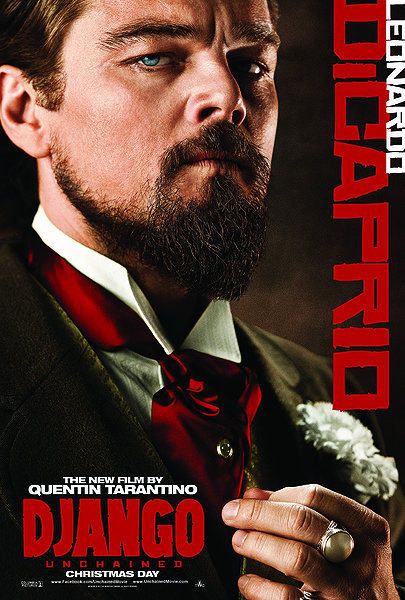
By the way, congratulations are in order for Mr. DiCaprio, after winning the National Board of Review's Best Supporting Actor award last December for his extraordinary work in Django Unchained (as well as receiving a Golden Globe nomination for the performance). Sadly, the Academy once again did not nominate DiCaprio for his work. With brilliant and complex recent performances in Sam Mendes' Revolutionary Road (2008), Scorsese's Shutter Island (2010), Christopher Nolan's Inception (2010), Clint Eastwood's J. Edgar (2011) and now Quentin Tarantino's Django Unchained, DiCaprio is unquestionably the best actor of his generation, and I wish the Academy would recognize him.

Congratulations are in order for Mr. Scorsese, as well, for winning two Emmys this fall for Outstanding Nonfiction Special and Outstanding Directing for Nonfiction Programming, for the masterful George Harrison: Living in the Material World, and to Thelma Schoonmaker, for winning the Gucci award for women's achievement in filmmaking in August.

While interning at Sikelia Productions this past semester, I also been worked with acclaimed documentary filmmaker Nancy Buirski with research for her new film, as well as promoting her extraordinary film The Loving Story in advance of its U.S. Theatrical Premiere in December (it was also shortlisted for the Academy Award for Best Documentary, and played on HBO earlier in 2012). Some of the Sikelia interns and I had a wonderful time attending a screening of The Loving Story at the Maysles Cinema in December, after which Buirski participated in a Q&A with the audience. It was such an honor to be a part of her work.

Speaking of Scorsese, Time Out New York released a list of the 100 Best New York City Films earlier this year that's pretty exceptional (they were wise enough to include films like Margaret and James Gray's Two Lovers, a powerful film that features another great performance from Joaquin Phoenix). They missed quite a few New York classics, though. Where are Gangs of New York (2002), Raging Bull (1980), The Godfather Part II (1974), Prince of the City (1981), Bringing Out The Dead (1999), The Age of Innocence (1993), A Bronx Tale (1993) and New York, New York (1977)? But I can't complain when the list as a whole is so good.

Sight and Sound Magazine announced the results of their very famous Greatest Films Poll this summer, which only comes around every ten years. This year was particularly notable because, for the first time in fifty years, Alfred Hitchcock's Vertigo (1958) took the place of Orson Welles' Citizen Kane (1941) as the greatest film ever made. I have to admit, I think I prefer the Directors Top 100 to the Critics Top 100 for this decade's Sight and Sound Poll. The directors rank many of my personal favorites higher than the critics, with Taxi Driver at #5, Raging Bull at #12, Goodfellas at #48 and Michael Cimino's The Deer Hunter (1978) at #91. It's particularly fascinating to read the top ten lists from our finest living filmmakers, including Scorsese, Woody Allen, Francis Ford Coppola, Michael Mann (who just turned 70 last week) and Quentin Tarantino.

All in all, there are so many pictures in the works by many of my heroes - according to a report, Scorsese is going to executive produce a film version of Roger Ebert's memoir, while Al Pacino has been cast as Joe Paterno in a film by Brian De Palma. Meanwhile, Scorsese has all kinds of amazing projects in the works.

Going back into this past summer, it was my first summer in New York, and it was a fantastic one. Most of my time was split between working at my internship at Sikelia Productions and intense pre-production for my film Jake the Cinephile. I like our neighborhood quite a lot. Celebrities are always out and about - I've seen Sam Rockwell walking his dog near our apartment, passed Adam Sandler on Prince Street, watched as Colin Farrell and director Niels Arden Oplev shoot a new picture on my street, and noticed Susan Sarandon at the cinema near my apartment.

I had a wonderful Fourth of July holiday, seeing the new Pixar film Brave with my friend Jess, and then spending time with friends at a rooftop cookout in Brooklyn. Later that evening, I had some homemade pulled pork with friends on a Manhattan rooftop and watched the official city fireworks. The summer was full of fun activities, including a great afternoon picnic in Prospect Park with friends.

The summer was a lot of fun in terms of film, too - three of my favorite filmmakers - Spike Lee, Woody Allen and Oliver Stone - all released terrific movies: Red Hook Summer, To Rome With Love and Savages.

Speaking of Spike Lee, he was kind enough to both ReTweet and reply to some of my Tweets regarding my admiration of his work. I wrote, "Every one of your films has had such an impact on me, ever since I saw 25th Hour at age twelve in cinemas," and "Vulture interview was outstanding. Cannot wait for Red Hook Summer. With love and admiration from a NYU Tisch senior." He replied, "Many Thanks. NYU VIOLETS." He also Re-Tweeted my link to a great interview with him.

Throughout May, June and July, the pre-production on Jake the Cinephile was nonstop. After shooting the promo video for the film with Bobb, I launched my IndieGoGo campaign for the film (to which many of my friends and family so generously contributed). Soon after, actor Tom Corbisiero very kindly drove my cinematographer Ben Dewey and me upstate to scout the Beacon Theater in Beacon, New York, which served as an excellent location for the picture. In preparation for the shoot, I re-watched and took a lot of notes on Scorsese's The Aviator (2004) and Taxi Driver (1976), which both influenced Jake the Cinephile quite a bit (I'm more convinced than ever that The Aviator is one of Scorsese's greatest achievements - it is a masterpiece, flawless in every respect). Later, Ben and I had a pre-production night where we watched scenes from The Aviator, Taxi Driver and Bringing Out the Dead (1999) for reference, as we shot-listed for Jake the Cinephile. The coming weeks were full of meetings with my producers, Erica Rose and Harry Tarre, rehearsals with actress Bethany McHugh and script supervisor Nicole Cobb and a camera test in Queens with the Red Scarlet Camera and anamorphic adapters.

The feedback on the edit of Jake the Cinephile this fall semester has been really fantastic. At the end of the semester, I had a wonderful phone conversation with Ray Hubley, the editor of Dead Man Walking, who expressed his admiration for Jake the Cinephile. He said the film has taken quite a journey over the semester. He applauded the thought and time put into every cut, and encouraged me to never let go of my own compass, finding my own way with the edit of the film. I've never been so proud of a film I did - I feel it's the most fully-realized visualization of my fears and anxieties that I've made so far. Hopefully my senior thesis film, You Can't Put Your Arms Around A Memory, will go even further. Jake the Cinephile will soon be picture-locked, thanks to the incredible work of my friend and editor Jonah Greenstein.

Speaking of my thesis film, my Advanced Production class with Yemane Demissie has been the best and most rewarding course of my college experience. It is both an intricate production class and an endlessly helpful writing workshop, and I am very lucky to be in the class again this semester as pre-production begins on my new film. The eleven other students who are making their films this spring are such thoughtful and mature filmmakers, and I look forward to all of us making our own pictures this coming year.

I had a very nice Thanksgiving in Austin, and I want to thank my friend Bolton Eckert for filming my late aunt's house over Thanksgiving break and helping me with a small family documentary I wanted to shoot in the wake of her passing (he's studying film in Los Angeles right now). Once back in New York after Thanksgiving, I continued preparing for my advanced film. Adam, Bobb and I received a Christmas care package from my mom, complete with nerf guns, Christmas decorations and candy, food galore, and slug zombies.


For our final Advanced Production class, we watched Michael Haneke’s devastating new film Amour, which won the Palme d'Or at the Cannes Film Festival earlier this year. It appeared near the top of many end-of-year top ten lists, and deservedly so. After a long two day ordeal at LaGuardia Airport attempting to get back to Austin, I finally returned for winter break, just in time to catch the Austin press screening of Tom Hooper's outstanding Les Miserables a little more than a week before it opened.


I'm late on congratulating my heroes, but I want to acknowledge that Robert De Niro, my all-time favorite actor, has had quite a wonderful year. He gave one of his best performances in David O. Russell's Silver Linings Playbook, and he received his seventh Oscar nomination for his work earlier this month (he deserves to win the award). He has been ignored for so many powerful performances (this is only his seventh nomination). His work in Mean Streets (1973), The King of Comedy (1983), Once Upon A Time in America (1984), Goodfellas (1990), Casino (1995), Heat (1995), A Bronx Tale (1993), Wag the Dog (1997), Jackie Brown (1997), New York New York (1977), The Good Shepherd (2006), Everybody's Fine (2009) and Stone (2010), among many others, was overlooked by the Academy. He was also excellent in Paul Weitz's Being Flynn earlier this year. He received the Hollywood Supporting Actor Award for his performance in Silver Linings Playbook, and later won the Kirk Douglas Award for Excellence in Film at the Santa Barbara International Film Festival. In Roger Ebert's review of Silver Linings Playbook, he writes that he's "been on an almost lifelong journey with Robert De Niro, and [feels] intimately familiar with him as an actor." "Here," Ebert writes, "his work unobtrusively charmed my socks off." Congratulations to cinema's finest actor and my hero on an outstanding year.

Since receiving his seventh Oscar nomination, De Niro has deservedly been celebrated around Hollywood. The American Cinematheque, in association with The Actors Studio, held a retrospective of De Niro's work, billed as an In-Person Tribute to Robert De Niro at the Aero Theatre in Los Angeles, screening Silver Linings Playbook (with De Niro in attendance), as well as Mean Streets (1973), Taxi Driver (1976), Cape Fear (1991) and Awakenings (1990). With more and more talk building around De Niro's ninth collaboration with Martin Scorsese, The Irishman, as well as De Niro getting his footprints in cement in Hollywood, thankfully people are recognizing the greatest film actor of all time for his consistently extraordinary work. And in one of the most moving interviews I've ever seen, De Niro gets particularly emotional when discussing his work in Silver Linings Playbook. It's very exciting to see my all-time favorite actor receive such recognition (if only I had been alive to see him win Best Actor for Raging Bull in 1981). And, thankfully, in a recent interview with the Hollywood Reporter, De Niro said he'd like to do "at least two [more films with Scorsese]" to "make it an even number - ten," adding that that's his "obsessive-compulsiveness." There is no actor I love and respect more than Robert De Niro.

In late January, I went to see Scorsese's Mean Streets at Film Forum with Ben, Jonah and Spencer. The film was screening as part of Film Forum's New Yawk New Wave film series, and although I've seen Mean Streets an endless number of times (it is one of my top ten films of all time), it was extraordinary getting to see the picture on the big screen, particularly in advance of shooting my senior thesis film in April (my film draws a lot of inspiration thematically, stylistically and visually from Mean Streets). There are few films that shake, enthrall and move me as deeply as this one - one day, I'll get around to writing a full essay on what the picture means to me.

Although I released my end-of-year Top Ten List of 2012 exactly a month ago, I need to revisit the list and update it with several films I saw in early January, including Gus Van Sant's outstanding Promised Land, David Chase's Not Fade Away, Michael Haneke's Amour (I needed to see the film on the big screen, at Film Forum, before putting it on my list) and especially Kathryn Bigelow's Zero Dark Thirty. Looking back on the year in film, I have to admit that the most affecting piece of cinema, for me, was unquestionably Silver Linings Playbook. Last month, I ranked the film at #2 on my Top Ten (just behind The Master), but I really do feel that Russell's film is the best picture of the year. No other movie had such deep understanding and care for its characters, and, in my opinion, a stronger directorial vision. Without my realizing it, the film sort of shifted my attitude last semester - Russell's movie hears the call of a misunderstood man (boy, does this film accurately capture the feeling of having so much going on inside your head), but without ever losing the darkness, Russell answers that call with love and warmth. The film acknowledges the pain and delusions of every character in its sight, and it's downright kinetic in the way it keeps up with the whims and obsessions of these same characters. The lifelike way in which the film changes course in the middle of any given scene reminds me, actually, of Margaret.

Every time I go back to see this film, I am reminded of how movies can make you feel and come to define an entire section of your life. For the past few months, I've been living with Silver Linings Playbook, and I think it should win the Academy Awards for Best Picture and Best Director (here's an excellent video essay on why Press Play thinks the film should win, as well). Of course, to talk about the year in film as a competition seems inappropriate. All nine Best Picture nominees are extraordinary films, and having seen a large number of them more than once, I feel deeply tied to many of these pictures. When you look back on 2012, it will be the year of Silver Linings Playbook, Django Unchained, Lincoln, Zero Dark Thirty, Les Miserables, Life of Pi, Amour, as well as other masterpieces that weren't nominated, such as The Master, Moonrise Kingdom and Flight. I spend a lot of time in cinemas, and I've come to understand many things from this year's great films. 2013 will have a tough time matching 2012 in terms of movie quality.

There were an overwhelming amount of tragic deaths in 2012 (as there are any year, but perhaps this year seemed worse with the passing of my aunt). Gangster Henry Hill, the subject of Scorsese's Goodfellas, died this summer. Mr. Hill's story was first told in the outstanding nonfiction book Wiseguy by Nick Pileggi. Not only is Goodfellas my all-time favorite film, I've probably seen it more times than any other movie, so I have a certain love for Mr. Hill's life story and background. Here is a great interview with Mr. Hill. His death brings to mind one of the saddest scenes in Goodfellas, when Joe Pesci kisses his mother goodbye before he is about to get "made," and Hill (Ray Liotta) says in voiceover, "You know, we always called each other goodfellas. Like you said to somebody, you're gonna like this guy. He's all right. He's a good fella. He's one of us. You understand? We were goodfellas. Wiseguys."

This summer, the great writer and director Nora Ephron also tragically passed away. I saw many of her films theatrically at a young age, including Michael (1996), Hanging Up (2000) and particularly You've Got Mail (1998), which I'll never forget seeing on Christmas Eve of 1998 with my mom and aunt. Oddly enough, 1990's My Blue Heaven (always a favorite of mine, starring Steve Martin and written by Ephron) was also loosely based on the life of Henry Hill, and Ephron's husband was Nick Pileggi, the brilliant author of Wiseguy and co-screenwriter of Goodfellas and Casino (1995).

The list of names goes on - Frank Pierson, screenwriter of Dog Day Afternoon and Cool Hand Luke; author Gore Vidal; the wonderful film critic Andrew Sarris; the incredible cinematographer Harry Savides, who shot Zodiac (2007), Milk (2008), Greenberg (2010), Elephant (2003) and American Gangster (2007); and NYU's own Time Keeper, who passed away in October.

I wrote earlier that I'd like to devote an entire post or essay to Mean Streets. The same can easily be said for Goodfellas and The Departed. Re-watching both films recently, I was reminded of how so many choices I make in my work as a filmmaker come from these movies. But that's not simply because I want to pay homage to them - it's because these films have influenced much more than just the way I think about films. The Departed and Goodfellas are such instrumental parts of my life that they influence how I experience and remember things. Both movies are tied strongly to so many events in my life - watching these movies, I'm transported to a different time and place, to memories that exist far outside the film itself. Yes, I would love to write long essays about all of these films and what their various parts mean to me, but time just slips away.

There are many more things to write about, but it's the most hectic semester yet, and I can never seem to write about all of the things I wish I could. One day.

On your way out of this post, check out this Gentleman Party sketch directed by Mike Cheslik! It briefly features my voice talent near the end, but more importantly, it's very funny.

Saturday, December 29, 2012

The Best Films of 2012


More than ever in my life, my movie ticket stubs tell my story. My experience as a human being is so deeply tied to my trips to the cinema that I’m able to relive the joy, pain, melancholy, heartbreak and richness of a life-changing semester simply by flipping through my stack of ticket stubs. Some of the films on this list are here because they affected me deeply; others are heightened by their association with a particular state of mind or feeling that came over me while watching them, or perhaps even those who were with me or weren’t with me for a particular film. There is no such thing as an objective movie-going experience – your inner pain, sorrow and love are reflected back when you go to the movies. Sometimes it’s the person sitting next to you. Sometimes it’s the fact that you’re alone, and the cinema is able to wash over you, like a dream. Like life, the cinema is something you experience alone, in your head, and whether you share the space with a packed audience or an empty house, it’s a personal journey that comes as close as anything else I’ve experienced to illuminating who we are.

Sometimes, it's impossible to explain an experience to someone else without associating it with the movie involved. I will always remember Cloud Atlas a certain way because of how I saw it, and that film will never mean the same thing to me. Nor will The Sessions ever mean as much to me as it did in that particular moment after it ended. As Martin Scorsese would say, "Movies are the memories of our lifetime." And so I excitedly present the best movies I saw this year, with films starring many of my favorite actors - Robert De Niro, Leonardo DiCaprio, Harvey Keitel, Ray Liotta and Daniel Day-Lewis - all making the list.

It's worth noting that this was an extraordinary year for American film, and the ranking seems almost arbitrary among the top four films. This year, Joaquin Phoenix, Daniel Day-Lewis and Denzel Washington gave three of the best screen performances I've ever seen, and picking just one of them for Best Actor is almost impossible. I also fully intend to write another post on the rest of the year's best films, because there were many - Not Fade AwayThe Dark Knight Rises, Argo, The Sessions, Looper, Take This WaltzThis Must Be The Place, End of Watch, Arbitrage, Magic Mike, Holy Motors, The Perks of Being A Wallflower and Savages, just to name a few - that I had to leave off this list.

1. Silver Linings Playbook (David O. Russell) 

If there’s a film with a particular aesthetic this year that really strikes me as what I’d like to achieve with my work, it’s David O. Russell's wonderful Silver Linings Playbook. It has the raw, energetic vitality and subjectivity of a Scorsese picture, and yet the camerawork isn’t nearly as stylized and polished. It’s all handheld and ideal for capturing the brilliant comic and dramatic timing of the actors. Russell is the rare filmmaker who lets an ensemble shine to its fullest while also making bold and powerful directorial choices with camera. It’s unlikely that a film like Silver Linings Playbook will win many awards for its cinematography – this is not a sweeping epic, but an intimate film – but it absolutely should be considered. There's an uneasiness to the camerawork in the film, as if at any moment Russell is going to push in quickly and Pat (Bradley Cooper) is really going to lose it. O. Russell makes brilliant walking movies – in both Silver Linings Playbook and The Fighter (2010), we’re introduced to a neighborhood and community by following a walking or jogging character joyously tumble through the neighborhood. His talent for assembling a furiously engaging soundtrack matches Scorsese’s gift for music, too. He’s all rock-and-roll. With Silver Linings Playbook and The Fighter, Russell has skyrocketed to one of my favorite American directors.

And although it’s a moving and believable romance, the film itself isn’t afraid to get dark and explore the potential violence inherit in mental illness. I’ve rarely cared more deeply about a set of characters – even minor supporting ones, such as the characters played by Chris Tucker and John Ortiz – than I do in this picture. Bradley Cooper and Jennifer Lawrence give two of the finest performances of the year.

What can I say about Robert De Niro in this picture? His work here is so moving and powerful. After being virtually ignored for impeccable performances in recent years (Everybody’s Fine, Stone, Being Flynn, The Good Shepherd), it looks like De Niro will receive his first Academy Award nomination in twenty-one years. He deserves to win for this performance – not because he wasn’t even nominated for The King of Comedy (1983), Mean Streets (1973), Goodfellas (1990), Once Upon A Time in America (1984), Casino (1995), Heat (1995), Wag the Dog (1997), The Untouchables (1987), A Bronx Tale (1993) and countless other classics, although they most certainly owe him – but because he gives the best supporting turn of the year.

2.  The Master (Paul Thomas Anderson) 

After three viewings of Paul Thomas Anderson’s The Master, it’s still difficult to really express how I feel about this melancholic love story. I can say with great certainty that it's the finest film Anderson has made yet, and that's saying something, as his There Will Be Blood (2007) and Magnolia (1999) are two of my favorite films of all time.

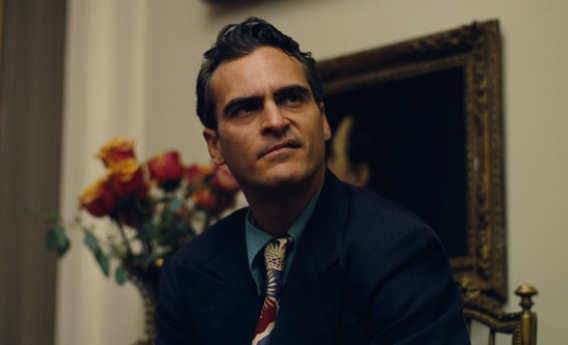
In the opening of the film, Freddie Quell (Joaquin Phoenix) leaves to be a seaman in World War II. His sweetheart, Doris, writes to him, but he never writes back. At war, he is restless and at odds with the other men in his company. His behavior is perverse and immature. But beneath his embarrassing sexual behavior is a kind of restless longing for love and understanding. After he returns from the war, he’s aimless – he hops from job to job, drinking booze wherever he can find it. When he meets Lancaster Dodd (Philip Seymour Hoffman), the leader of a new religious movement called the Cause, Freddie finds direction and purpose. Even if he doesn’t always buy the theories of the Cause, Freddie finds a kind of father figure in Lancaster.

Where is Freddie’s father? Freddie tells a stranger early on in the film that he reminds him of his father (a stranger who later dies from Freddie's strong booze), and Freddie later reveals that his father died from alcoholism. His relationship with Lancaster develops into something resembling a kind of father-son bond. It’s fascinating to look back at Freddie’s aggression toward a man he is photographing in the department store early in the film, who strangely resembles Lancaster – does this man remind him of his father?

Anderson’s films, as many have noted, almost always concern father-son relationships. In my Advanced Production class, we noted the similarities between the first processing scene on the boat in The Master (one of the most electrifying and best-acted scenes in recent cinema) and the interview scene in Magnolia between Frank T.J. Mackey (Tom Cruise) and the reporter barraging him with questions.

In my opinion, the finest section of The Master begins with Lancaster sitting alone in a darkened room, looking out on his unsuspecting followers. He looks deeply conflicted, enshrouded in darkness (looking uncannily like Charles Foster Kane in Citizen Kane), and although we don’t ever come to know Lancaster’s specific doubts about what he’s preaching, this scene establishes that doubts, or some form of uncertainty, exist. After following Lancaster out toward his eager audience, we watch Freddie in the crowd, as he listens to Lancaster speak. Something feels false to Freddie. We don’t know exactly what it is that strikes him this way, but that’s not important. Confused, Freddie does his established walking exercise, when he comes across a publisher (Kevin J. O’Connor) from New York. The publisher asks Freddie what he thinks of Lancaster’s latest book. Freddie, conflicted, asks the publisher what he thinks. When Freddie hears his worst fears confirmed by the publisher - that the book is hogwash - he lashes out at him, except it’s different from the first time Freddie went nuts on someone who dared dissent against the Master. This time, Freddie escorts the publisher outside, beats him, and then sinks on a nearby bench, his head in his hands. It’s here that Freddie understands he isn’t the only one who thinks the Cause is completely false – and yet, as always, Freddie so desperately needs something in which to believe. In the next scene, he takes off on the motorcycle, leaving Dodd and the Cause.

Seeing The Master for a second or third time allows for a deeper understanding of Amy Adams’ character – I gathered that she is almost more deeply committed to the Cause than her husband. “If you figure out a way to live without a master, any master, be sure to let the rest of us know, for you would be the first in the history of the world," Lancaster says to Freddie near the end of the film. Is he talking about his wife? 

By the time Freddie arrives at Doris’ house near the end of the film and speaks to her mother, we’re looking at a different person. Freddie has matured. What’s astonishing about The Master is that it doesn’t discredit the positive effects the Cause has on Freddie. Through his commitment to Lancaster and his cause, Freddie arguably come to terms emotionally with many of his demons, and resists many of his primal urges when he could not before.
           
I reject the notion that the film is too distant – I found it more emotionally moving than There Will Be Blood. The film is almost entirely subtextual, and in its own strange way, it is an emotionally cathartic film. At the end of the film, Freddie is still the same lost boy, albeit matured and looking for something deeper. That something deeper, though, isn’t the Cause. The last shot of the film encapsulates Freddie’s eternal struggle – everything he reaches for dissolves into sand. He strives for acceptance in a group and he longs for love, but by the end, the only woman beside him is that imaginary sand goddess, who crumbles into sand just like everything else.

3. Django Unchained (Quentin Tarantino) 

Quentin Tarantino’s Django Unchained is the most fun I’ve had at the cinema in some time. The picture borrows elements from many of the great revisionist westerns, including Robert Altman’s McCabe and Mrs. Miller (1971) and Mel Brooks’ Blazing Saddles (1974) and unfolds into a gloriously violent and exhilarating western that is every bit as masterful as Tarantino’s Inglourious Basterds (2009).

But as outrageously funny and gleefully entertaining as Django Unchained is, Tarantino isn’t afraid to graphically depict the horrors of slavery. The violence in the film is absolutely necessary – first, to brutally capture the way slaves were treated (in a way that few films have ever attempted), and secondly, to allow Django to paint the walls red with retribution. If you were among those who clapped during the last thirty minutes of Inglourious Basterds, you’ll have no shortage of smiles during this film.

There’s not really a need to explain why Django Unchained works so well. I love this movie for the same reasons I love Pulp Fiction (1994) and every other Tarantino film. His writing is impeccable. Every performance is brilliant – from Jamie Foxx’s quiet and understated work as Django to Samuel L. Jackson’s hilariously un-hip servant Stephen. Leonardo DiCaprio and Christoph Waltz will likely both be nominated for Academy Awards, because, well, it’s just about impossible to pick a favorite between their outstanding supporting turns. DiCaprio, the best actor of his generation, continually gives unbelievably complex performances (J. Edgar, Shutter Island, Inception, Revolutionary Road, The Departed) that the Academy chooses to ignore, and so I can only hope that they not only nominate him this year, but give him the Oscar.  

4. Lincoln (Steven Spielberg)

To say that I’ve been looking forward to Lincoln for many years would be a massive understatement. This is the film I was hoping Steven Spielberg would make right after his masterful Munich (2005), and now, seven years later, Spielberg has given us one of the richest and most extraordinary films of his career. Lincoln is a portrait of President Abraham Lincoln in the months leading up to the end of the Civil War, with emphasis placed on the congressional fight to pass the Thirteenth Amendment, which abolished slavery in the United States. Spielberg and screenwriter Tony Kushner (who has written the most complex, dense and thoughtful script of this year) are careful to examine the moral grey areas in Lincoln’s decision-making, and the film’s presentation of the democratic process is fittingly chaotic.

The central performance by Day-Lewis as Lincoln is impeccable. Where Lincoln excels better than any Spielberg film, however, is in the supporting ensemble – every new scene comes alive with rich characterizations by many of the finest working character actors. Acting nominations are in order for David Strathairn, as Secretary of State William Seward; Sally Field, as Lincoln’s wife, Mary Todd Lincoln; James Spader, as political lobbyist W.N. Bilbo; and especially Tommy Lee Jones, who, as radical abolitionist Thaddeus Stevens, gives a thunderous performance that is both endlessly quotable and quietly moving. Day-Lewis’ Lincoln is a gentle and articulate man not without his own doubts and uncertainties. This is a beautifully understated performance that will likely earn Day-Lewis his third Oscar.

Lincoln belongs in the same tier as Schindler's List, Minority Report, Jaws and Munich as a genuine Spielberg masterpiece.

5. Zero Dark Thirty (Kathryn Bigelow)

The obsessive hunt to capture Osama bin Laden in Kathryn Bigelow's Zero Dark Thirty calls to mind another masterpiece, David Fincher's Zodiac (2007). Both movies are procedurals in which the hunt consumes the life of the protagonist, and in Zero Dark Thirty, we have one of the best characters of the year with Maya (Jessica Chastain). Like Bigelow's The Hurt Locker, the characterization in this picture is subtle, and the film's political stance is largely objective (which seems to enrage just about everyone). And even though this manhunt has a more satisfying historical conclusion than the one in Zodiac, this isn't a triumphant movie. What's left of Maya by the end of the film? Zero Dark Thirty is a powerful and complex portrait of our country. Anyone claiming that this film endorses torture is an idiot, and the only thing anyone is accomplishing by accusing this film of such things is begging Hollywood to only make movies without any acknowledgment of moral ambiguity. Zero Dark Thirty is the kind of film we need. 

6. Moonrise Kingdom (Wes Anderson)

Wes Anderson’s Moonrise Kingdom – the director’s first film since the should-have-been-Oscar-winning animated feature Fantastic Mr. Fox (2009) – was the movie event of the summer. This is a poignant and hilarious picture; it’s hard to imagine someone not responding to this material. On a personal level, I haven’t been so deeply affected by one of Anderson’s films since The Royal Tenenbaums (2001), one of the last films I saw with my father before he passed away.

In a New England community in the 1960s, twelve year-old outcasts Suzy (Kara Hayward) and Sam (Jared Gilman) run away from home together, convinced beyond any doubt that they are in love (once on the adventure, they are aided by Sam’s considerable skills as a Khaki Scout). Bruce Willis, Edward Norton, Bill Murray and Frances McDormand are among the adults and parents leading a search-and-rescue mission to find Sam and Suzy. Willis and Norton, in particular, do some of their best work in years.

In this film, Anderson beautifully expresses both the joy and melancholy of first love. Even though Moonrise Kingdom does end on a positive note, there’s still a hint of a dissatisfied adulthood waiting for our protagonists by the end of their adventure. Whether Suzy and Sam end up together in the long run is irrelevant – their love will never feel as real and as powerful as it does in their memory. Their utopian ‘moonrise kingdom’ is something the adults have long since abandoned, and soon enough, it will exist only in Suzy and Sam’s memories.

7. Flight (Robert Zemeckis) 

If there’s another film on this list besides Silver Linings Playbook that’s representative of the sort of film I’d like to make, it is Robert Zemeckis' Flight, a powerful portrait of alcohol addiction. The film opens with an exhilarating plane crash sequence, and then unfolds into a moving character study of a man who cannot stop lying to himself. This is one of the most mature and understanding films about addiction that I’ve ever seen, and the fact that such a tortured and morally complex character is the center of a big Hollywood film is astounding. There are an endless number of things I love about this film, including its association of certain pop songs with a particular state-of-mind (for instance, Feelin’ Alright by Joe Cocker indicates a cocaine high).

There are so many powerful moments in this film. Consider the scene when Whip is dragged to an Alcoholics Anonymous meeting and is forced to suffer through testimony from recovered alcoholics who have found a kind of peace about which Whip can only dream. Or the subtle moment as his doomed flight takes off, as Whip throttles his plane forward, humming Feelin’ Alright, staring ahead into the stormy abyss. Whip navigating his upside-down plane is as powerful a visual metaphor as you can find in a film this year. Flight is also the story of multiple addicts and survivors. Kelly Reilly’s performance as Whip’s new girlfriend, recovering heroin addict Nicole, is very effective.

8. Life of Pi (Ang Lee)

Ang Lee's Life of Pi is an overwhelmingly moving adaptation of Yann Martel's great book, which tells the inspiring and allegorical story of a young boy stranded by himself on a lifeboat with a large tiger in the middle of the ocean. What's extraordinary in this film is how cinematic the entire experience is, without losing nearly anything from the novel. The use of 3D in this film is every bit as outstanding as in Martin Scorsese's Hugo, and I can't think of another recent film so deserving of an Academy Award for Best Visual Effects. You couldn't have asked for a more brilliant director for this material than Lee, the visionary filmmaker behind films as diverse as Brokeback Mountain (2005), The Ice Storm (1997), Sense and Sensibility (1995) and the underrated Hulk (2003). 

9. Les Miserables (Tom Hooper)

Les Miserables holds a very special place in my heart – I know most of the lyrics by memory, and in high school my friend Austin Kingsbery and I advanced to Nationals with Confrontation (he played Javert and I was Valjean). Yes, I’ve longed to see this musical on film (even though I’ve always secretly harbored the desire to direct an adaptation myself, in my imaginary future as a film director). With its emphasis on performance over musical prettiness, Tom Hooper’s film version represents a bold new approach to shooting a musical, and I think it pays off beautifully. I’ve never felt so intimately and emotionally affected by the characters in a musical, and in an age where many movies seem consumed by self-referential irony, I appreciate Hooper’s unwillingness to inject even a hint of irony into the film. This is a tragic opera, and it is the Les Miserables adaptation that the fans of the musical deserve.

Hugh Jackman, as Valjean, and Anne Hathaway, as Fantine, are every bit as outstanding as you've heard, but let's not count out Russell Crowe, who brings a grave understanding to Javert that's unique and worth applauding. I've seen the musical many times, but I've never seen it like this – so intimate and so unapologetically emotional. Although I’ll never quite get over the fact that Hooper won the Best Director Oscar for The King’s Speech over David Fincher for The Social Network, I have to hand it to Hooper here – he has made a wonderful movie.

10. Bernie (Richard Linklater) 

Bernie stands alongside Before Sunset and Dazed and Confused as one of Austinite Richard Linklater’s finest films. In this endlessly funny and sometimes achingly sad true story of small-town murder, actual locals from Carthage, Texas recount the tale of Bernie Tiede (Jack Black), a beloved small-town mortician on trial for murdering a disliked elderly woman (Shirley MacLaine).

East Texas is an area that hasn't received much cinematic attention (and an area that I hold close to my heart, having spent quite a bit of my childhood in Hallsville and Longview, where my father grew up), and it comes to vivid life as a loving and warped environment in Linklater’s film. I had the opportunity to speak to Mr. Linklater after a screening of the film in New York City, and he remains the quintessential Texas filmmaker. Bernie, which also features career-best performances from Jack Black and Matthew McConaughey (who also excelled this year in Magic Mike and Killer Joe) is a testament to Linklater’s enduring genius.

Best Picture

Winner: Silver Linings Playbook

Runners-Up: The Master, Django Unchained, Lincoln, Zero Dark ThirtyMoonrise Kingdom

Best Director

Winner: David O. Russell, Silver Linings Playbook

Runners-Up: Paul Thomas Anderson, The Master; Steven Spielberg, Lincoln; Quentin Tarantino, Django Unchained; Kathryn Bigelow, Zero Dark Thirty; Ang Lee, Life of Pi; Wes Anderson, Moonrise Kingdom

Best Actor

Winner: Joaquin Phoenix, The Master

Runners-Up: Daniel Day-Lewis, Lincoln; Denzel Washington, Flight; Bradley Cooper, Silver Linings Playbook; Hugh Jackman, Les Miserables; Sean Penn, This Must Be The Place; Robert De Niro, Being Flynn; Jamie Foxx, Django Unchained; John Hawkes, The Sessions; Jack Black, Bernie; Richard Gere, Arbitrage

Best Actress

Winner: Jennifer Lawrence, Silver Linings Playbook

Runners-Up: Jessica Chastain, Zero Dark Thirty; Michelle Williams, Take This Waltz; Marion Cotillard, Rust and Bone; Rachel Weisz, The Deep Blue Sea; Quvenzhane Wallis, Beasts of the Southern Wild; Naomi Watts, The Impossible

Best Supporting Actor

Winner: Robert De Niro, Silver Linings Playbook

Runners-Up: Leonardo DiCaprio, Django Unchained; Philip Seymour Hoffman, The Master; Tommy Lee Jones, Lincoln; Christoph Waltz, Django Unchained; Matthew McConaughey, Magic Mike, Bernie and Killer Joe; Bruce Willis, Moonrise Kingdom and Looper; Benicio Del Toro, Savages; Russell Crowe, Les Miserables; David Strathairn, Lincoln; Samuel L. Jackson, Django Unchained

Best Supporting Actress

Winner: Sally Field, Lincoln

Runners-Up: Anne Hathaway, Les Miserables and The Dark Knight Rises; Amy Adams, The Master; Helen Hunt, The Sessions; Kelly Reilly, Flight; Jacki Weaver, Silver Linings Playbook; Emily Blunt, Looper; Samantha Barks, Les Miserables; Kerry Washington, Django Unchained

Best Original Screenplay

Winner: Django Unchained

Runners-Up: Moonrise Kingdom, The Master, Flight, Zero Dark ThirtyLooper

Best Adapted Screenplay

Winner: Lincoln

Runners-Up: Silver Linings Playbook, Life of Pi, Argo