


As a teenager, I quite liked that I was often the youngest person at the Arbor. I remember seeing Alexander Payne’s Sideways (2004) with my mom at a packed opening weekend screening, and sitting behind us was my dentist and his wife, who seemed rather amused that I was there. In those days, I typically went to the movies with my friends two or three times per week – but we went to other theaters. The Arbor was a different place altogether. It’s where I went to feel like an adult, to watch a different kind of cinema, and it helped shape me into a person interested in real movies about real things.

I’ll never forget that Jojo Rabbit experience, in particular. As the film ended and the lights came up in the auditorium, my mom and I turned to look at each other. Our eyes were welled up with tears, but we also had grins on our faces – now that was a movie. That special moment between us is indicative of the power of the Arbor – sometimes, if you went at an odd time of day and were among the only people in a large auditorium, it felt like the film was speaking right to you.
When I was home from college the summers of 2010 and 2011, I practically lived at the Arbor. My mom and I loved to go to double features, often picking one movie we were dying to see and one we knew little about. This led to us seeing films like Beginners, Meek’s Cutoff, Everything Must Go, Another Earth, Terri, Submarine, The Guard, Tabloid, Page One: Inside the New York Times, The Conspirator, The Future – and that was all just the summer of 2011.
 In recent years, the Arbor was unique in that it never catered to what Paul Schrader has described as “club cinema.” Although I have great fondness for the Alamo Drafthouse and other dine-in cinemas of its ilk, the Arbor was just a regular old theater – no frills, no waiters wandering around during the movie, no open bar (though they did eventually serve alcohol at the concession stand).
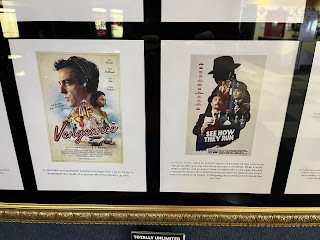
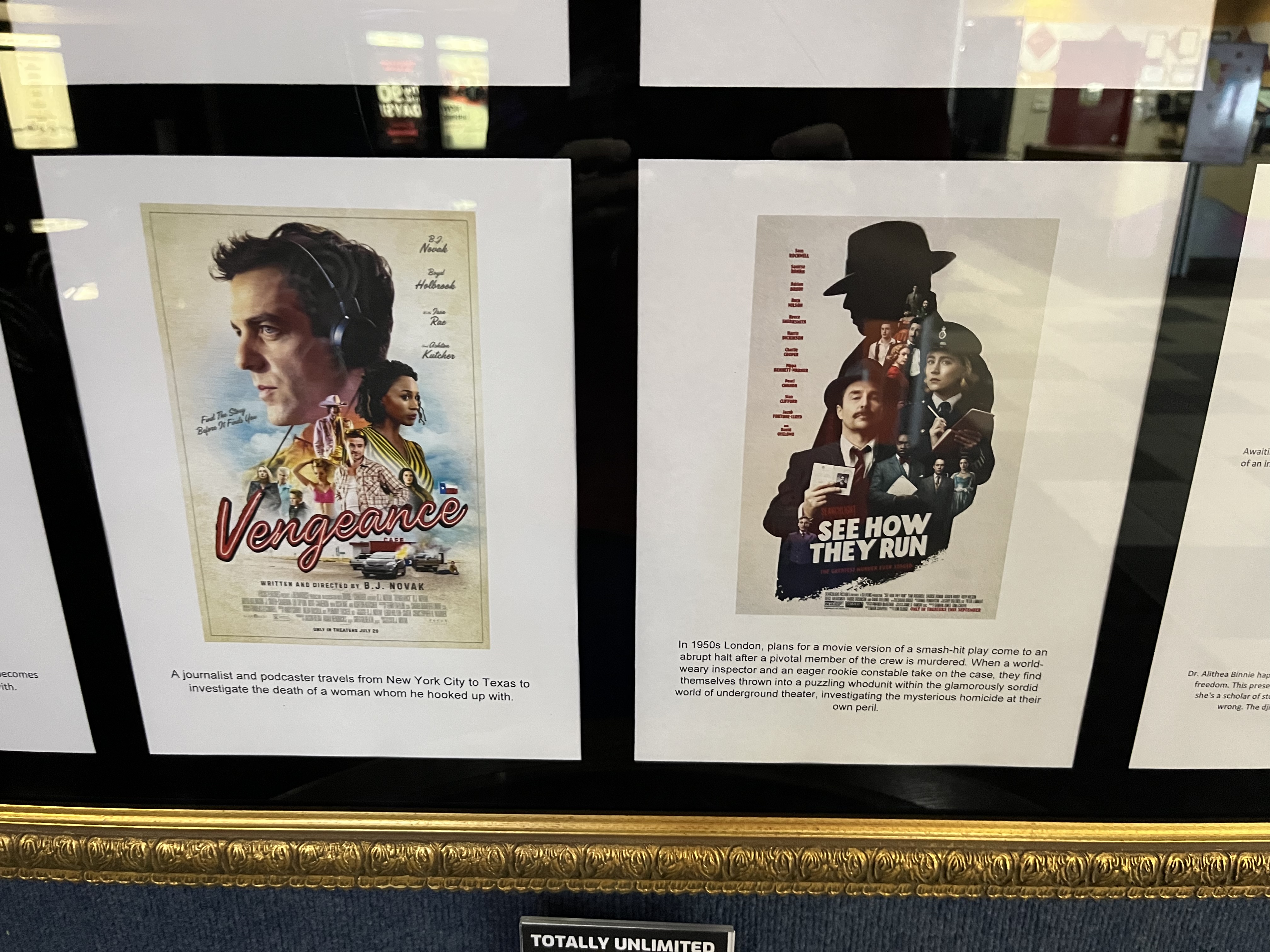
Two weeks ago today, my mom and I went to an Arbor double-feature of See How They Run and Vengeance. We had no idea these would be the last films we saw at the beloved cinema, and I can imagine the employees were blindsided by the news – one person at the box office that day matter-of-factly said, “We aren’t going anywhere.” Exactly one week later, they were shut down.
Everything about the closure was unceremonious – just a short email from Regal saying the cinema was closed. No fanfare, no chance to say goodbye, no final screening for its loyal customers of nearly two decades. Everyone deserved better. My heart goes out to the people who worked there – particularly Brenda, who was the Arbor’s long-time ticket-taker. When you entered through the Arbor doors and received a friendly greeting from Brenda, you were immediately welcomed back into a home away from home.
 The pandemic could not have been easy for the Arbor. When it reopened briefly in September of 2020, I saw two films there – The Personal History of David Copperfield and The Last Shift. Both screenings were nearly vacant. While other cinemas remained open (and were similarly sparsely attended), the Arbor closed its doors a few weeks later, not opening again until May of 2021. Since its second re-opening, I’ve tried to see as many movies there as possible, but the adult audiences that the Arbor caters to simply aren’t returning to the cinema in droves.
It’s not for a lack of new releases – last fall and winter featured a murderer’s row of incredible first-run titles at the Arbor, including Licorice Pizza, Nightmare Alley, West Side Story, C’mon C’mon, Parallel Mothers, House of Gucci, Mass, Belfast, The French Dispatch and Spencer, just to name a few. Nevertheless, you’d be hard-pressed to find more than 15 people in the cinema at a given time (though, to be fair, I often went at odd times to avoid big crowds).
 Unlike other institutions that have closed during the pandemic, I don’t have any regrets regarding my recent attendance at the Arbor – by my count, I’ve been there at least twenty times since their re-opening. But I do wish I had a chance to say a formal goodbye – to spend a day entirely at the cinema, seeing as many films as possible.
What will become of the now-shuttered cinema? Considering the trend of Austin stripping away the local establishments that brought people here in the first place, I’m thinking a bunch of luxury condos. But the optimist in me wants to believe another cinema can take its place, just as the Arbor replaced Great Hills 8 (and, similarly, AFS Cinema replaced the old Lincoln 3 Theater). Given the way things are going in this town, though, it’s unlikely. But, as Bruce says, “Everything dies, baby, that’s a fact… but maybe everything that dies someday comes back.”

Everything about the closure was unceremonious – just a short email from Regal saying the cinema was closed. No fanfare, no chance to say goodbye, no final screening for its loyal customers of nearly two decades. Everyone deserved better. My heart goes out to the people who worked there – particularly Brenda, who was the Arbor’s long-time ticket-taker. When you entered through the Arbor doors and received a friendly greeting from Brenda, you were immediately welcomed back into a home away from home.
It’s not for a lack of new releases – last fall and winter featured a murderer’s row of incredible first-run titles at the Arbor, including Licorice Pizza, Nightmare Alley, West Side Story, C’mon C’mon, Parallel Mothers, House of Gucci, Mass, Belfast, The French Dispatch and Spencer, just to name a few. Nevertheless, you’d be hard-pressed to find more than 15 people in the cinema at a given time (though, to be fair, I often went at odd times to avoid big crowds).

What will become of the now-shuttered cinema? Considering the trend of Austin stripping away the local establishments that brought people here in the first place, I’m thinking a bunch of luxury condos. But the optimist in me wants to believe another cinema can take its place, just as the Arbor replaced Great Hills 8 (and, similarly, AFS Cinema replaced the old Lincoln 3 Theater). Given the way things are going in this town, though, it’s unlikely. But, as Bruce says, “Everything dies, baby, that’s a fact… but maybe everything that dies someday comes back.”


